
Out in the Gulf, where miles of open water stretch over a mostly barren seafloor, life gathers wherever it can find something solid.
Give it structure—and it will come.
That’s exactly the idea behind a new artificial reef project off the Texas coast, where an unlikely material is now doing an important job beneath the surface.
Turning Utility into Habitat
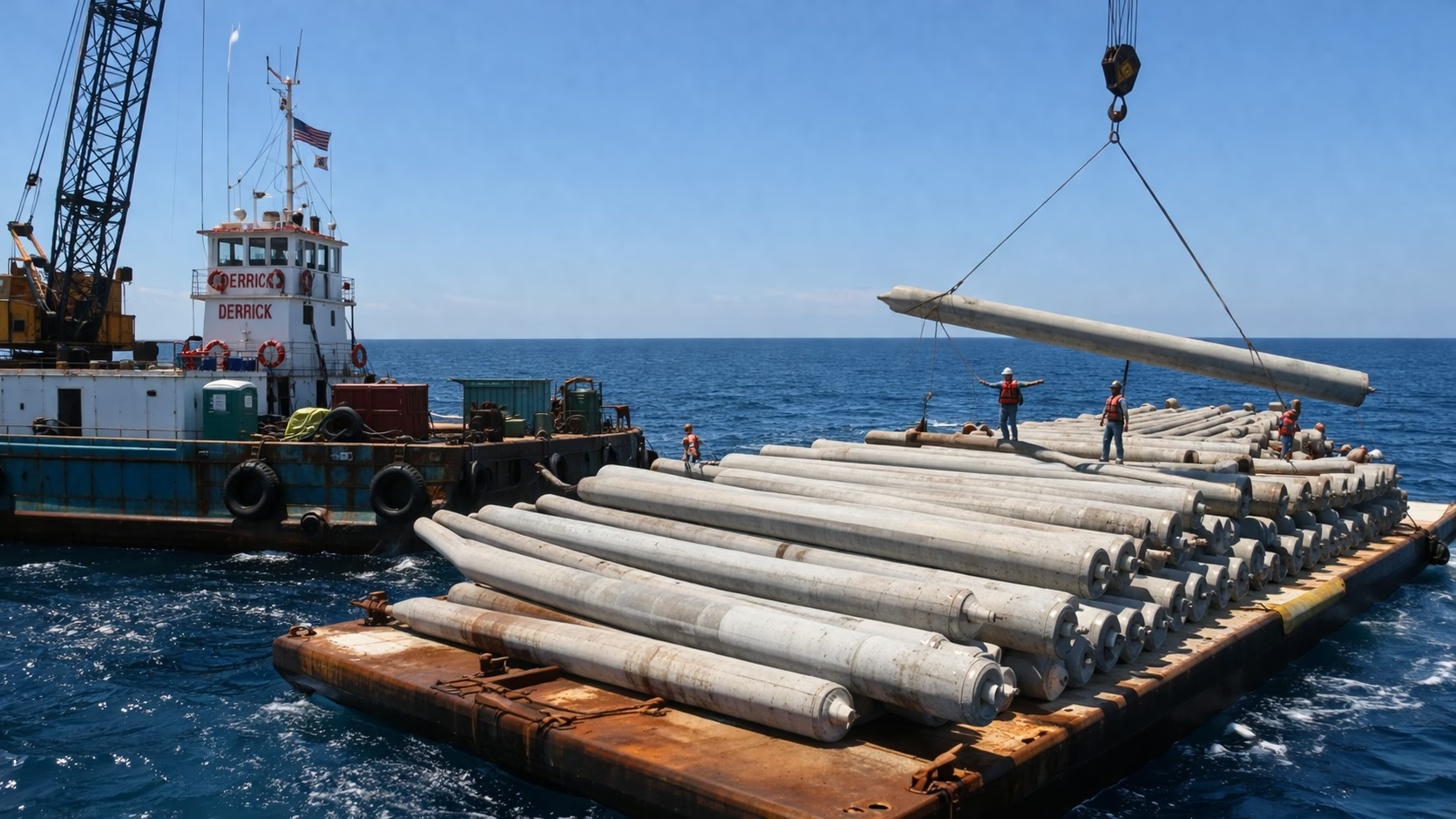
On July 22, dozens of concrete power line poles were deployed about 30 nautical miles east of Corpus Christi, marking the first time this type of material has been used to create an artificial reef in Texas waters.
In all, 152 hollow concrete poles, ranging from 10 to 40 feet in length and totaling more than 1,400 tons, were placed on the seafloor as part of the Texas Parks and Wildlife Department Artificial Reef Program.
The poles were donated by American Electric Power, giving new purpose to materials that might otherwise have been discarded.
Building on an Existing Reef
The deployment took place at a site known as Matagorda Island Block 712, in roughly 130 feet of water—an established reef location created years earlier using the deck of an abandoned offshore oil platform.
This new addition doesn’t replace what’s already there.
It builds on it.
Contractors transported and placed the poles alongside a recently deployed hopper barge, adding complexity and vertical relief—two key ingredients for creating productive reef habitat.
Accessible from both Corpus Christi and Port O’Connor, the site offers another destination for offshore anglers and divers willing to make the run.
Life Below the Surface
To the casual observer, a pile of concrete might not look like much.
But underwater, it becomes something entirely different.
“An artificial reef is like an oasis in the desert,” said Dr. Larry McKinney, TPWD’s coastal fisheries director. “The Gulf floor is mostly mud and sand. Reefs provide the hard surfaces needed for marine life to attach and grow.”
That growth begins small—barnacles, corals, sponges, and other invertebrates—but it doesn’t stay that way for long.
Those organisms attract baitfish.
Baitfish attract predators.
And before long, the reef becomes part of a larger food web.
Species like red snapper and grouper take up residence, while pelagic visitors—mackerel, sharks, even billfish—move through to feed.
A Program with a Purpose
This project is part of a broader effort guided by the Texas Artificial Reef Act of 1989 and the state’s long-range reef plan adopted the following year.
Since then, the program has permitted:
- 74 former oil and gas platforms
- 49 reef sites statewide
- 17 nearshore reefs designed for smaller boats
Materials used range from Liberty ships and tugboats to concrete culverts, reef balls, quarry rock, and other durable structures—all carefully selected to be clean, stable, and beneficial to marine ecosystems.
The goal is simple: create habitat where little existed before.
From Power Lines to Fishing Grounds
There’s something fitting about it.
Concrete poles that once carried electricity across the land are now serving a new purpose beneath the water—quietly helping rebuild fish habitat and support the Gulf’s living resources.
It’s not flashy work.
Most folks will never see it.
Final Drift
But give it time.
Because out there, in that wide stretch of open Gulf, those poles are already doing what reefs have always done—gathering life, building structure, and creating opportunity.
And for the angler easing up on the throttle over open water, watching the depth finder come alive…
That’s where the real story begins.

0 Comments