
There are days on the water you never forget.
Not because of the fish you caught—but because of the water you had to survive.
When a Lake Turns Mean
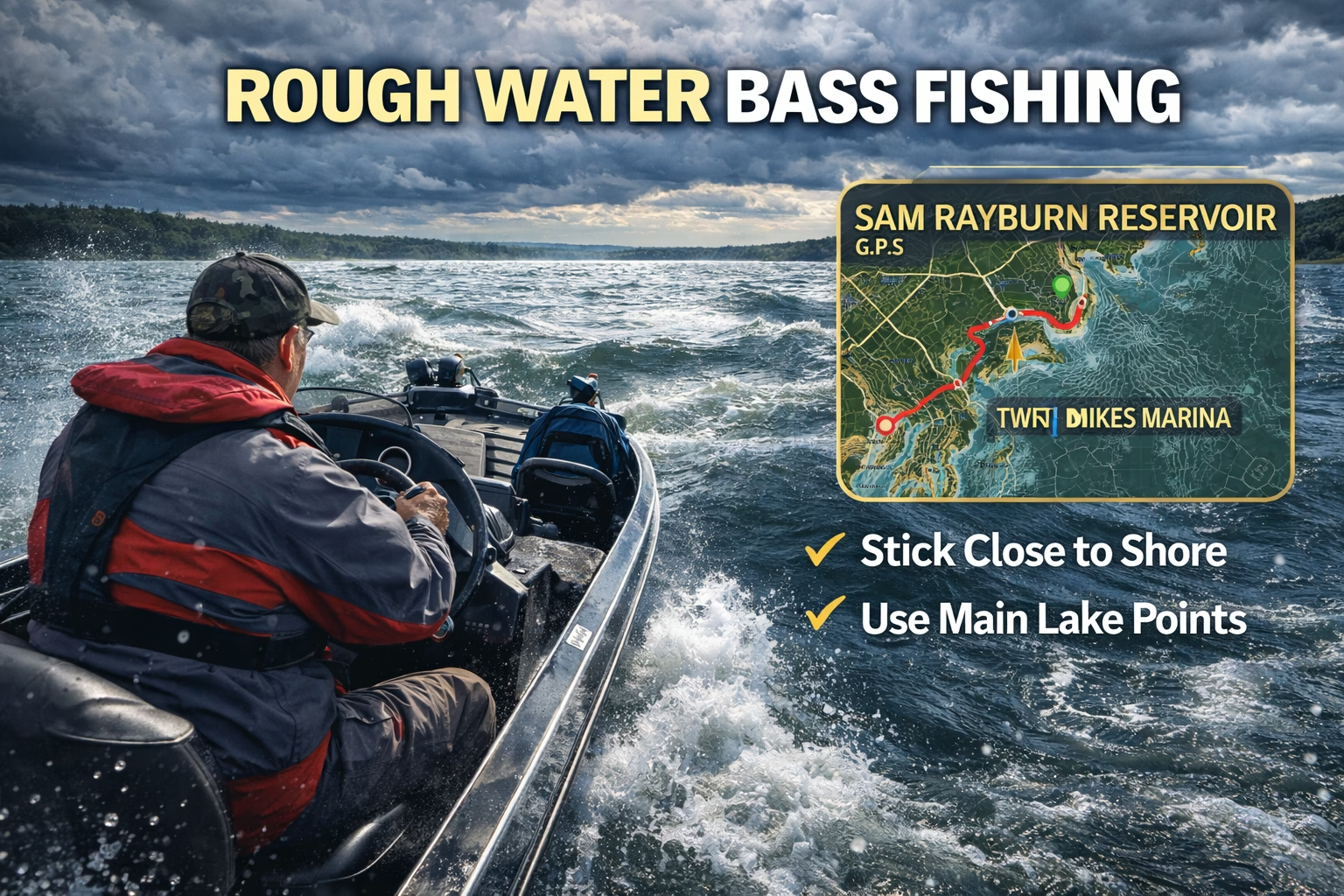
During the first day of the Texas Invitational last month, I found myself on Sam Rayburn Reservoir in conditions that felt more like the Gulf of Mexico than a freshwater lake.
I’ve seen rough water before—on Toledo Bend, Livingston, Conroe, Rayburn, and Richland Chambers. Wind can turn any of them into a challenge.
But this was different.
At daylight, the wind was running 15 to 20 miles per hour. Manageable. Nothing out of the ordinary.
Six hours later, it had doubled.
And the south end of the lake was rolling with five- to eight-foot waves.
A Long Run Back
My partner and I were nearly 20 miles up the lake when it was time to head in—straight into that wind, back toward Twin Dikes Marina.
Out in the middle, the waves were standing tall and angry. That’s no place to be when the wind stacks up like that.
On big water, the main lake acts like a funnel. Wind drives straight down the center, building wave after wave with nothing to slow it down.
The safer route?
Pick a bank.
Running Smart in Big Water
When conditions turn dangerous, a few simple rules can make all the difference:
- Run one shoreline or the other whenever possible
- Use main lake points to break the wave action
- Stay behind points as long as you can for protection
- Take it slow—one wave at a time
- Tack at an angle instead of hitting waves head-on
That last one matters.
By working across the waves at an angle, you reduce the risk of spearing into one—or worse, stuffing the bow and taking water over the front.
Picking Your Line
Choosing the right side of the lake isn’t always easy.
That day, I rounded a main lake point and hit water so rough I could barely make forward progress. The waves were stacked tight, and every inch felt like a fight.
But I knew something.
About three miles across the lake was another point that extended well out into the water. If I could reach it, I’d have a protected run for a couple of miles.
So I made the call.
I turned into the wind and started working my way across.
It wasn’t pretty—but it worked.
Once I reached that far shoreline, I could finally turn downlake and make steady progress back toward weigh-in.
Playing the Wind
Wind doesn’t just blow in a straight line.
It curls around points. It sneaks into coves. It builds in one place and lays down in another.
Learning how it moves across a lake is just as important as learning where the fish are.
Main lake points, however, are your best friend in rough water. They break waves, create calmer water behind them, and give you a chance to regroup.
The Human Side of Big Water
There’s something else you don’t hear talked about much.
What it feels like.
That first tournament day, there came a point when the noise disappeared. I couldn’t hear the wind. I couldn’t hear the water.
All I could feel was the isolation.
When you’re out there in heavy water and things start going sideways, it’s just you and the lake. And when Mother Nature decides to show her strength, it can feel like she’s got you cornered.
It’s a lonely feeling.
One you don’t forget.
Final Run
Most days on the water are good ones.
But every now and then, the lake reminds you who’s in charge.
If you ever find yourself caught in conditions like that, remember the basics—work the banks, use the points, take your time, and keep your head.
Because in the end, getting back to the dock safely is the only catch that really matters.
And if you respect big water… it’ll usually let you come home.


0 Comments