

A Complete Guide to Smallmouth Bass Fishing on Lake Amistad, Texas
When most anglers think about Lake Amistad bass fishing, their minds naturally drift toward the giant Amistad largemouth bass that have made this famous Texas reservoir legendary. Yet hidden within the rocky canyon walls and deep clear water of this border lake lives another prized species that many anglers overlook: smallmouth bass.
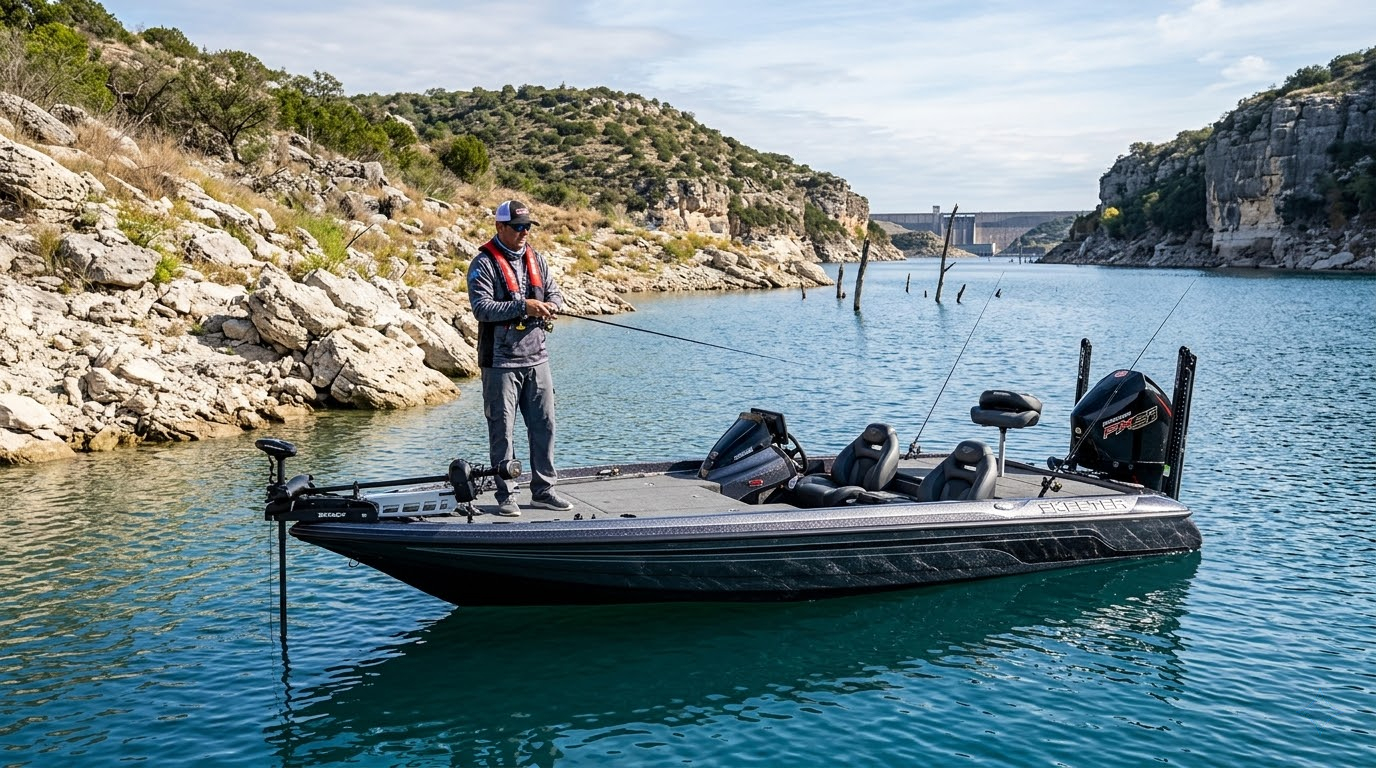
For anglers searching online for Lake Amistad smallmouth bass fishing, the reservoir offers one of the most unique smallmouth fisheries in the southern United States. Unlike the smallmouth lakes of the Ozarks or the Great Lakes, Amistad’s bronzebacks inhabit a rugged desert canyon ecosystem filled with steep limestone walls, submerged rock piles, and crystal-clear water.
These conditions create an exceptional habitat for smallmouth bass. They thrive in Amistad’s rocky environment, where current from the Rio Grande and Devils River creates the kind of structure and water clarity smallmouth prefer.
While largemouth bass dominate the spotlight, experienced anglers know that Lake Amistad smallmouth bass fishing can be outstanding year-round, especially for fishermen who enjoy light tackle, finesse techniques, and structure fishing.
This guide explores everything you need to know about Lake Amistad smallmouth bass fishing, including lake characteristics, seasonal patterns, locations, structure, depth, lures, and techniques based largely on Texas Parks and Wildlife fishing reports and regional angler observations.
Overview of Lake Amistad
Lake Amistad sits along the Texas–Mexico border just northwest of Del Rio. Formed in 1969 with the construction of Amistad Dam, the reservoir floods a massive canyon system where three historic rivers meet.
Primary Rivers Feeding the Lake
• Rio Grande
• Devils River
• Pecos River (via the Rio Grande)
These rivers carved steep limestone canyons through West Texas long before the dam was built. Today those canyon walls, rock ledges, and submerged ridges provide ideal habitat for smallmouth bass.
Lake Characteristics
Lake Amistad offers a set of conditions that strongly favor smallmouth bass:
• exceptionally clear water
• abundant rocky structure
• steep shoreline gradients
• deep main lake basins
• strong baitfish populations
Unlike many Texas lakes dominated by timber and vegetation, Amistad features miles of bare rock structure, which smallmouth bass prefer.
Why Lake Amistad Produces Smallmouth Bass
Smallmouth bass prefer environments that mimic river systems and rocky lakes. Lake Amistad offers both.
Key factors include:
Rocky Structure
Much of the lake’s shoreline consists of limestone cliffs and broken rock. This structure provides:
• feeding ambush points
• crawfish habitat
• current breaks
Clear Water
Visibility often ranges from 10 to 20 feet, allowing smallmouth to hunt effectively.
Deep Water Access
Smallmouth like quick access to depth. Many Amistad banks drop from shallow rock shelves into 30–60 feet of water within a short distance.
Crawfish Population
Amistad has a healthy crawfish population, which is a primary food source for smallmouth bass.
Best Areas for Smallmouth Bass Fishing on Lake Amistad
Although smallmouth bass are scattered throughout the lake, certain areas consistently produce better fishing.
Devils River Arm
The Devils River is widely considered the best smallmouth habitat on the lake.
Features include:
• clear flowing water
• steep rock bluffs
• submerged ledges
• strong current
Smallmouth bass thrive here because the environment resembles a river more than a traditional reservoir.
San Pedro Canyon
San Pedro Canyon contains numerous rocky points and submerged ledges where smallmouth frequently hold.
This area is especially productive during winter and early spring.
Rough Canyon Area
Rough Canyon provides excellent fishing for both largemouth and smallmouth bass.
Smallmouth tend to hold on:
• deep rock walls
• main lake points
• submerged rock piles
Rio Grande River Channel
The Rio Grande arm offers deep structure and current flow that smallmouth bass favor.
Fishing the channel edges and rocky banks can produce excellent results.
Seasonal Smallmouth Bass Patterns
Smallmouth bass behave differently than largemouth bass. They often remain deeper and rely more heavily on rock structure.
Understanding seasonal movements is key to successful Lake Amistad smallmouth bass fishing.
January – Winter Structure Fishing
During January, water temperatures drop into the mid-50s.
Smallmouth bass hold on deep rock structure.
Depth
20–40 feet
Structure
• steep rock bluffs
• underwater ledges
• submerged rock piles
Best Lures
• jigging spoons
• drop-shot rigs
• football jigs
Colors
• brown
• green pumpkin
• natural crawfish
Slow presentations work best during the winter months.
February – Pre-Spawn Movement
By February, smallmouth begin moving toward spawning areas.
Depth
15–30 feet
Structure
• secondary points
• rock transitions
• gravel banks
Best Lures
• suspending jerkbaits
• finesse jigs
• tubes
Jerkbaits can be deadly in clear water during this time.
March – Pre-Spawn Feeding
March often produces some of the best Lake Amistad smallmouth bass fishing of the year.
Smallmouth aggressively feed before spawning.
Depth
10–20 feet
Structure
• rocky points
• gravel flats
• canyon ledges
Best Lures
• crankbaits
• jerkbaits
• tube jigs
Shad-pattern crankbaits work well when bass are feeding on baitfish.
April – Spawn
Smallmouth spawn when water temperatures reach about 60–65°F.
Depth
5–12 feet
Structure
• gravel banks
• rocky flats
• protected coves
Best Lures
• tube jigs
• soft plastics
• finesse worms
Because the water is so clear, sight fishing can be effective.
May – Post-Spawn
After spawning, smallmouth move toward deeper structure.
Depth
15–25 feet
Structure
• rock ledges
• submerged humps
• main lake points
Best Lures
• Carolina rigs
• football jigs
• swimbaits
Crawfish-colored jigs excel during this period.
June – Early Summer
Summer begins pushing fish deeper.
Depth
20–35 feet
Structure
• offshore rock piles
• submerged ridges
• deep points
Best Lures
• deep crankbaits
• drop-shot rigs
• flutter spoons
July – Deep Summer Pattern
Smallmouth hold on deep structure during hot weather.
Depth
30–45 feet
Structure
• main lake ledges
• canyon drop-offs
Best Lures
• drop shots
• football jigs
• big worms
Fishing early morning or late evening often produces the best results.
August – Summer Stability
August patterns resemble July.
Bass remain deep and structure-oriented.
Depth
30–40 feet
Best Lures
• drop shot rigs
• finesse worms
• jigging spoons
Slow vertical presentations often work best.
September – Fall Transition
Cooling temperatures trigger baitfish movement.
Depth
15–25 feet
Structure
• rocky points
• channel edges
Best Lures
• crankbaits
• swimbaits
• spinnerbaits
Smallmouth begin chasing baitfish more actively.
October – Fall Feeding
October can produce aggressive smallmouth action.
Depth
10–20 feet
Structure
• shallow rock banks
• points
Best Lures
• jerkbaits
• spinnerbaits
• topwater plugs
Early morning topwater bites can be excellent.
November – Late Fall
Cooling water pushes fish slightly deeper again.
Depth
15–30 feet
Best Lures
• jigs
• swimbaits
• jerkbaits
Rocky ledges remain productive.
December – Winter Transition
Smallmouth return to winter structure patterns.
Depth
20–40 feet
Best Lures
• jigging spoons
• drop shots
• football jigs
Slow, deliberate presentations work best.
Best Lures for Lake Amistad Smallmouth
Experienced anglers consistently rely on several lure categories.
Tube Jigs
Perhaps the most reliable lure for smallmouth bass.
Best colors:
• green pumpkin
• watermelon
• brown craw
Football Jigs
Perfect for dragging along rocky structure.
Recommended colors:
• brown
• peanut butter and jelly
• green pumpkin
Jerkbaits
Excellent during winter and early spring.
Use natural baitfish colors in clear water.
Drop Shot Rigs
Highly effective for deep water smallmouth.
Use small finesse worms in natural colors.
Deep Crankbaits
Effective for covering water and locating active fish.
Tackle Recommendations
Smallmouth fishing often benefits from lighter tackle than largemouth fishing.
Rod
Medium or medium-light spinning rods.
Line
8–12 lb fluorocarbon works well in clear water.
Reels
High-quality spinning reels are preferred for finesse presentations.
Lake Amistad Smallmouth Records
While largemouth bass dominate the record books, Lake Amistad has produced impressive smallmouth bass.
Fish exceeding 6 pounds have been caught in the reservoir, which is excellent for southern smallmouth fisheries.
Tips for Successful Lake Amistad Smallmouth Fishing
Focus on Rock
Smallmouth prefer rocky structure more than vegetation.
Watch Water Clarity
Clear water allows fish to see lures from greater distances.
Fish Points and Ledges
Smallmouth often hold on structural breaks.
Use Natural Colors
Because of the lake’s clarity, natural presentations are usually best.
Why Lake Amistad Is a Unique Smallmouth Fishery
Few lakes in Texas offer the combination of:
• deep clear water
• rocky canyon structure
• abundant forage
This combination makes Lake Amistad smallmouth bass fishing unique in the southern United States.
The lake’s canyon environment more closely resembles the rocky lakes of northern regions than typical Texas reservoirs.
Final Thoughts on Lake Amistad Smallmouth Bass Fishing
For anglers willing to target them specifically, Lake Amistad smallmouth bass fishing offers one of the most exciting and underappreciated bass fisheries in Texas.
While largemouth bass may dominate the spotlight, the lake’s bronzebacks provide incredible sport on light tackle. Their aggressive strikes, powerful runs, and aerial acrobatics make them one of the most thrilling fish to catch in freshwater.
Whether fishing the clear waters of the Devils River, the rocky cliffs of San Pedro Canyon, or the deep ledges along the Rio Grande, anglers who learn the patterns of these fish will discover that Lake Amistad holds outstanding smallmouth fishing throughout the year.
For fishermen seeking something different from the typical Texas bass lake, few destinations offer the rugged beauty and fishing excitement of Lake Amistad smallmouth bass fishing.

0 Comments