
West Texas had been holding its breath.
For years, lakes like O.H. Ivie sat low and quiet, their shorelines pulled back like a retreating tide. The drought that gripped the region from the late 1990s through 2004 wasn’t just about water levels—it showed up in the fish, too. Fewer big bass. Fewer stories worth telling. Just a long, dry spell in more ways than one.
Then, on a cold January afternoon, the lake answered back.
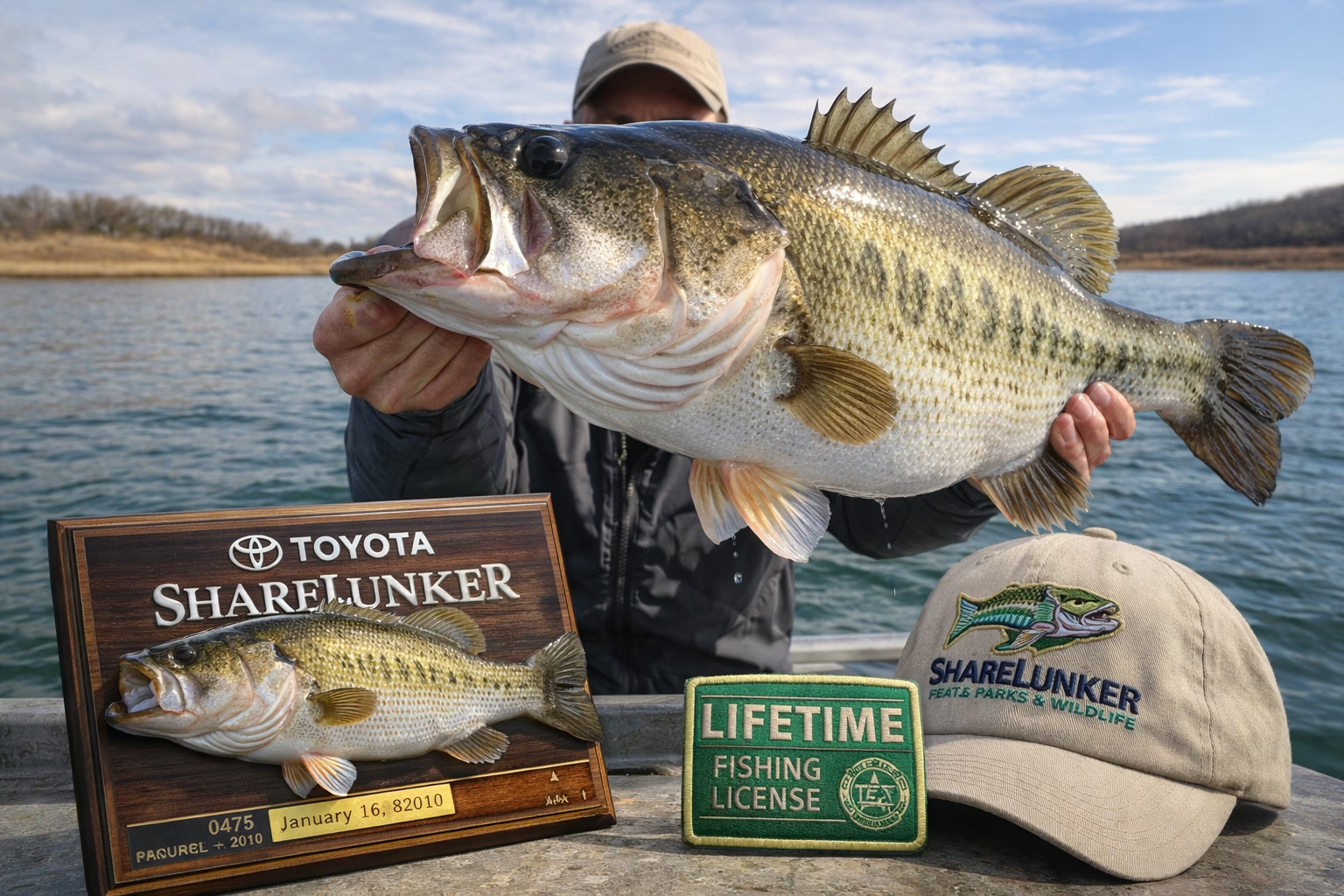
On January 16, Ben Blaine of Merkel leaned into something heavy in 12 to 15 feet of 48-degree water. At 5:00 p.m., working a DD-22, he brought up a largemouth that tipped the scales at 14.02 pounds—25.5 inches long with a 21.25-inch girth. That fish became Toyota ShareLunker No. 475, and just like that, the drought—at least the one that mattered to anglers—was broken.
“We’ve been expecting it,” said Bobby Farquhar, inland fisheries regional director for the Texas Parks and Wildlife Department out of San Angelo. “About six to seven years after the end of a drought, you usually see the big fish start to come out.”
It wasn’t luck. It was the slow, patient math of fisheries management finally coming due.
O.H. Ivie had already proven it could grow giants, producing five ShareLunkers before—three in 2000 and two in 2002. Those fish traced back to the original stockings in 1990 and 1991. But when the lake dropped during the drought, bass numbers swelled while growth stalled. Too many fish chasing too little groceries.
So biologists made a move that raised a few eyebrows at the time: they loosened regulations, allowing anglers to keep two bass under 18 inches. It was a deliberate thinning of the herd. Then the rains came, the lake rose, and suddenly the system had room to breathe again.
“There were lots of adult fish in the lake, and they produced strong year classes in 2004 and 2005,” Farquhar said. “I would not be surprised to see more ShareLunkers. We’ve had several reports of 12-pounders being caught in the last year.”
In other words, Blaine’s fish may not be the headline—it may be the opening chapter.
For anglers chasing that same kind of lightning, the path is clear. Anyone legally catching a 13-pound or larger largemouth bass in Texas waters—public or private—between October 1 and April 30 can enter the Toyota ShareLunker program. A quick call to program manager David Campbell sets the wheels in motion, and TPWD personnel will pick up the fish within 12 hours.
Those fish don’t just earn bragging rights—they become the foundation for the future.
At the Texas Freshwater Fisheries Center in Athens, ShareLunker bass are used in a selective breeding program aimed squarely at one goal: growing bigger, faster bass across the state. Some offspring are returned to the very waters where their parents were caught. Others are stocked in public lakes statewide, quietly improving the genetic deck for the next generation of anglers.
And for the angler who lands one? The rewards are as memorable as the catch—a replica mount, a certificate, ShareLunker gear, and recognition at the annual banquet in Athens. Catch the biggest fish of the year, and you’ll walk away with something even more lasting: a lifetime fishing license.
Programs like ShareLunker don’t happen by accident. They’re fueled by partnerships, including support from Gulf States Toyota through the Texas Parks and Wildlife Foundation—a reminder that conservation, like fishing, works best when everyone’s pulling in the same direction.
And out on O.H. Ivie, as winter light fades across a rising lake, there’s a feeling you can’t quite measure on a scale.
The water is back.
The forage is right.
And somewhere down there, another fish is growing into a story.

0 Comments