
In Texas, hunting seasons aren’t just dates on a calendar—they’re traditions measured in sunrises, boot tracks, and the rhythm of a long weekend.
Now, state wildlife officials are looking to stretch that rhythm just a little further.
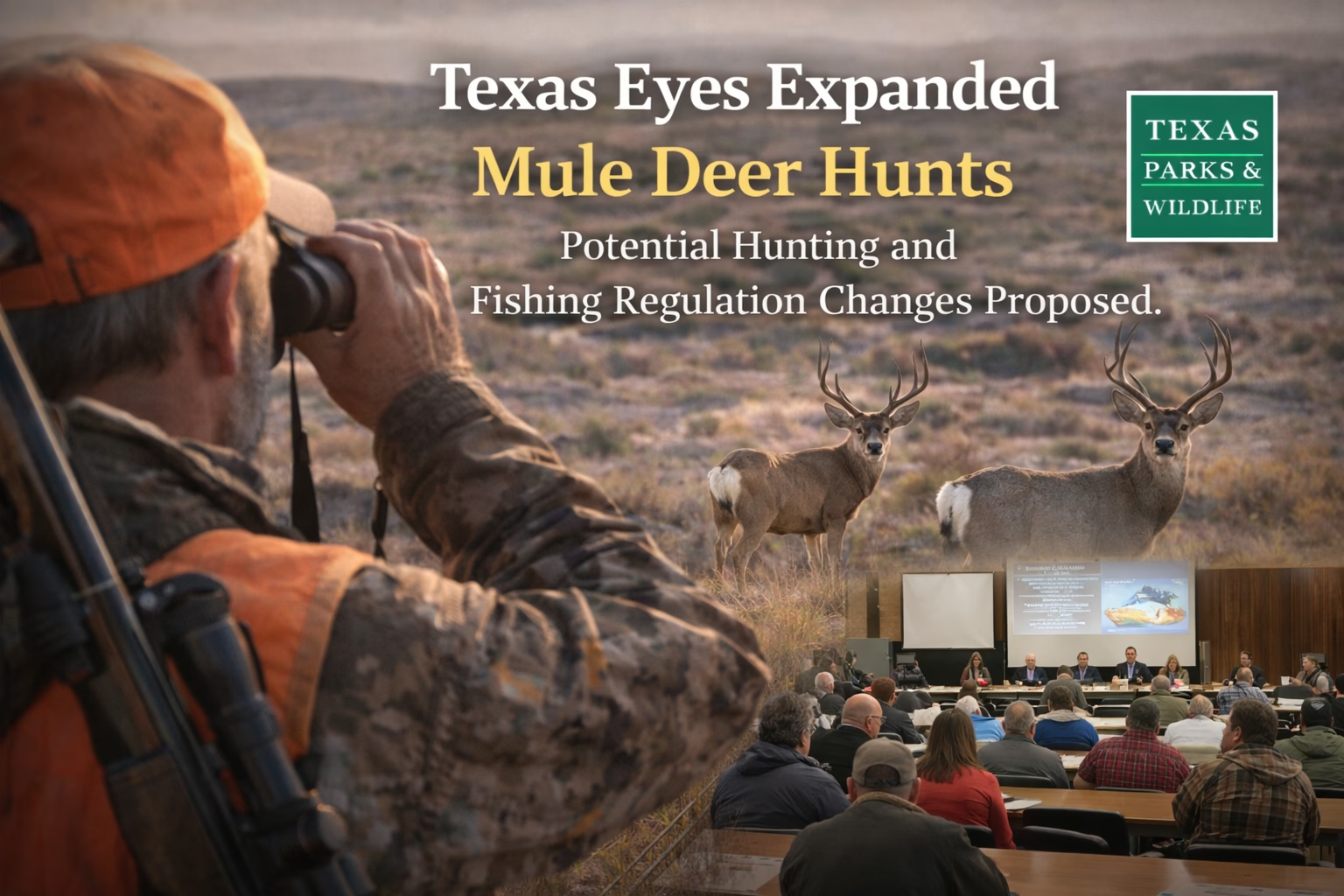
The Texas Parks and Wildlife Department has proposed a focused set of changes to the 2010–2011 hunting and fishing regulations, with one idea rising to the top: expanding opportunities for mule deer hunters across West Texas.
At the heart of the proposal is a move to open general mule deer seasons in Dawson and Wheeler counties—areas where no open season currently exists. Under the plan, Dawson County would see a nine-day, buck-only season, while Wheeler County would receive a 16-day, buck-only season.
It’s a measured approach—more access for hunters, without tipping the balance.
According to TPWD wildlife biologists, mule deer populations in these counties are limited but stable in pockets of suitable habitat. A buck-only structure ensures that harvest pressure remains controlled, allowing herds to continue growing without disrupting reproduction or long-term distribution.
In other words, it’s opportunity with guardrails.
There’s also a nod to tradition—and to practicality.
Big game seasons in Texas have long opened on Saturdays, giving hunters a full weekend to get afield. But in the Trans-Pecos, mule deer season traditionally begins the Saturday after Thanksgiving. The Texas Parks and Wildlife Commission has asked biologists to consider shifting that opening one day earlier—to Friday—capturing more of the holiday window.
If approved, the change would extend the current 16-day season by a day and give hunters an extra sunrise in country that rewards every minute spent in it.
Biologists say the added day would have no measurable negative impact on the mule deer resource—another small adjustment designed to increase participation without compromising the herd.
On the fishing side, the proposals are lighter—but no less telling.
One closely watched idea—a reduction in the minimum length for snook from 24 inches to 22—has been pulled from consideration after public feedback raised concerns about the health of the fishery. Coastal anglers made their voices heard, and TPWD responded by shelving the proposal.
It’s a reminder that good management isn’t just about data—it’s about listening.
Fisheries staff will continue to gather input on other proposals, including stronger commercial reporting requirements, clearer separation between commercial and recreational regulations, and tighter definitions around possession limits and protected size classes.
All of it points to a system that’s evolving—carefully, deliberately, and with an eye on both access and sustainability.
For those who want a say, the door is open.
A series of public meetings will be held across the state in February and early March, with additional opportunities to review and comment online. The final decision will come at the April 1 public hearing of the Texas Parks and Wildlife Commission.
Because in Texas, the future of hunting and fishing isn’t set behind closed doors.
It’s shaped in meeting rooms, on back roads, and in the voices of the people who care enough to show up—
all working to make sure the next season is just a little better than the last.


0 Comments