

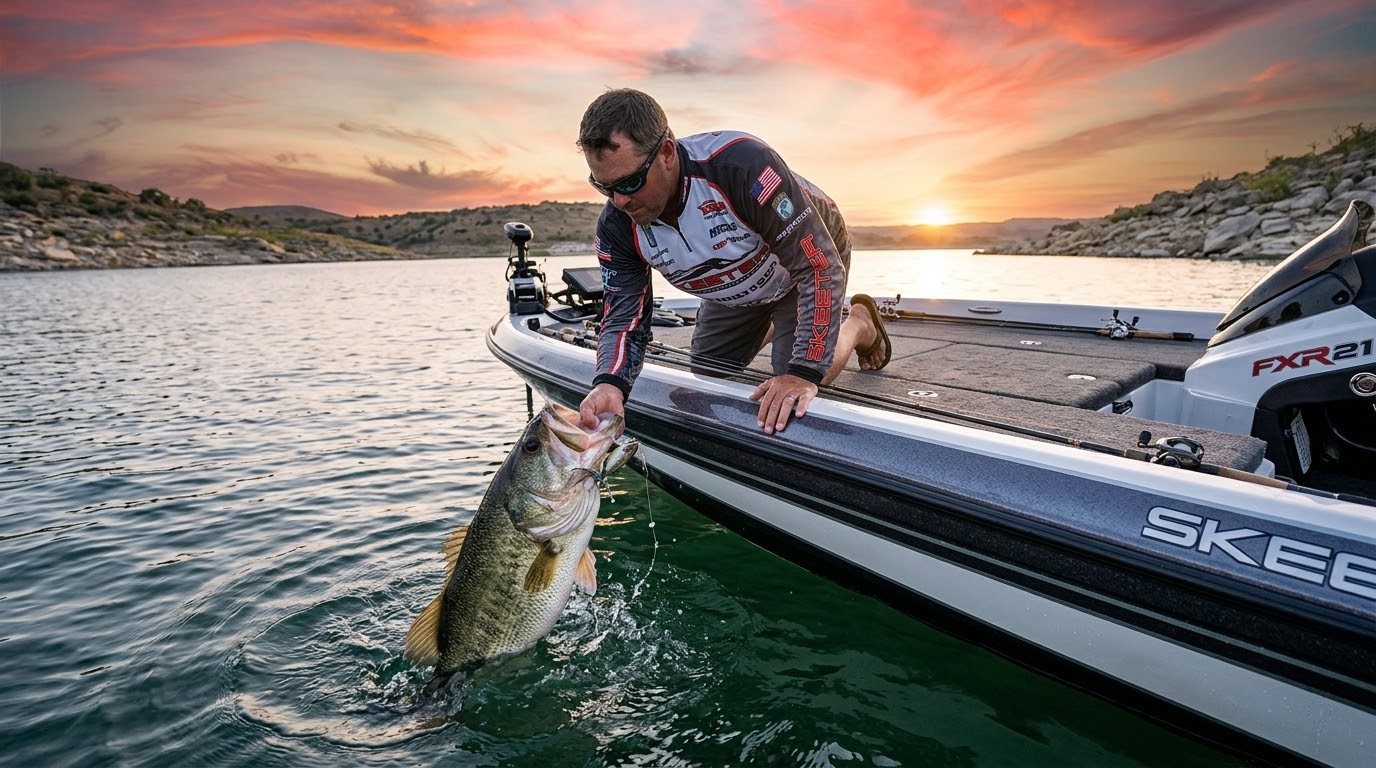
Few lakes in Texas hold the mystique and big-bass reputation of Amistad Reservoir. Sitting along the Rio Grande near Del Rio, where the Devils River meets the main lake, Amistad has long been one of the Southwest’s legendary bass fisheries. Clear desert water, miles of rocky structure, flooded brush, and hydrilla beds create a nearly perfect environment for both largemouth bass and smallmouth bass.
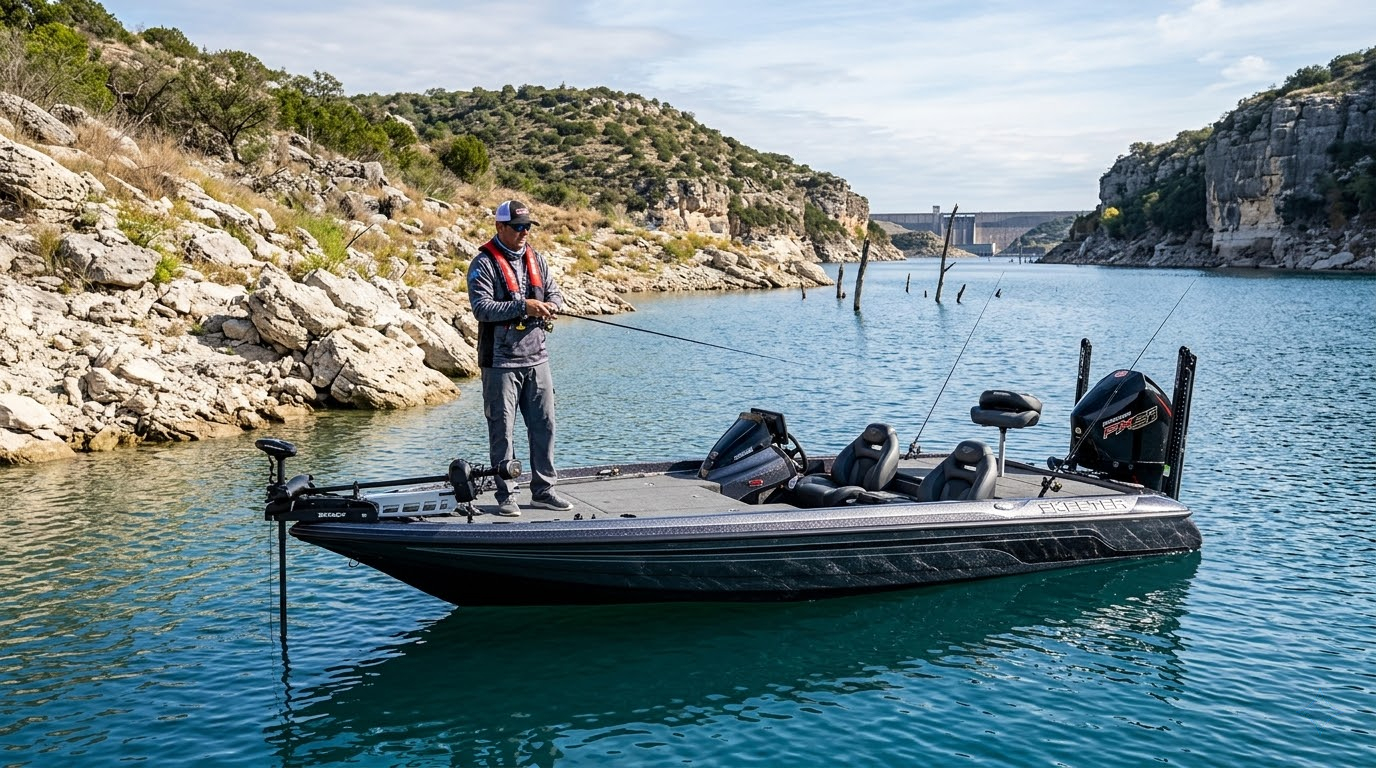
For anglers searching online for Amistad Reservoir bass fishing, the Devils River arm consistently stands out as one of the most productive sections of the lake. The rugged limestone bluffs, steep rock ledges, and crystal-clear water offer classic structure where bass thrive year-round.
According to the Texas Parks and Wildlife Department, largemouth bass are the most abundant sportfish in Amistad Reservoir, while smallmouth bass fishing is often best in the Devils River arm where rocky habitat dominates.
This detailed guide covers:
-
Devils River bass fishing patterns
-
Monthly largemouth and smallmouth bass strategies (January–December)
-
Best lures, colors, and presentation techniques
-
Aquatic vegetation and structure patterns
-
Key fishing areas and depths
-
Lake records and trophy potential
Whether you are planning your first trip or reliving decades of Amistad fishing memories, this guide will help you understand the seasonal rhythm of this iconic Texas bass lake.
Understanding Amistad Reservoir and the Devils River Arm
Amistad Reservoir is dominated by rocky structure, steep drop-offs, and long points, with additional habitat from flooded brush and aquatic vegetation such as hydrilla.
These structural elements create ideal bass habitat:
Primary Structure
-
Limestone ledges
-
Submerged rock piles
-
Creek channels
-
Bluff walls
-
Submerged points
Secondary Cover
-
Hydrilla beds
-
Flooded brush after water rises
-
Standing timber in some pockets
Bass use these features as seasonal staging areas, moving between deep water and shallow spawning zones throughout the year.
If you want a broader overview of the lake itself, see this guide to
Lake Amistad Bass Fishing Best Areas Guide which covers many of the primary structure zones and lake sections anglers target.
Devils River: One of the Best Bass Areas on Amistad
Among all areas of the lake, the Devils River arm is especially well known for both largemouth and smallmouth bass fishing.
Why Devils River produces so well:
-
Clearer water than the Rio Grande arm
-
Abundant rocky habitat favored by smallmouth bass
-
Numerous secondary points and ledges
-
Hydrilla growth in some coves
-
Consistent baitfish populations
Smallmouth bass in particular tend to prefer rocky banks and steep drop-offs, which the Devils River arm offers in abundance.
For anglers wanting to explore this river system further, you may enjoy reading about the Devils River bass fishing opportunities where its remote beauty and fishing potential are discussed in detail.
Amistad Reservoir Bass Fishing Lake Records
Amistad has produced some impressive bass over the years.
Official lake records (TPWD):
-
Largemouth Bass: 15.68 pounds – caught December 28, 2005
-
Smallmouth Bass: 5.37 pounds – caught November 7, 2004
The lake also produces numerous bass in the 6–10 pound class, particularly during the prespawn months when Florida-strain largemouth move shallow.
Month-by-Month Amistad Reservoir Bass Fishing Guide
Below is a seasonal breakdown of largemouth and smallmouth bass fishing patterns on the Devils River arm.
January: Winter Structure Fishing
Winter bass on Amistad hold along deep rock structure and channel edges.
Typical depth
-
15–40 feet
Key areas
-
Devils River channel swings
-
Main-lake rock ledges
-
Bluff walls
Cold fronts push bass deeper, but warming trends often trigger feeding activity.
Best lures
-
Football jigs (½–¾ oz)
-
Jigging spoons
-
Deep-diving crankbaits
Recommended colors
-
Green pumpkin
-
Brown
-
Shad patterns
Presentation
Slow bottom contact is essential in winter. Crawl jigs along rocky structure where bass hold tight to cover.
February: Pre-Spawn Movement Begins
Water temperatures start climbing into the mid-50s and low-60s, pushing bass toward spawning areas.
Fishing reports note bass moving shallow in 0–10 feet of water as prespawn activity begins.
Best locations
-
Gravel pockets
-
Secondary points
-
Protected coves
Best lures
-
Chatterbaits
-
Lipless crankbaits
-
Suspending jerkbaits
Colors
-
Chrome shad
-
Chartreuse shad
-
Natural crawfish
Smallmouth bass often stage along rocky banks just outside spawning pockets.
March: Prime Prespawn Fishing
March is one of the best months of the year for Amistad Reservoir bass fishing.
Bass begin staging on first drop-offs near spawning flats, with many fish in 5–10 feet of water.
Key structure
-
Gravel flats
-
Chunk rock points
-
Secondary creek channels
Best lures
-
Texas-rig worms (7–10 inches)
-
Spinnerbaits
-
Medium diving crankbaits
Colors
-
Watermelon red
-
Green pumpkin
-
White/chartreuse spinnerbaits
Large females often suspend near deeper water before committing to beds.
April: Spawning Season
April marks peak spawning activity.
Bass build nests in:
-
Gravel pockets
-
Sandy flats
-
Protected coves
Typical depth
-
2–8 feet
Best lures
-
Soft plastic lizards
-
Tube baits
-
Wacky-rigged stick worms
Colors
-
Watermelon seed
-
Green pumpkin
-
White (to see strikes)
Smallmouth bass also spawn around rocky banks and gravel points.
May: Post-Spawn Feeding
After spawning, bass move to nearby structure and feed heavily.
Key areas
-
Points near spawning coves
-
Hydrilla edges
-
Submerged brush
Top lures
-
Topwater walking baits
-
Pop-Rs
-
Squarebill crankbaits
Topwater fishing can be spectacular during early morning hours.
June: Early Summer Pattern
As water warms, bass transition deeper.
Typical depth
-
10–25 feet
Structure
-
Main lake ledges
-
Rock piles
-
Channel drops
Best lures
-
Deep diving crankbaits
-
Carolina rigs
-
Big worms (10–12 inches)
Colors
-
Plum
-
Red shad
-
Green pumpkin
July: Offshore Summer Fishing
Summer bass concentrate around deep structure and baitfish schools.
Typical depth
-
20–40 feet
Electronics become critical for locating fish relating to submerged structure.
Best lures
-
Football jigs
-
Big worms
-
Flutter spoons
Presentation
Vertical fishing or slow dragging along ledges works best.
August: Heat of Summer
August fishing can be challenging but productive if anglers focus on deep water and early morning topwater action.
Best times
-
Dawn
-
Late evening
Best lures
-
Topwater walkers
-
Drop-shot rigs
-
Deep crankbaits
Smallmouth bass often suspend along steep bluff walls during hot weather.
September: Early Fall Transition
As temperatures begin dropping, bass start moving toward shallower feeding areas.
Key areas
-
Creek mouths
-
Secondary points
-
Wind-blown banks
Best lures
-
Lipless crankbaits
-
Spinnerbaits
-
Swimbaits
Shad migrations often dictate bass location.
October: Fall Feeding Frenzy
October offers some of the most consistent fishing of the year.
Bass chase baitfish along rocky banks and shallow flats.
Typical depth
-
3–12 feet
Best lures
-
Squarebill crankbaits
-
Spinnerbaits
-
Topwater walkers
According to TPWD, topwater baits and spinnerbaits are particularly effective during morning and evening hours.
November: Cooling Water Patterns
Bass begin moving back toward winter structure.
Best areas
-
Main lake points
-
Channel edges
-
Bluff walls
Best lures
-
Jigs
-
Alabama rigs
-
Jerkbaits
Smallmouth bass often feed aggressively during this cooling period.
December: Winter Bass Fishing
Winter fishing returns bass to deep structure and rock ledges.
Typical depth
-
20–40 feet
Best lures
-
Jigging spoons
-
Football jigs
-
Deep crankbaits
Slow presentations are critical in cold water.
Best Lure Colors for Amistad Reservoir
Due to the lake’s typically clear water, natural colors work best.
Top lure colors
-
Watermelon red
-
Green pumpkin
-
Brown craw
-
Shad patterns
-
Plum (for deep worms)
For more lure selection tips, anglers often refer to Texas bass fishing lure strategies which breaks down seasonal lure choices across Texas reservoirs.
Aquatic Vegetation and Bass Habitat
Hydrilla beds provide some of the best bass habitat in Amistad Reservoir.
Benefits include:
-
Oxygen production
-
Baitfish cover
-
Ambush points for bass
Hydrilla is one of the primary aquatic plants found in the reservoir.
Bass often position along edges of vegetation near deeper water, making them prime targets for soft plastics and reaction baits.
Why Amistad Reservoir Remains a Legendary Bass Lake
For decades, Amistad has been known for producing trophy bass and high catch rates.
Reasons include:
-
Florida-strain largemouth stocking programs
-
Extensive rocky habitat
-
Clear water conditions
-
Strong forage base
TPWD continues to manage the fishery through stocking and monitoring programs to maintain trophy bass potential.
Final Thoughts on Amistad Reservoir Bass Fishing
When anglers search online for Amistad Reservoir bass fishing, the Devils River arm consistently appears near the top of the list for productive areas.
From deep winter structure fishing to explosive topwater action in fall, the lake offers year-round opportunities for both largemouth and smallmouth bass.
Understanding the seasonal movements of bass, combined with knowledge of the lake’s rocky structure and vegetation, is the key to success.
And once you spend a sunrise drifting along those limestone cliffs of the Devils River with a rod in your hand and the desert waking around you, it becomes clear why so many Texas anglers consider Amistad one of the finest bass fisheries in the country.

0 Comments