
Another Lesson Learned
Tournament fishing has a way of teaching lessons the hard way.
Sometimes you learn them one fish at a time. Other times, the whole thing comes down on your head in a single day, and all you can do is take your medicine, study the mistake, and promise yourself not to make it again.
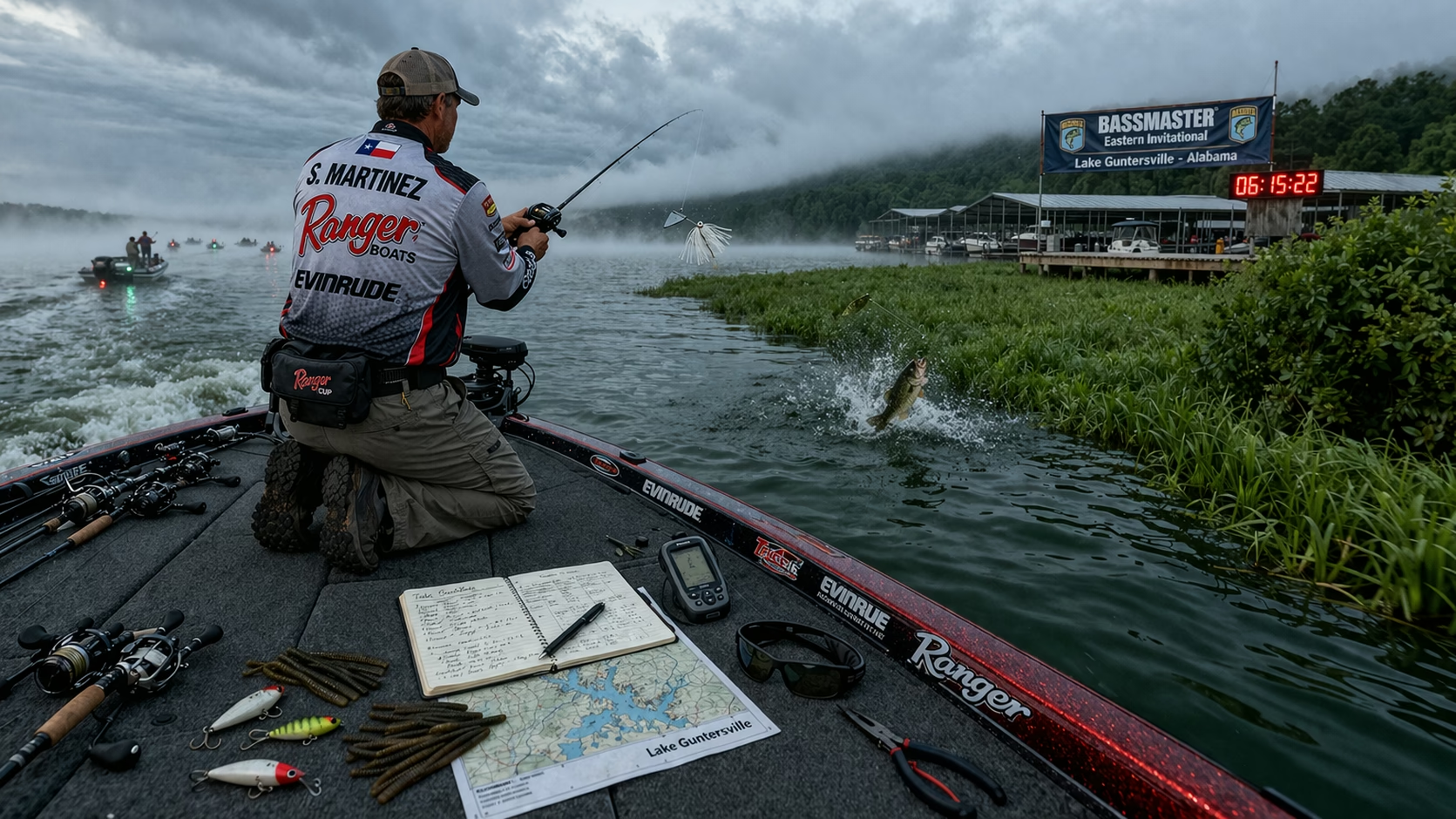
Last month I fished the Alabama Bassmaster Eastern Invitational on Lake Guntersville. I had never been to the lake before, but I did know it had extensive aquatic vegetation, especially milfoil and coontail. On the drive to Alabama, I spent plenty of time piecing together what I thought should be the most likely mid-May patterns. Topwaters, buzzbaits, spinnerbaits, and Carolina-rigged French fries, all worked around the grass, seemed like solid bets. Freshly emerging underwater grass and submerged grass points were at the top of my list.
When practice started on Monday, I ran up the Tennessee River, which feeds Lake Guntersville, and pulled into a large bay called Seibold, where several major creeks feed in. I had studied it on the map ahead of time and liked the way it laid out. I ran to the biggest point in the bay, shut down, jumped on the front deck, and fired a buzzbait about 40 yards across a shallow grassbed that had not yet topped out on the surface.
The bait had barely begun its retrieve when it got smashed.
Everything was just right: a slight breeze, overcast skies, and that early-morning feel that makes a fisherman think anything can happen. After about six turns of the reel handle, a three-pound bass came up and crushed the buzzbait. I boated the fish and, while releasing it, noticed shad getting busted nearby. I fired right back into the activity and immediately hooked another one.
That kind of action went on all morning. By noon, I had caught around 15 bass.
Then I picked up a Zara Spook and started working it over some deeper grass edges. About 20 minutes later, one came up and blasted it. As the day wore on, my topwater pattern seemed to get stronger and stronger. For the next three days of practice, I threw the buzzbait and Zara Spook exclusively. Each day I caught 15 to 25 bass, and between 8 and 14 fish a day were over the 15-inch minimum length.
That sounds like a pretty solid pattern, doesn’t it?
Wrong.
The weather during that event was as stable as any I have ever seen in a B.A.S.S. tournament. Normally, in a six-day event, you expect changing conditions and know you may have to adjust to major weather shifts. But this time the weather held steady. The first tournament morning was overcast and foggy, with the air temperature right where it had been all week, in the mid-70s.
I arrived at my fish early Thursday morning with a high level of confidence in that buzzbait pattern.
By 11:00, I still had not had a bite.
That will get your attention in a hurry.
I was standing there in shock, slowly realizing I had made a serious mistake. I had not backed up my buzzbait pattern with anything dependable. I had caught fish on the Zara Spook, but they did not want it either. And truthfully, the Zara Spook did not count as a real backup pattern anyway, since it was still another topwater bait.
What had happened was simple enough, at least after the fact. Through three warm practice days, the surface temperature had climbed enough that the fish were ready to pull away from that strong topwater bite. It just so happened they made the move during the tournament, and they made it abruptly.
That is the part that surprised me.
Usually a bite like that fades gradually. Normally the fish do not come off a productive pattern overnight. But tournament fishing is full of moments when the bass do not read the script. This was one of them.
And it taught me a lesson I will not forget.
Preparation
If you want to compete in bass tournaments and be successful over the long haul, preparation is everything. Having one strong primary pattern and no real backup plan is not preparation. It is wishful thinking.
A backup pattern is a must in every tournament you fish. Never count on one pattern alone, no matter how strong it looks in practice. Fish change. Conditions change. Water temperatures change. A productive pattern today can be a dead end tomorrow. When the fish shift, you have to anticipate it and be ready to shift with them.
That means building more than one way to catch them before the tournament ever starts.
The lesson is plain enough. Do not fall in love with one pattern just because it has been good to you for three days. Practice should not only tell you what the fish are doing now, but also what they are likely to do next. A man who goes into a tournament with only one answer is asking for trouble.
So before your next event, put together not just one pattern, but two or three. Give yourself some options. Give yourself a way to adjust. And most of all, do not let confidence blind you to the fact that bass can change overnight and leave you standing there wondering what happened.
That is a lesson I learned the hard way at Guntersville.
Maybe by reading this, you can avoid a trip to the same school of hard knocks.
Good luck, and good fishing.


0 Comments