
Back to the Beach
By late summer and early fall, a man’s mind starts drifting in a few different directions.
For some, it is the deer woods. For others, it is dove fields, teal ponds, or the first cool mornings of a changing season. For me, it is often the Texas coast. September usually gives me a little breathing room from freshwater guiding. School is back in session, schedules change, and the month tends to start a little slow. So every year, when I get that break, I make a point to head for the salt.
Being only about an hour and 45 minutes from the coast makes the trip easy enough, but surf fishing is still a hit-or-miss proposition, especially for the wade fisherman. A fellow can save himself a lot of trouble by making a few calls before leaving home. A bay guide, a marina, or even a local pier can usually tell you what you need to know. More than anything, you are looking for clear green water, what I call “trout green.”
That green water is the whole key to the deal.
A southeast wind blowing 5 to 10 knots for a couple of days will usually set the surf up just right for wading. If the tide movement is good, that same wind will help the bays as well. Get the wind, the water, and the tide all working together, and the Texas coast can turn into something special in a hurry.
I recently spent several days wade fishing the surf off Galveston, along with a whole handful of fishing friends who joined me for what turned into a weeklong adventure. For nine straight days, the beachfront was as good as a man could ask for. The water stayed trout green the entire time. During the day, the wind was light out of the southeast. Then, from about 3:00 a.m. until daylight, it would turn and blow lightly out of the north.
That little north breeze did something beautiful.
Blowing offshore into an already calm surf, it slicked the Gulf down until there were hardly any breakers at all. There was just a touch of whitewash right on the beach itself. It was the kind of surf a wade fisherman dreams about, and it could not have set up any better. The fishing proved it every single morning.
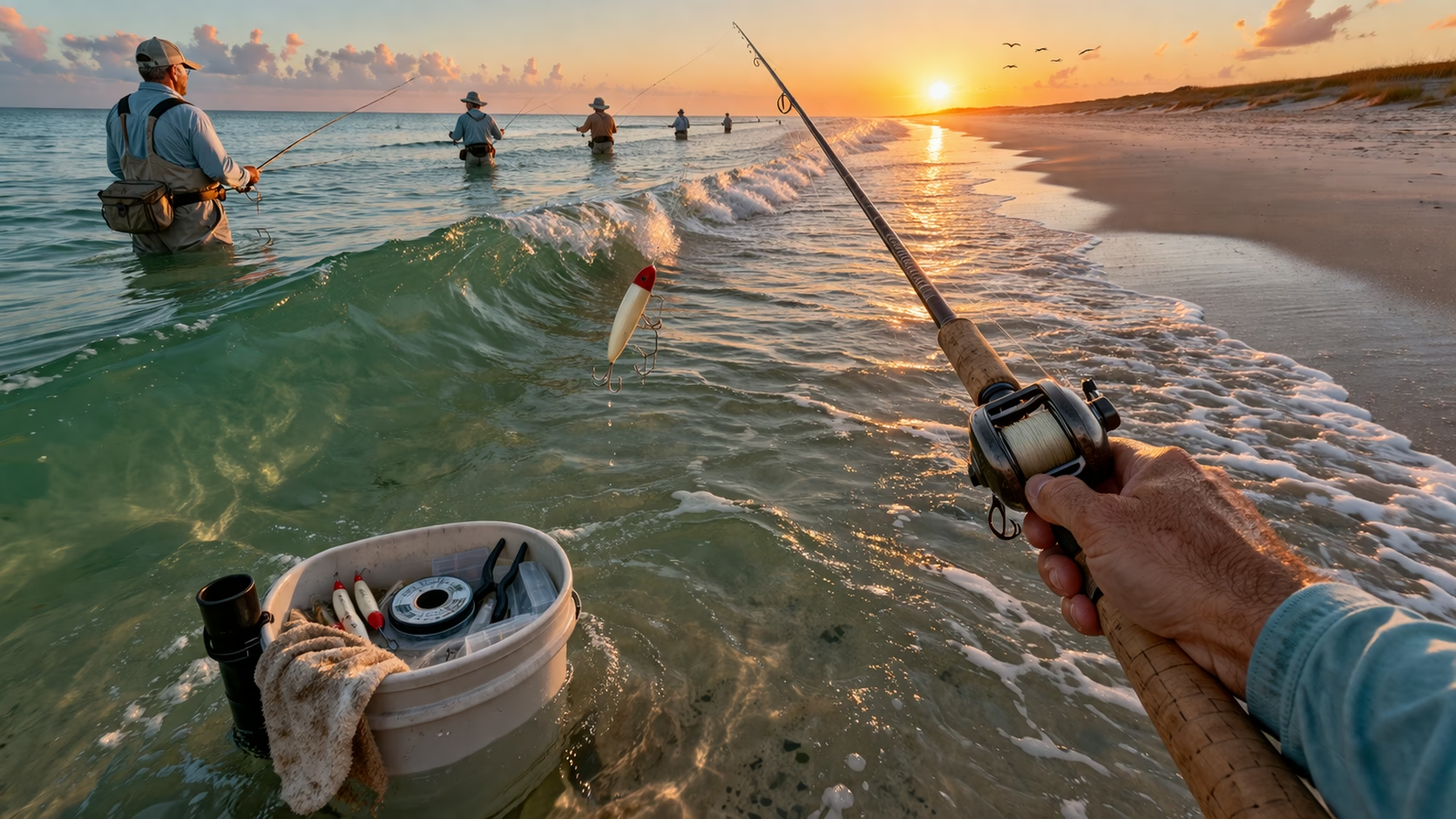
All six to eight of us would hit the water at daylight and ease out to the first sandbar. We spread out about 20 yards apart, lined up parallel to the beach, and waited for schools of trout to come through. They usually did not keep us waiting long. Speckled trout are made for that first light feed, and when they are active, things happen fast.
We started each morning with topwaters. Pop-Rs, Zara Spooks, Jumpin’ Minnows, floating MirrOlures, and Chug Bugs all got their turn. If the trout were really aggressive, we worked those baits fast and covered water. When the fish were not crashing them as hard, we slowed everything down. That is surf fishing in a nutshell. Let the fish tell you how they want it.
We stayed with the topwaters as long as the fish would have them. Usually by around 7:30, that surface bite would begin to taper off. Since every morning can be a little different, we stuck with those plugs as long as we could before making a change.
When the topwater bite slowed, we switched over to MirrOlures and kept moving down the beach, still working from the first sandbar. The most productive retrieve was a twitch-and-fall. Red head with a yellow body proved to be the best producer day in and day out. Some colors may look good in the tackle box, but that one looked best in a trout’s mouth.
By around 9:00, we would move out to the second sandbar and keep covering water down the beachfront. Most of the trout we caught ran from two to three pounds, and limits were common. I lost count of how many fish I culled over the course of that week.
Then one morning the beach gave us something extra.
A couple of us found ourselves into some truly heavy specks. We both ended up with limits of four- and five-pound trout, and it was probably the finest stringer of specks I have ever put together. My own limit came in the first 20 minutes of daylight on a bone-colored Jumpin’ Minnow, all within 30 feet of the beach. Those fish were in less than three feet of water during that first half hour of daylight.
That will make your heart beat a little harder.
The surf that morning was slick calm, calmer than I had ever seen it. I spent the rest of the morning throwing a MirrOlure, trying to upgrade, but I could not catch another fish that could hold a candle to the giants already hanging on my stringer. That is a fine problem to have.
Speckled trout are hard fighters, and they are notorious for throwing hooks because of their tender mouths. That means your tackle needs to match the job. I use a slow-action 7 1/2-foot Fenwick Gulf Coast Seahawk rod, and it is just about right for this kind of fishing. It gives you the casting distance you need, and the softer action absorbs those violent headshakes that so often pull hooks loose.
I fished a Shimano Calcutta all week and had no trouble with it in the salt. Spooled with 15-pound Saltline, it handled everything I asked of it, although one fish hit my MirrOlure and headed south like it had business in Mexico. It left me with a bare spool. My guess is it was a jackfish, but whatever it was, it made its point and kept right on going.
That is another part of the coast that keeps a man coming back. You never quite know what may grab hold next.
Saltwater fishing has always been a good change of pace for me. When the water is right, it can be as exciting as any fishing Texas has to offer. We were fortunate enough to hit Galveston when everything lined up exactly the way a fisherman hopes it will. The water was green, the surf was calm, the trout were feeding, and for nine days the beachfront flat came alive.
Trips like that do not come around every day.
But when they do, they remind you why men keep making that drive to the coast year after year. There is just something about easing into that first sandbar at daylight, throwing a topwater into green Gulf water, and waiting for a speckled trout to blow a hole in the surface. When the beach is right, there is no sweeter music.
That is why, every fall, I find myself headed back to the beach.

0 Comments