
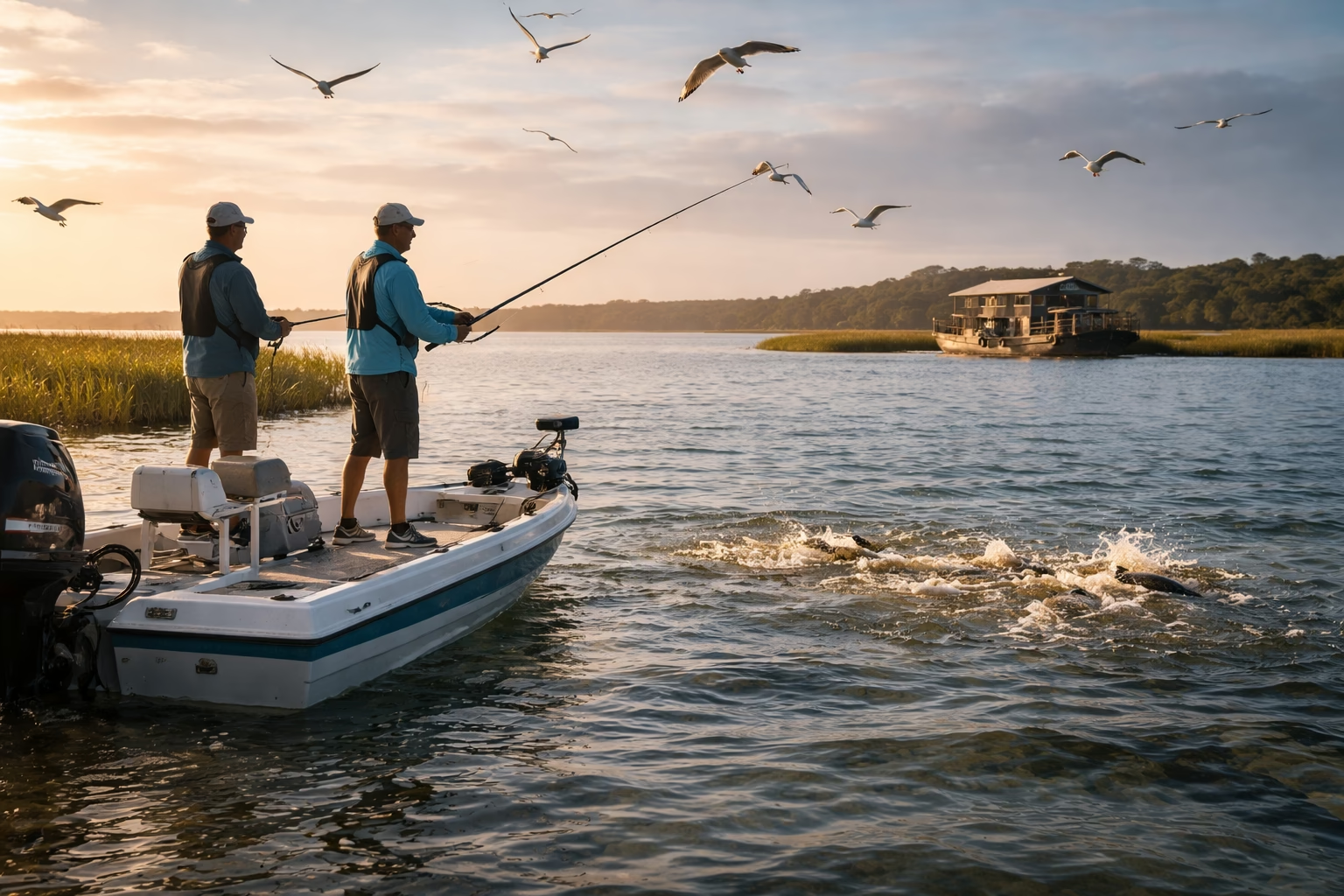
Last month I had the chance to fish the Texas coast with two friends of mine, Brian and Darren Broaddus, and from the moment the trip began, I had a feeling it was going to be one of those outings a man remembers for a long time.
Their family, along with another family, owns a floating house barge in the Christmas Bay area. Christmas Bay lies at the far west end of West Bay, within sight of the San Luis Pass toll bridge, and for a fisherman it is about as close to a dream setup as you can get. The three of us had planned a five-day trip to the “barge,” beginning on May 29. Planning, preparation, and a fair amount of anticipation always come with a trip like that, at least for me.
We arrived at Bastrop Marina around noon on Monday. The boat was loaded with our gear, groceries, and clothes for the week. While Brian and Darren went through their usual launching routine, I went in to pay the launch fee. Before long, we were headed down Bastrop Bayou toward Christmas Bay.
About halfway there, we passed the mouth of Lost Lake and spotted a swarm of birds working over a small reef. Brian stopped the boat and mentioned that birds often worked that area and that it was usually trout underneath them. We eased upwind of the flock, tied on pumpkinseed-and-chartreuse shad tails, and set up for a drift.
The boat was packed with gear, so it took a bit of maneuvering to get ready, but once we drifted into casting range, the action came fast. Darren cast first and hooked up immediately. I fired into the birds and was instantly on. Brian cast in and he was hooked up too. We had drifted right into a school of small trout, mostly in the fourteen- to sixteen-inch range. The birds stayed just ahead of us downwind, and for about fifteen minutes we stayed with the school. Nearly every cast brought a strike. There were not many keepers, but there was no shortage of action.
Eventually we drifted around the school and lost casting range. Rather than set up for another drift right then, we agreed to head on to the barge, unload the boat, and come back later. I offered to stay and wade, but Brian and Darren insisted I help unload.
We ran the Intracoastal into a small back bay where the barge was moored. Once we pulled up and unloaded, I got my first real look at the place. Calling it a sportsman’s dream would not be an exaggeration. The barge was a genuine work of art, built by fishermen and clearly designed by men who understood exactly what mattered. The deck wrapped all the way around the house, with a fish-cleaning station on one corner. Inside were two sets of bunk beds, a kitchen, and a table with chairs. It was simple, practical, and perfect.
Still impressed by the whole setup, I sat on the deck for a moment just taking it in. Brian and Darren could tell how much I liked it, and they got a kick out of my reaction. Truth be told, they were just as glad to be there as I was.
Not long after, we boarded the eighteen-foot “scooter boat” and took off. That boat was a different animal altogether. It had no gunwales whatsoever. The deck simply ended, and then there was water. It was my first time fishing from a boat like that, so I had to pay attention not to step where there was nothing underfoot. On the other hand, landing fish was easy. You simply brought them alongside and slid them onto the deck. Only a good fish required the net.
We ran back around to Lost Lake and found the birds over what was probably the same school of trout. The action was much the same, fish after fish, with only a few keepers mixed in. We stayed with them for an hour or so, then finally left them biting in search of larger trout. We drifted a few shallow reefs, picked up scattered fish for the rest of the afternoon, and eventually headed back to the barge for the night.
That evening we ate supper, talked over the day, and laid plans for the next morning.
The following day we headed into West Bay looking for birds again. Darren spotted some in the distance, and we made our way toward them. Brian got us set up upwind and put us on another drift. Once we reached casting range, it was automatic all over again. Nearly every cast produced a small trout, and every now and then a keeper would show up. We left those birds for another flock that had formed about a half mile away, only to find more of the same: lots of trout, most of them undersized, with a few keepers mixed in. We spent the whole morning hopping from flock to flock, looking for a school of bigger fish.
Back at the barge for lunch, we decided to spend the afternoon in the back bays looking for redfish. We stretched out for a short nap before heading back out, but that did not last long. Right outside my window, no more than twenty yards away, four gulls were dive-bombing the water and working like mad. We bolted outside, grabbed a rod from the boat, and cast a tail beneath them. Brian, standing on the barge, hooked up immediately, and I hooked up from the boat. We both landed trout just over the fifteen-inch limit.
That was almost too much to believe, keeper trout caught right from the barge. That put an end to napping.
We headed back out and flagged down a shrimp boat motoring along the Intracoastal. Pulling alongside, we bought a quart of live shrimp. From there we moved into a small bay and began drifting reefs, popping live shrimp over them in search of redfish. For several hours we worked different areas where Brian and Darren had caught fish before. By around 7:30, the tally stood at a few trout and no reds.
We were running short on daylight and starting to think about supper when Brian said we would try one last spot. He pulled us up to a peppergrass shoreline with a small shell point jutting out from it. We started a drift and worked the edge carefully. Just as we passed the point, Darren got hammered. His rod bowed hard, and he was instantly hooked up. I popped my cork a couple of times, and then it vanished. I leaned into the fish as line came peeling off the spool. Freight train, I thought.
Darren had not even turned his fish yet. He just sat there with a bent rod and a grin, waiting until he could finally start putting pressure on it. After a couple of hard minutes, my fish grudgingly came to the boat and Brian slipped the net under it. It measured twenty-three inches, a solid redfish weighing about four pounds. Darren’s fish took longer. After a stout battle, it finally wore down and we netted it. That fish measured twenty-seven and a quarter inches.
We made that same drift several more times before dark and caught redfish on every pass. By the time we finished, we had four keepers in the box and had released around fifteen more that were just under the legal limit.
The rest of the week stayed just as good. We rode out a couple of thunder squalls, listened to two Rockets games on the radio, and enjoyed the kind of weather and fishing a man hopes for but does not always get. The birds kept working in West Bay, and we caught plenty of trout, including several fish pushing five pounds. We also stayed on that same school of reds throughout the week.
By Friday afternoon, it was hard to leave. I had taken a real liking to the barge and to the whole rhythm of life that came with it. Brian and Darren knew they would be back soon with their dad, and I found myself hoping I might get the chance to return someday too.
Some trips are good because the fishing is good. Others stand out because of the company, the setting, and the feeling that for a few days you managed to step outside the usual routines of life and into something rare. This trip had all of that. Fine friends, steady action, a one-of-a-kind place to stay, and the kind of coastal water that keeps a fisherman looking over the horizon for what might happen next.
What a trip.
0 Comments