
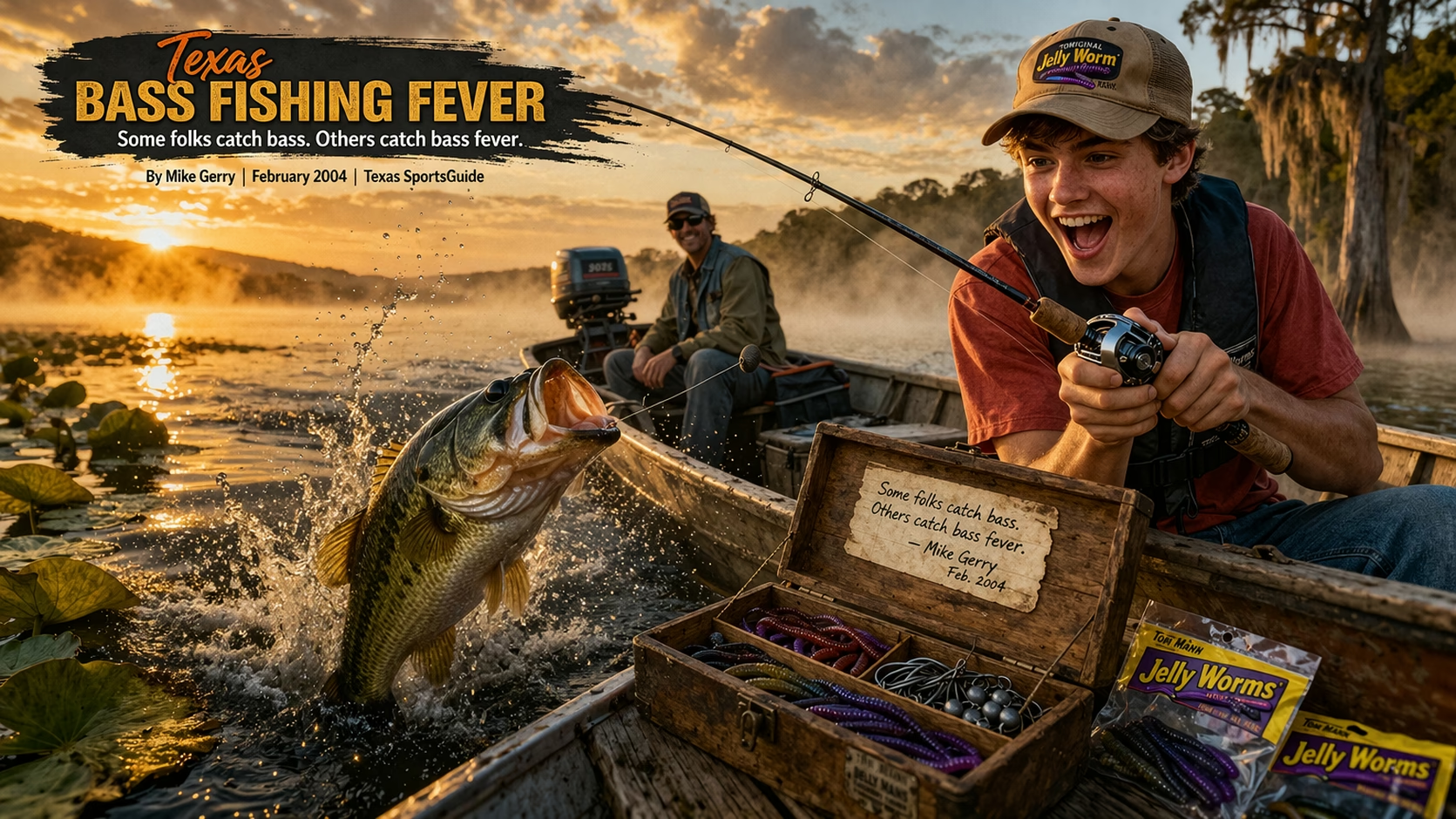
Some folks catch bass.
Others catch bass fever.
If you have ever hooked your first quality largemouth and felt your pulse jump clear into your throat, then you already know what I am talking about. One good bass is all it takes. From that point on, the hooks are not just in the fish, they are in you. And once that fever sets in, it has a way of spreading through every corner of your life.
This column is aimed mostly at junior bass anglers and young adults who have been bitten by that bug. But truth be told, plenty of middle-aged and older fishermen know the symptoms just as well. They have had the fever for years. In fact, most of them never really got over it.
Let’s face it, once you tangle with your first good bass, it is over. You are done for. Suddenly tackle catalogs make more sense than the evening news. Saturday mornings start long before daylight. Every pond, creek, cove, and reservoir begins to look like a place where the next big one might be waiting.
That is bass fever.
Owning and operating a three-day on-the-water bass fishing school, running a bass charter service, co-hosting coast-to-coast radio and television shows, teaching seminars, fishing tournaments when time allows, and writing articles that have been read in magazines and on more than 200 outdoor internet sites has put me in touch with a lot of anglers over the years. I get a steady stream of emails and phone calls, and I would estimate that about 70 percent of them come from anglers between roughly 12 years old and 35 years young.
They call to sign up for schools, book trips, and ask questions on just about every topic imaginable related to bass fishing. Men, women, boys, and girls all seem to be chasing the same thing: a better understanding of one of the greatest sports in America.
And make no mistake, bass fishing has become exactly that.
The sport has exploded to the point that it is now widely recognized as America’s number one freshwater sport, and for good reason. It is exciting, challenging, frustrating, rewarding, and, above all, addictive. Bass fishing is no longer just a pastime. It is a multi-billion-dollar industry built around a fish that can make grown adults act like kids and kids dream like grown men.
So with all that in mind, let’s get to the questions I hear the most.
The number one subject, by a long shot, is equipment.
Anglers want to know what kind of boat to buy, what rod and reel they need, what line to spool up, which electronics are worth owning, and what hard baits, soft plastics, hooks, weights, colors, scents, and storage boxes they ought to have in the boat. Then, right behind that, comes the next big question:
“How the heck do I use all this stuff?”
After that come questions about water conditions, weather, locating fish, choosing baits, and presentation. Those are all fair questions. But there is one thing that really bothers me, and it is the number of anglers who think they need to spend a year’s wages just to get started in bass fishing.
That simply is not true.
In fact, I learned that lesson the hard way.
Back in the early 1970s, while serving my country in the U.S. Navy, I had a good friend named Jim who invited me to go fishing one weekend with him and his brother. At that point, I was what you might call a part-time angler, and by part-time I mean maybe twice a year with a worm, hook, and bobber. I did not know much about bass, and I certainly did not know how to catch one.
Still, I told him I would love to go.
That weekend changed everything.
Jim told me not to bring a thing but myself, so I showed up at his house, which was near the California Delta, expecting another day of soaking worms and watching bobbers. Instead, we launched an old wooden boat that looked like it may have seen action in World War I, climbed aboard, and ran up the river a short distance.
A few minutes later, Jim dropped anchor and handed me a rod and reel. Naturally, I asked where the bobbers, hooks, and worms were.
Jim just smiled and said he had forgotten to stop and buy worms on the way to the river.
That was not exactly reassuring.
Then he reached into a leather bag, pulled out a tackle box, and opened it. Inside I saw a few hooks, some sinkers, and several bags of purple rubber worms. For those of you old enough to remember, they were some of the original Tom Mann Jelly Worms.
Jim rigged one up for me Texas-style, handed me the rod, and told me to cast toward a patch of lily pads about 20 yards away. So I did. Then, like any proper bobber fisherman, I laid the rod down.
Jim immediately told me to pick it back up and hold it lightly while keeping the slack out of the line.
Then it happened.
Something grabbed hold, the rod bent over, and line started peeling off the reel. I did not even know how to set a drag in those days. Jim reached over, tightened it up, and told me not to give the fish any slack.
A few moments later, I landed a 5 1/2-pound largemouth bass.
From that point on, it was all over.
I went every chance I got, and yes, I had a full-blown case of bass fever.
Now here is the part I want younger anglers and newcomers to really hear.
If I had had a mentor, an instructor, or just somebody willing to help me get started after Jim got transferred, I could have saved enough money over the next few years to buy a brand-new car or truck. Instead, I did what too many anglers still do today.
I started buying everything that looked good.
The truth is, for a long time I simply did not know what to buy or what to do, because nobody was willing to help. Back then, bass fishing was still gaining steam, and many anglers guarded information like it was buried gold. Some still do.
But there are better ways to learn.
Here are a few simple rules that can save you a pile of money and a great deal of frustration.
First, do not buy everything on the shelf that catches your eye. A handful of basic, proven baits will catch bass almost anywhere in the country. Bass are bass. They may live in different waters, but they behave more alike than many people think. What matters most is learning how and when to use those baits.
Second, read all you can, but do not stop there. Try to find an experienced angler willing to share knowledge. Most bass fishermen, and I do mean most, are good people who enjoy talking fishing and helping others along.
Third, ask questions. Spend time around tackle shops, boat ramps, and bait stores. Listen carefully. Not every tip will be gold, but enough of them will help you grow.
Fourth, enroll in a bass fishing school if you can. Not just mine. There are others around the country doing a good job teaching the sport. A quality school can shorten the learning curve in a big hurry.
And finally, always think safety first on the water and treat other anglers with courtesy. Fishing is supposed to be enjoyable. A little common sense and respect go a long way.
As for equipment, buy the best quality you can reasonably afford, but do not convince yourself that success depends on owning the most expensive rod, reel, or boat in the parking lot. The fish do not care what you paid for your tackle.
Bass fishing can become a career for some. For others, it will remain a passion, a weekend addiction, or a lifelong escape. Either way, the road has its share of ups and downs. There will be lean days, frustrating days, and days when nothing seems to work. But if you stick with it, work hard, keep learning, and stay humble, the rewards are there.
Bass fever is real enough.
And once you have it, there is a good chance you will never want the cure.



0 Comments