
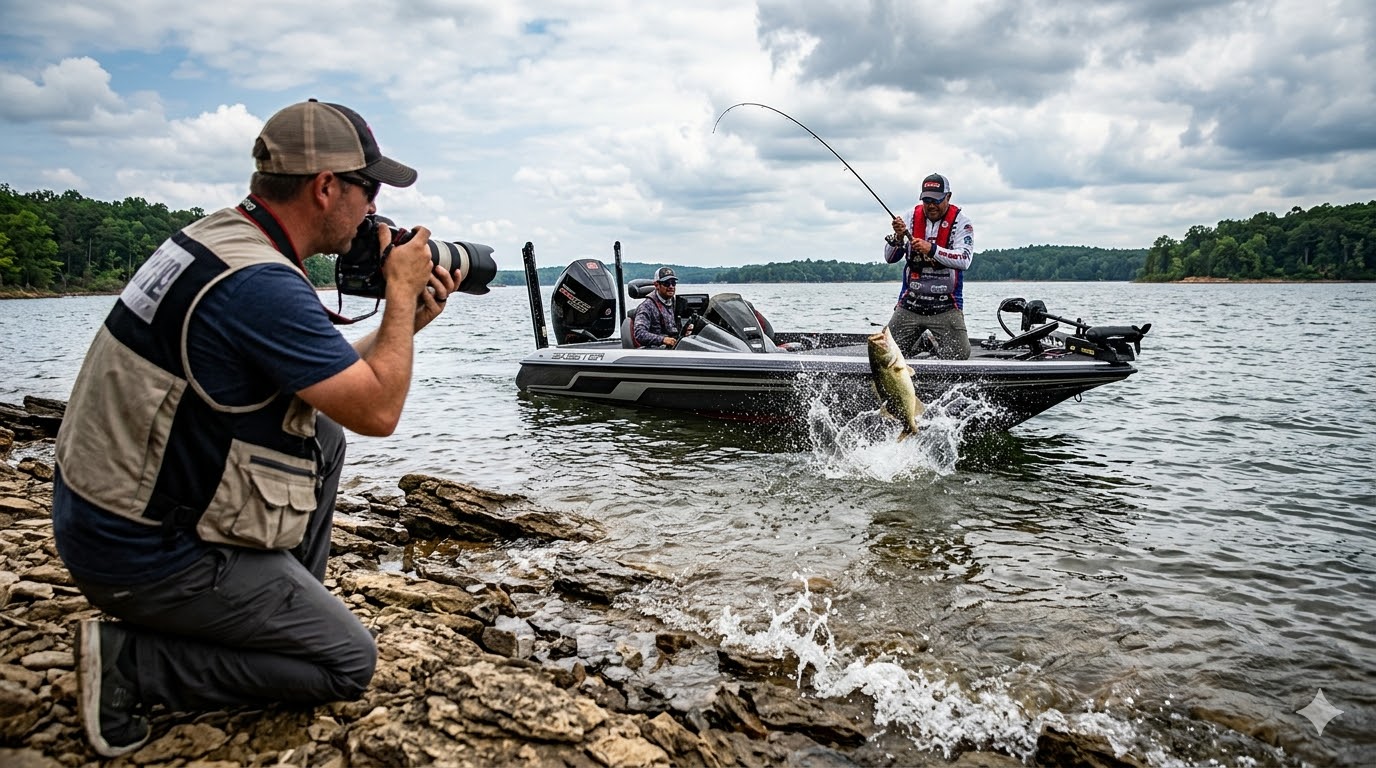
Tournament bass fishing has always been a test of more than just an angler’s ability to locate fish. It is a contest of judgment, patience, endurance, and sometimes plain stubborn grit. Anyone who has spent time on the sprawling waters of Sam Rayburn Reservoir, affectionately called “Big Sam” by Texas anglers, knows the lake can be generous one moment and brutally unforgiving the next.
During the 1996 BASSMASTER Texas Invitational, young East Texas fishing guide Bill Cannan experienced both sides of that coin in a single day. What began as a banner day on the water nearly turned into a disaster before the afternoon was over. Yet by the time the tournament ended, Cannan had etched his name into the results of a major event and taken another step forward in what was shaping up to be a promising professional career.
A Productive Practice on the North End
Like most successful tournament anglers, Cannan had done his homework during practice days leading up to the event. His scouting runs led him to a group of quality fish on the north end of Sam Rayburn Reservoir, an area known for its productive shallow structure during certain seasonal conditions.
The fish he located were holding shallow and feeding aggressively. Rayburn bass often move into skinny water when the conditions are right, and during practice Cannan discovered a pattern that looked promising.
His weapon of choice was a spinnerbait, one of the most reliable lures an angler can throw when bass are roaming shallow water and actively feeding.
When the blades spin through stained water and flash in the light, a spinnerbait can trigger reaction strikes from bass that might ignore other presentations. That proved to be exactly the case during practice. The fish were there, and they were ready to bite.
Cannan knew he had found something special.
Day One: Rayburn Bass on the Attack
When the first day of competition arrived, Cannan wasted no time getting back to the water where he had located those fish.
Tournament morning on Sam Rayburn often carries a mix of excitement and tension. Dozens of bass boats scatter across the lake at takeoff, each angler racing toward a carefully chosen stretch of water where they hope their practice pattern will hold.
When Cannan arrived at his area, he found exactly what he had hoped for.
The fish were still there.
Even better, they were aggressive.
Working his spinnerbait through shallow water, Cannan quickly discovered that the bass were not just biting—they were crashing the lure.
Spinnerbait fishing at its best can feel explosive. A cast lands near a stump, a grass line, or a piece of submerged timber. The blades begin turning. Then suddenly the rod loads up as a bass slams the bait with violent force.
That is exactly what Cannan experienced.
Throughout the morning and into the afternoon, the bite stayed strong. By the time the day’s fishing was nearly over, Cannan and his partner had boated more than forty bass.
For tournament anglers, that kind of action can make a long day feel short. When the fish are biting, time on the water seems to pass in a blur of casts, strikes, and splashing fish.
But while the bass were cooperating, something else was beginning to change.
A Front Approaches
As the day progressed, the weather began shifting.
A strong cold front was pushing in from the northwest, and with it came rising winds. On a massive reservoir like Sam Rayburn, wind can transform the lake in a hurry.
Protected creeks and coves may remain calm while open sections of the lake build into rolling waves that test even the most experienced boaters.
Cannan had been fishing inside a creek arm that provided protection from the growing wind. While he continued to catch fish, the conditions outside his sheltered water were steadily deteriorating.
Tournament anglers always keep one eye on the clock. Getting back to the weigh-in on time is mandatory, and being late can mean severe penalties or disqualification.
About one hour before his scheduled weigh-in, Cannan packed up and headed toward the main lake.
That is when the real challenge began.
The Run Back to Weigh-In
The weigh-in site was twenty miles down the lake.
Normally that distance would be nothing more than a routine run in a modern bass boat. But when Cannan idled out of the creek and into open water, he immediately realized conditions had changed dramatically.
The wind was now howling across the lake, gusting to nearly 30 miles per hour.
Out on the main body of Sam Rayburn, the waves had built into towering rollers.
Eight-foot waves are not unheard of on large reservoirs during strong winds, but seeing them in person is something entirely different. Walls of water rise and collapse like ocean surf, and navigating through them demands both skill and nerve.
Cannan suddenly faced a serious problem.
He had to cross that water to reach the weigh-in.
Big Sam Turns Rough
Anyone who has spent time on Rayburn knows that the lake can get rough in a hurry. When strong north winds sweep across the open water, long stretches of fetch allow waves to build quickly.
On that afternoon during the Invitational, the lake looked more like the Gulf of Mexico than an inland reservoir.
Cannan pointed his boat toward the weigh-in site and began making his way through the waves. Each crest and trough forced him to throttle carefully and keep the boat under control.
Progress was slow.
And then things got worse.
Trouble on the Water
In the middle of that pounding run across the lake, Cannan’s motor failed.
Suddenly the challenge had shifted from difficult to dangerous.
With waves breaking around him and the wind pushing hard across the lake, the situation forced a decision no angler ever wants to make.
Cannan had to abandon the boat.
Anyone who has heard the full story knows it is filled with the kind of tense, heart-stopping moments that make tournament fishing so unpredictable. Equipment failure on a calm day is inconvenient. In heavy waves it becomes something else entirely.
Cannan later described every detail of the ordeal in his own words, and the story is well worth reading from beginning to end.
For now, it is enough to say that the young guide handled the situation with the calm judgment that comes only from time spent on the water.
A Strong Finish
Despite the chaos and danger of that afternoon, Cannan managed to complete the event and post an impressive final weight.
When the scales closed, his two-day total reached 50 pounds 9 ounces.
That catch placed him just three-tenths of a pound behind veteran angler Lonnie Stanley, one of the most respected competitors on the professional bass circuit.
For a young guide competing in a major tournament, it was an outstanding performance.
Cannan’s finish earned him a brand-new Ranger 481 bass boat, fully rigged and ready for the water, along with $2,000 in prize money.
For any angler chasing the professional dream, that kind of result represents both validation and opportunity.
More Than a Tournament Angler
Readers of Texas SportsGuide were already familiar with Bill Cannan long before that tournament result.
Since the beginning of his professional career, Cannan had served as a staff writer for the magazine, sharing his fishing knowledge with anglers across the state.
Like many guides who spend hundreds of days on the water each year, Cannan developed a deep understanding of the lakes he fished regularly.
His home waters included Lake Livingston, and his fishing reports for Texas SportsGuide quickly became a valuable resource for anglers looking to understand seasonal patterns and productive techniques on that lake.
Cannan also built a strong reputation as a successful East Texas fishing guide, helping clients experience the thrill of catching bass on some of the region’s best waters.
Support from the Local Fishing Community
Throughout his early career, Cannan received support from one of the long-time advertisers in Texas SportsGuide.
He was sponsored by Family Boating Center, Houston’s only Nitro and Tracker dealer at the time.
Local dealers and businesses have always played an important role in the growth of professional bass fishing in Texas. By supporting guides and tournament anglers, they help build the fishing culture that keeps the sport thriving.
For a young pro like Cannan, that support provided both encouragement and practical help as he continued developing his career.
A Career Still in Motion
Looking back at that 1996 tournament, it is easy to see it as a turning point.
The performance proved that Cannan could compete at a high level against seasoned veterans. It also demonstrated something every successful angler must possess.
Resilience.
Tournament fishing rarely unfolds exactly as planned. Weather changes, equipment fails, fish disappear, and unexpected challenges arise.
The anglers who succeed are the ones who keep adapting.
Cannan’s experience on Sam Rayburn showed exactly that quality.
Watching a Young Pro Grow
For readers of Texas SportsGuide, the story carried a special kind of satisfaction.
Many had followed Cannan’s writing and fishing reports for years. Watching a familiar name from the pages of the magazine step onto the tournament stage and perform well felt like seeing one of their own succeed.
And if that day on Sam Rayburn was any indication, it seemed likely that anglers would continue hearing the name Bill Cannan for many years to come.
Whether through his fishing reports, guide service, or tournament appearances, his presence in the Texas bass fishing community was clearly just getting started.
Contacting Bill Cannan
Anglers interested in learning more about fishing Lake Livingston could find Bill Cannan’s contact information in his regular fishing report within Texas SportsGuide.
His phone number was listed at the end of the report as well as in his guide advertisement on that page.
For anyone looking to experience East Texas bass fishing with a knowledgeable guide who spends countless days on the water, a trip with Cannan offered both education and excitement.
And if the events of that blustery day on Sam Rayburn proved anything, it was this:
When the wind starts blowing and the lake turns rough, experience matters.


0 Comments