
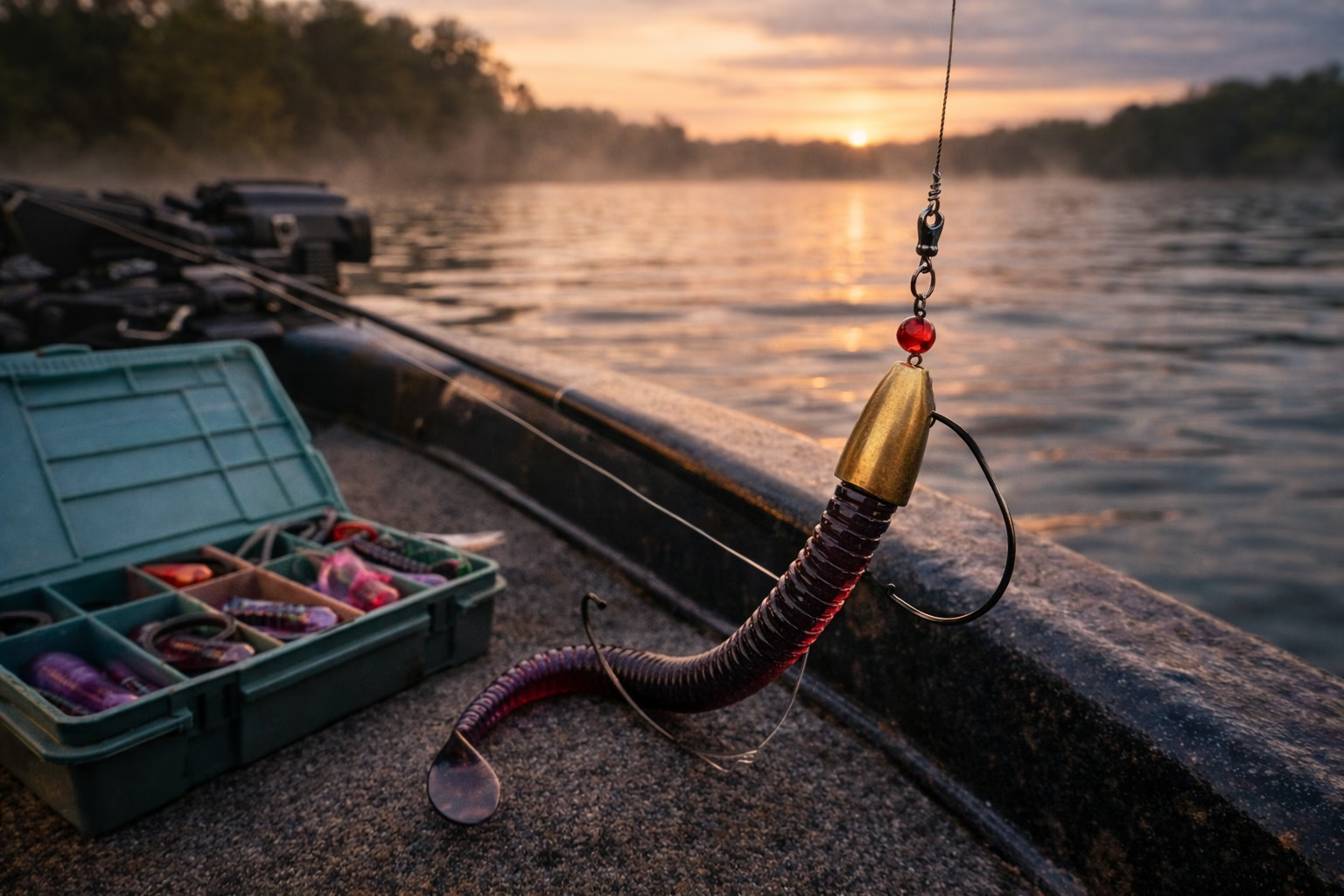
If there is one bass-fishing technique that has earned its place on Texas structure water, it is the Carolina rig.
It is not flashy. It is not complicated. And it is not new. But when black bass set up on deep structure, there are few methods more effective or more dependable. On East Texas lakes, where much of the best structure lies hidden well below the surface, the Carolina rig remains one of the best ways I know to reach fish and keep a worm in the strike zone.
Take Lake Conroe as an example. It is loaded with structure: pond dams, old roadbeds, railroad trestles, creek channels, ridges, and submerged timber. Much of that structure lies out of sight, sometimes in water as deep as fifty feet. That is exactly the kind of water the Carolina rig was built for.
What makes the Carolina rig so effective is the way it separates the weight from the worm. Because the sinker is not fixed directly to the bait, you can use a heavy weight without killing the worm’s natural action. That gives you the best of both worlds: enough weight to get down quickly and stay in contact with deep structure, while still allowing the worm to move, flutter, and look alive behind it.
That heavy weight is one of the system’s greatest advantages.
Even in twenty feet of water or more, a Carolina rig with a three-quarter- to one-ounce sinker will get to the bottom fast and allow you to stay in touch with what is down there. That constant bottom contact is critical. It helps keep the bait in the strike zone longer and lets you feel the contours, cover, and changes that make deep-water structure fishing so productive.
And because deep-water fishing usually calls for long casts, the Carolina rig shines there too. Long casts cover more water, probe more structure, and keep the bait moving naturally across the bottom.
The rig itself is straightforward, but it does require being put together correctly.
To rig a Carolina worm, you need a three-quarter- to one-ounce brass worm weight, a glass bead, a barrel swivel, a three-foot leader, and a No. 2 hook. Start by cutting a piece of line about three feet long for the leader and setting it aside. Then take the line coming from your rod and run it through the brass weight, followed by the glass bead. Slide both up the line and tie that line to one end of the barrel swivel. Tie your three-foot leader to the other end of the swivel. Then tie the hook to the loose end of the leader and rig the worm on it just as you would for a Texas rig.
That arrangement serves more than one purpose.
The brass weight and glass bead create a clicking sound each time the rig is pulled across the bottom. That noise often resembles the sound of a crawfish popping its tail as it moves, and since bass naturally feed on crawfish, they are often drawn to that sound. In that sense, the Carolina rig is not just a deep-water presentation. It is also a sound-producing presentation.
There is another reason I favor brass over lead.
Brass is better for the environment. Every time a sinker is broken off and left on the bottom, it stays there. One lost weight may not seem like much, but multiply that by countless fishermen over many years, and it adds up. Lead accumulates in the lakes we fish. Brass, on the other hand, does not introduce the same harmful contamination. For that reason alone, I believe brass weights are the better choice, and I would not be surprised if lead weights are eventually phased out in favor of safer alternatives.
Rod selection also matters.
A seven-foot heavy-action rod makes the Carolina rig far easier to cast and fish. That long leader can feel awkward on a shorter rod, especially when long casts are required. The longer rod handles the rig more smoothly and, just as importantly, gives you the leverage you need for a solid hookset at the end of a long cast.
That hookset matters more than many anglers realize.
When you are dragging a Carolina rig across deep structure, you may have ninety feet of line out. With that much line in the water, you need a rod long enough to generate the power required to overcome line stretch and drive the hook home.
Fishing the Carolina rig itself is really one of the simpler forms of worm fishing.
Once you are in the area you want to fish, cast the rig toward the structure and let it settle to the bottom. Quite often, the strike will come right then. The sinker drops quickly, but the worm lags behind, suspending briefly before fluttering down. That slow, tantalizing fall is one of the most important features of the Carolina rig, and it accounts for a lot of bites.
After the rig reaches bottom, let it sit for twenty to thirty seconds before beginning your retrieve. Hold the rod parallel to the water and about forty-five degrees away from the bait. Then slowly turn the reel handle, about one full revolution every ten seconds. The idea is not to race the bait along. The idea is to crawl it, feel everything, and keep that worm in contact with the bottom as naturally as possible.
If the rig comes across a piece of cover, such as a log, stump, or tree, let it pause and settle again. That is often where the strike zone lies. The weight bumps over the structure, and the worm follows behind with that soft, fluttering fall. Many bass simply cannot stand it.
Detecting strikes on a Carolina rig takes concentration.
Some bites feel like a few light taps. Others feel like a faint, pulsing pressure. Every now and then, a fish will inhale the bait so hard it nearly jerks the rod from your hands. But most of the time, the bites are subtle. That is why focus is so important. A fisherman has to stay dialed in.
When you do detect a strike, a sweeping hookset is usually the best answer. With so much line out, sweeping the rod sideways helps you establish a more direct line to the hook and generate more power. If you jerk straight up, you first have to lift the sinker before you get true pressure on the fish. Sweeping through the hookset creates a better angle and improves your chances of driving the hook home.
Line choice is another key part of the system.
Carolina rigging deep structure means dragging across rocks, timber, stumps, and all sorts of rough bottom. You need a line strong enough to take that abuse. In recent years, braided lines made from Kevlar and polyethylene have changed the game for many anglers. Compared with traditional monofilament, braided line is smaller in diameter, much stronger for its size, far more sensitive, and has very little stretch.
That makes a big difference.
For example, ten-pound monofilament is roughly equal in diameter to thirty-pound braided line. Yet the braided line offers far more strength and much better feel. Because it stretches so little, it transmits bottom contact and subtle strikes much more clearly than monofilament. In deep-water structure fishing, that added sensitivity can mean the difference between detecting a light bite and never knowing it happened.
That is one more reason the Carolina rig remains such a valuable tool.
It is a system built for deep water, for structure, for subtle bites, and for anglers willing to slow down and pay attention. It is not fancy, but it is effective. And on many Texas lakes, especially when bass pull out to deeper structure, effectiveness is what counts.
The Carolina rig has stood the test of time for a reason. It gets down, stays in touch with the bottom, and lets a worm do what it does best. Learn to fish it properly, and it will put more bass in your boat.

0 Comments