
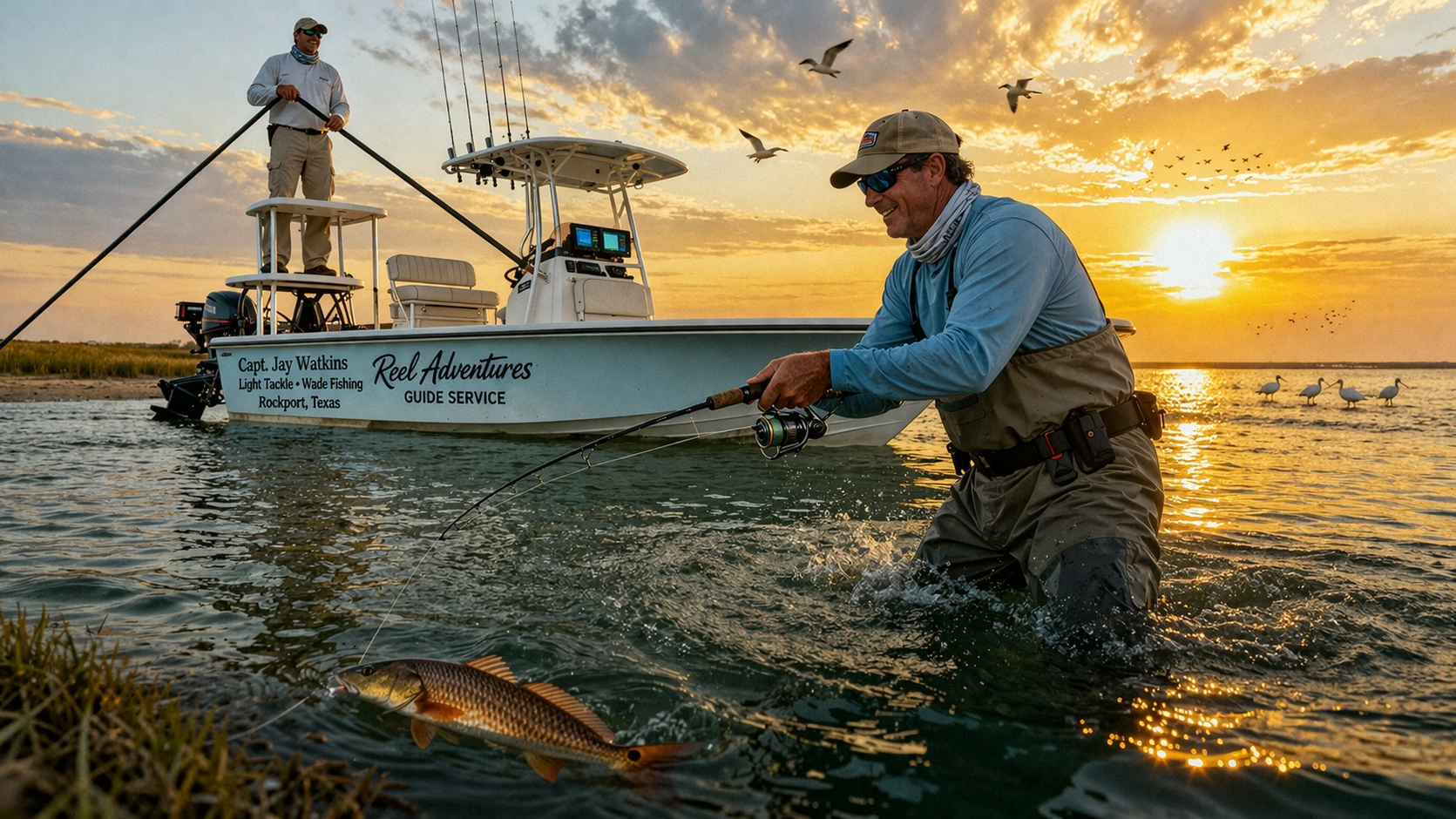
A good saltwater guide can shorten the learning curve, save you a lot of time and trouble, and turn an ordinary fishing trip into one you remember for years.
Whether you want to learn a new bay system or simply love to fish without the expense and hassle of owning a boat, hiring a professional guide can be both a pleasant and rewarding experience. But choosing the right guide takes a little homework. If the trip goes well, you may be starting a long relationship, so the search ought to be approached with the same care you would use when looking for a family doctor, a mechanic, or anyone else you may come to rely on.
Start by asking around.
Talk to friends you trust. Visit trade shows and visit with the guides there. Pay attention to who is getting mentioned in local newspapers, fishing reports, and magazines. Once you narrow the list down to a few who seem to fit what you are looking for, the real work begins.
I spoke with several well-known and respected guides from the Rockport and Galveston areas to get their thoughts on what keeps customers coming back year after year. Having fished with a couple of them myself, I also came away with a few observations that may help you in your own search.
One of the first things to consider is personality.
It is easy to focus only on catching fish, and certainly that matters. But there is more to a good trip than a full stringer. A guide is not just there to put you on fish. He is also the fellow you are going to spend the day with, often in close quarters, and the tone he sets can go a long way toward determining whether the trip feels rushed, relaxed, instructional, or enjoyable.
Captain Jay Watkins, a guide down around Rockport, says he tries to look at every trip as a fresh one.
“I try to get all my clients to enjoy the whole fishing experience,” he says. “By that I mean the hoped-for end result is catching fish, but being on the water and enjoying the surroundings, the birds, and just being outside for a day is all part of the whole thing.”
I happen to agree with him. Catching fish is what we all hope for, but the actual catching is often just the icing on what ought to be an already good day.
Equipment is another important factor.
Since many fishermen only do one or two types of fishing regularly, it pays to ask ahead of time what the guide provides and what the client is expected to bring. Does the guide furnish rods, reels, tackle, waders, or other gear? Or are you expected to show up ready from head to toe?
Galveston guide Captain Pat Murray says he keeps everything on hand that his customers could possibly need.
“Most of the people who fish with me prefer to use their own rods and reels,” Murray says, “but if someone doesn’t have the proper equipment for bay fishing, I keep extra rods and reels on the boat for them to use.”
He also keeps the lures on hand that are producing best at the time. Still, he understands that many anglers have confidence in certain baits.
“If someone has a particular lure they are comfortable using, I’ll try to persuade them to use what has been producing most recently, and I’ll have those on the boat.”
That is a sensible approach. A good guide ought to know what is working, but he should also be willing to work with a client’s comfort level when possible. One thing most guides do not provide, however, is food and drink, so that is something you will generally need to bring yourself.
Another thing worth considering is how a guide likes to fish.
Just as fishermen differ, guides differ too. Some prefer live bait. Others are primarily lure fishermen. Both Pat and Jay would rather fish artificials, but if a client wants to fish with live bait, most good guides will work with that. The key is knowing that ahead of time so your expectations match the kind of trip you are booking.
There are also practical details to clear up before you ever arrive at the boat ramp.
Years ago, many guides supplied nearly everything, rods, reels, lures, waders, leg guards, and just about anything else a customer might need. But as the cost of quality equipment climbed, that became too expensive for many guides to continue doing. These days, it is simply smart to ask questions beforehand.
The real value in hiring a professional guide, though, goes beyond tackle and boat rides.
The best thing about hiring a guide is having someone at your disposal for an entire day who knows the area, understands seasonal fish patterns, and can teach you things it might otherwise take years to learn on your own.
Galveston guide Captain Tim Young put it plainly.
“Most people don’t take advantage of the knowledge that a guide has spent a lot of years gathering,” he says. “That’s one reason to hire a guide, so that you can learn some of what they know without having to spend years of trial and error running around the bay using up gas and time.”
That is hard to argue with.
No matter what you are hiring a guide for, it helps to think in terms of what he can teach you and, more importantly, what you are willing to learn. A fisherman who pays attention on a guided trip can come away with much more than a few fish pictures. He can learn how tides affect a shoreline, how bait movement reveals feeding fish, how weather changes a pattern, how to position a boat, and how to work a lure in a way that produces. Without guides, many of us would have taken far longer to gain the knowledge we now take for granted.
If you plan to wade fish, that brings another list of things to consider.
Take a good pair of waders, a wading belt equipped with a hook remover, a stringer, and a lure pouch. Some guides may provide the belt and accessories, but many will expect you to bring your own. If you are not comfortable hand-grabbing a 27-inch redfish, you may also want to bring a short-handled dip net.
Personal rain gear is another item the fisherman is usually expected to bring. If the forecast looks wet, it is a must. Even if rain is not expected, a rain jacket can still be useful as a wading jacket on a breezy morning.
In the end, the best thing you can do is talk with the guide before the trip. Find out what kind of fishing you will be doing, what the guide provides, and what you need to bring. The more you know going in, the smoother the day will go once you hit the water.
A good guide can put you on fish.
The right guide can do something even better. He can leave you with a better understanding of the bay, more confidence in your fishing, and the kind of day that makes you want to book the next trip before the first one is even over.
0 Comments