
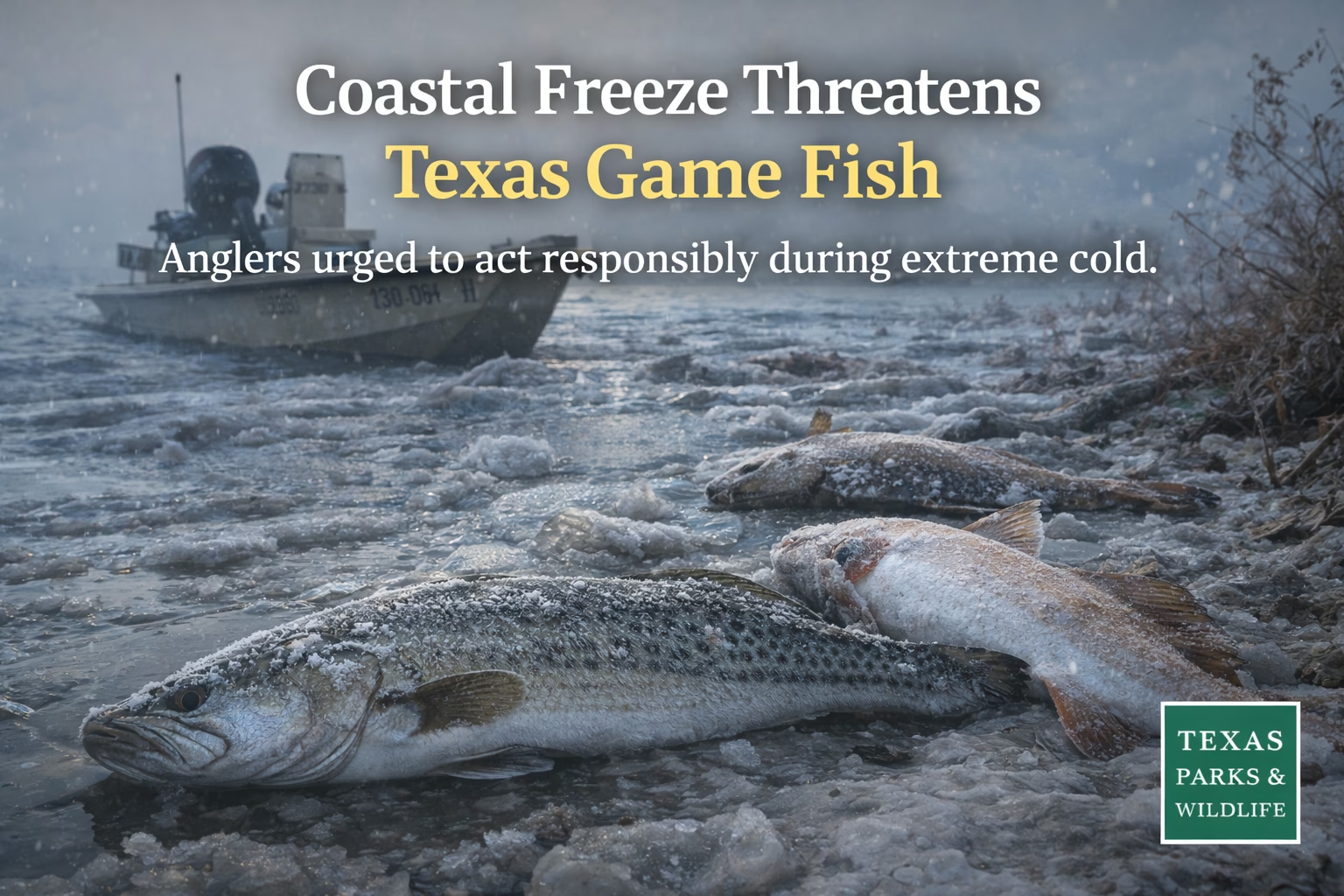
When a hard north wind sweeps down the Texas coast and the bays turn to glass, the fishing can look easy.
Too easy.
During a saltwater freeze, the same fish that spend their lives dodging predators and anglers alike suddenly become slow, disoriented, and vulnerable. It’s a moment that tests not just skill—but restraint.
Biologists and game wardens with the Texas Parks and Wildlife Department are closely monitoring current freeze conditions along the coast. While the event has not reached the level that would require emergency closures, officials are asking anglers to take a long view—and give the resource a little breathing room.
The species at risk read like a coastal angler’s roll call: red drum, spotted seatrout, snook, sharks, and tripletail. Under normal conditions, they’re tough, resilient fish. But when water temperatures plunge, many are forced into deeper pockets where they gather in tight numbers, moving slowly and struggling to recover.
That’s when pressure can do the most damage.
Game fish in Texas may only be taken by pole and line, and it is illegal to snag or foul-hook fish—an important rule any time, but especially critical during a freeze when fish are concentrated and easy targets.
“The high mortality that a freeze can cause may deplete fish stocks for years,” said Robin Riechers, Coastal Fisheries Division Science and Policy Director. “Protection of the surviving fish during the few days when they are especially vulnerable to capture would likely shorten the recovery time for coastal species, especially spotted seatrout.”
History backs that up.
Texas’ roughly two million acres of bays and estuaries are no strangers to extreme cold, but when it hits hard, the losses can be staggering. During the freeze of 1989, temperatures at Brownsville dropped to 16 degrees, and an estimated 11 million fish were lost—an impact that echoed across the coast for years.
That’s the kind of setback no one forgets.
The good news is that anglers can play a direct role in preventing history from repeating itself. By following regulations, avoiding stressed fish, and giving concentrated schools a wide berth, fishermen can help protect the breeding stock that will rebuild the fishery once temperatures rise.
If you’re on the water and see signs of trouble—large numbers of sluggish or cold-stunned fish, or evidence of a fish kill—TPWD asks that you report it. The Upper Coast Regional Office can be reached at (281) 534-0100, and the Lower Coast Regional Office at (361) 729-2328.
Out there, on a cold, quiet bay, the temptation can be strong.
But sometimes the best cast… is the one you don’t make.
0 Comments