
Some places aren’t built overnight—they’re reclaimed, restored, and patiently brought back to life.
Down in the Lower Rio Grande Valley, just outside Weslaco, Texas, one of those places is beginning to take shape.
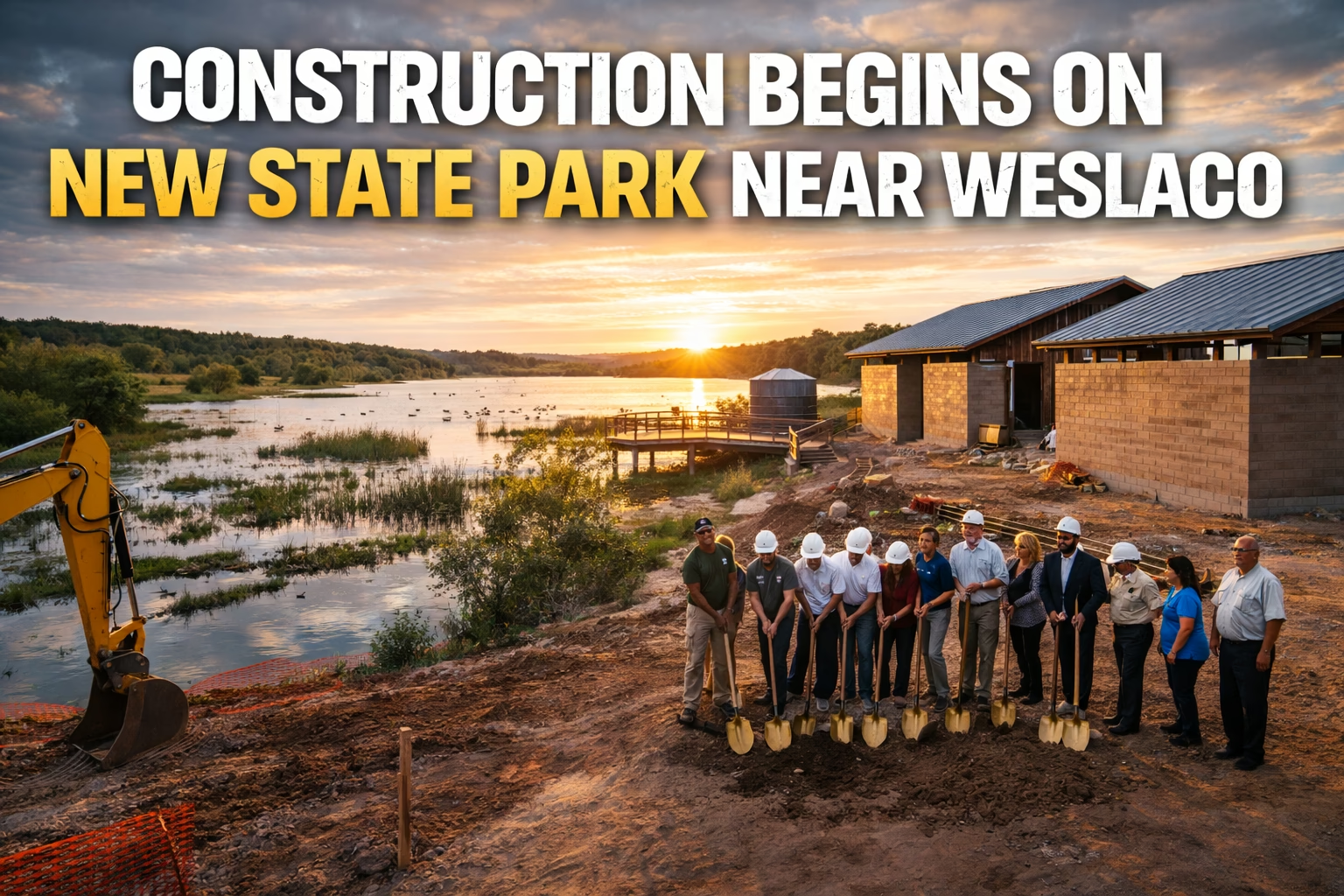
On July 28, ground was officially broken on a new state park at Estero Llano Grande State Park, part of the growing World Birding Center. What was once a patchwork of agricultural land and dry lakebed is being transformed into a thriving wetland sanctuary—one that promises to draw birders, photographers, and outdoor enthusiasts from across the country.
A Wetland Reborn
When completed, the 148-acre park will feature a 2,800-square-foot visitor center, miles of walking trails, an observation deck, and a network of restored wetlands designed to attract a remarkable diversity of birdlife.
But this isn’t just construction—it’s restoration on a grand scale.
Thousands of native plants have already taken root, including Montezuma bald cypress, sugar hackberry, and Sabal palm. Another wave of seedlings is scheduled for planting, gradually reshaping what was once a sorghum field into a living, breathing habitat.
Park manager Martha Martinez describes the vision simply: a wetland park unlike anything else in South Texas.
Built for People—and Birds
The design balances access with preservation.
Visitors will enter along a raised boardwalk, shaded by a wood-and-steel arbor, leading into a thoughtfully designed complex created by Lake Flato Architects and constructed by SpawGlass. The buildings, clad in clay block and cypress, will house classrooms, offices, and a gift shop—practical spaces that support both education and exploration.
Outside, the experience opens up.
A waterside observation deck will provide close-up views of ducks, stilts, and other water birds. Trails—many of them wheelchair accessible—will wind through wetlands and thorn forest alike, offering visitors a chance to move quietly through the habitat without disturbing it.
Even the landscaping serves a purpose. Native plantings and rainwater harvesting systems are designed to sustain both the environment and the wildlife it supports.
A Year-Round Spectacle
Wildlife experts already describe the site as a year-round “spectacle of birds.”
Shorebirds, waders, and waterfowl find both food and refuge here, while marsh species like bitterns and rails thrive in the dense fringe vegetation. During the heat of late summer, when water becomes scarce elsewhere in the Valley, the park can attract thousands of birds—including the threatened wood stork.
Add in the flash of a roseate spoonbill or the steady presence of a white ibis, and the wetlands begin to feel alive with motion and color.
In the wooded areas, the cast changes again. Green jays, Altamira orioles, vermilion flycatchers, olive sparrows, and long-billed thrashers all find a home here. Even more remarkable is the regular presence of red-crowned parrots and green parakeets—species that have crossed over from northeastern Mexico and settled into the Valley.
It’s a rare blend of habitats—and an even rarer concentration of life.
A Community Investment
Weslaco isn’t just hosting the park—it’s embracing it.
As one of nine communities tied together under the World Birding Center banner, the city sees this project as both an environmental and economic investment. Nature tourism has long been part of the Valley’s identity, and this new park adds another reason for visitors to stay longer, explore deeper, and return again.
Local leaders understand what’s at stake.
This isn’t just about trails and buildings—it’s about preserving a landscape while inviting people to experience it.
Looking Ahead
The park is expected to open to the public in 2005, with additional adjacent lands—including a national wildlife refuge—also becoming accessible through connected trail systems.
When complete, the site will offer something increasingly rare: a place where restoration, recreation, and education come together in a way that feels natural.
Final Light
There’s a quiet kind of progress that doesn’t make much noise—but leaves a lasting mark.
You see it in the first cypress taking root, in the return of birds to water that wasn’t there a few years ago, and in the slow shaping of a place meant to be shared for generations.
Out near Weslaco, that kind of progress is underway.
And when the gates finally open, it won’t just be a new park.
It’ll be a second chance for a piece of Texas that was waiting to come back to life.


0 Comments