
In the fishing business, plenty of companies come and go. Very few leave a mark deep enough to become part of the sport’s history.
Crème Lure Company of Tyler, Texas, is one of those rare exceptions.
It does not matter whether you are brand new to fishing or a seasoned angler with years on the water behind you, chances are you have fished with a Crème bait somewhere along the line. Nick Crème changed the course of modern fishing in 1949 when he created the first plastic worm, the 6-inch Scoundrel. More than half a century later, that same lure is still catching bass and still winning tournaments.
That kind of staying power does not happen by accident.
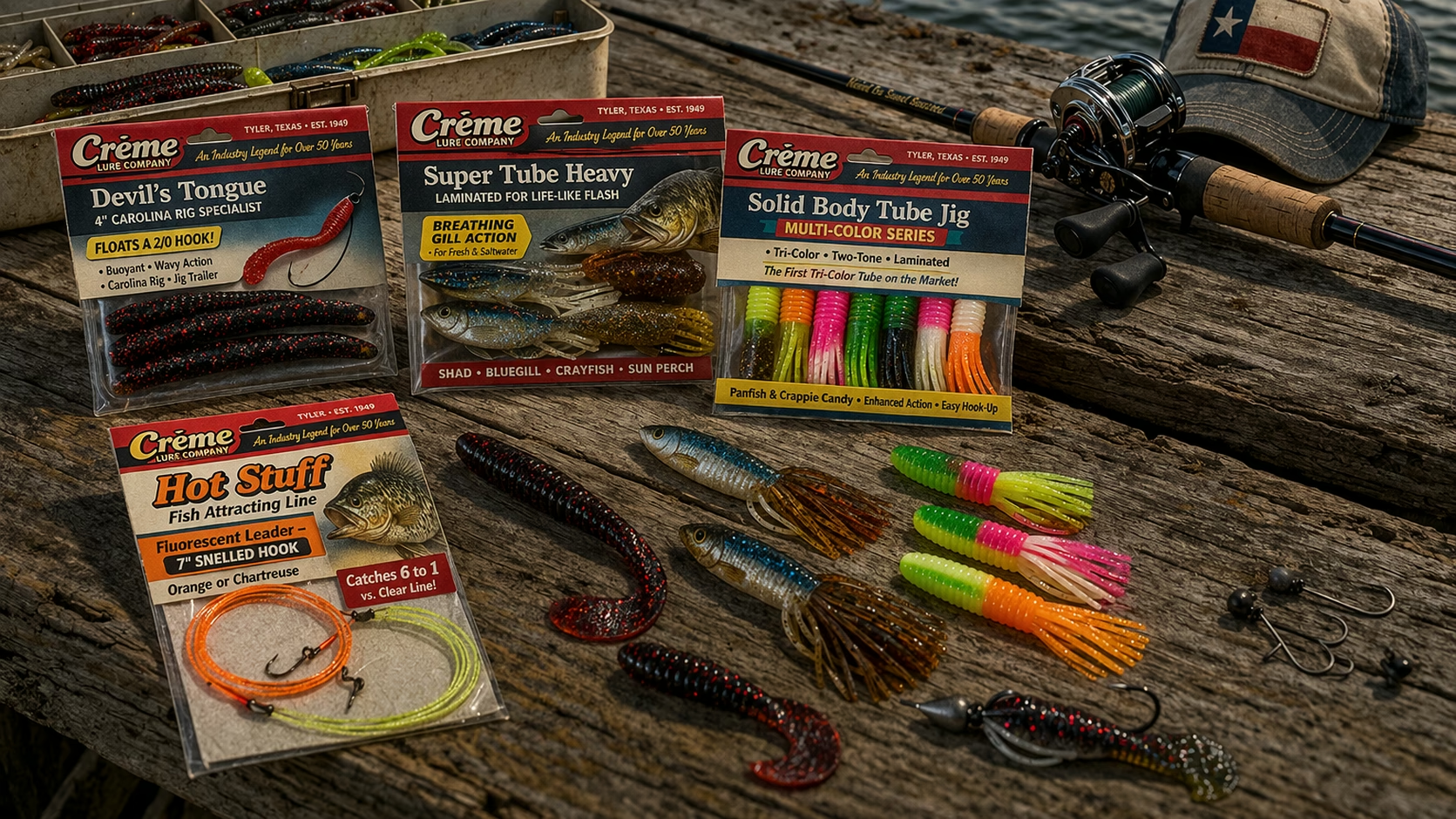
For more than 50 years, anglers have trusted Crème Lures to deliver quality, innovation, and fish-catching performance in soft plastics. More often than not, the company has delivered exactly that. Recently, Leslie Thompson, Crème’s Director of Marketing, sent me a collection of baits that serves as another reminder of why this company remains such a fixture in the industry. A few of these stand out enough to deserve mention, because they are not just clever ideas, they are proven fish-catchers.
Devil’s Tongue
A special process that injects air into the plastic gives this 4-inch bait enough buoyancy to float a 2/0 hook nearly straight up in the water. For anglers who like to Carolina-rig, the Devil’s Tongue is a bait worth serious attention.
Field testing has shown that it can produce two distinct types of action, depending on how it is rigged. Hook it straight back into the body and it gives off a flat, wavy action. Turn the hook into the side and the bait takes on a wiggle that bass have a hard time ignoring.
Its buoyancy also makes it an excellent jig trailer. The bait will stand a 3/16- or 1/4-ounce jig up on its head, making it especially effective for flipping around boat docks or bushes. I have not yet had the chance to try the Devil’s Tongue for drop-shotting, but with that kind of floating ability, it ought to make a mighty inviting target for a hungry bass.
Super Tube Heavy
This is a tube bait built to do exactly what a good tube should do: imitate a forage fish.
A special laminated process gives the Super Tube Heavy a lifelike look inside and out, while its patented “breathing gill action” is designed to mimic what a predator sees just before inhaling its prey. That added realism is more than just a novelty. It is the sort of detail that can make a good bait even better.
Tube baits have already proven themselves in both freshwater and saltwater, and the Super Tube Heavy adds extra flash to help trigger strikes. Available colors include shad, bluegill, crayfish, and sun perch, all practical forage imitators that ought to fit a wide range of fishing situations.
Solid Tubes, Multi-Colors
Crappie fishermen have known for years that bright colors can make a difference, and Crème evidently listened closely when developing its new Solid Body Tube Jig. The result was the first tri-color tube on the market.
The bait is available in tri-color, two-tone, and laminated patterns, and the idea behind the solid-body design is a good one. Crème set out to make a small bait with better action, easier rigging, and more durability, and by all appearances they hit the mark.
Offering the bait in a range of new color schemes only sweetens the deal. Initially, the Solid Body Tube Jig was introduced in five tri-color, two-tone, and laminated combinations. For panfish and crappie anglers, that gives plenty of options to match water color, mood, and light conditions.
Hot Stuff
For years, good fishermen have added a touch of fluorescent color to their baits in hopes of drawing extra attention from fish. Crème found a way to bring that same idea to live-bait fishing with its Hot Stuff fish-attracting line.
Hot Stuff rigs feature a quality snelled hook tied to a 7-inch leader harness in either orange or chartreuse. The thinking is simple enough: fluorescent color has long been a producer on jigs, so why not carry that same visibility and attraction into terminal tackle?
According to field tests, anglers using Hot Stuff rigs were catching six fish for every one caught on traditional clear line and hooks. Crappie, sunfish, catfish, walleye, and other game fish all showed a noticeable attraction to the fluorescent rigging.
That is the kind of practical idea fishermen tend to remember.
And for all the attention given to newer 21st-century bait designs, Crème has not forgotten the lures that made the company famous in the first place. Classics such as the Scoundrel, the original Lit’l Fishie, Lit’l Fishie Shad and Perch, Living Lizard, and Killer Crawdad, along with many others in the Crème and Burke Flex-O lines, remain popular with anglers around the world.
That may be the strongest statement of all.
A lure company does not become a legend by living on yesterday’s reputation alone. It stays there by honoring its roots while continuing to innovate, and that is exactly what Crème has done for generations. From the first plastic worm to modern soft-plastic designs, the company has earned its place in fishing history the old-fashioned way: by making baits that catch fish.
And in this business, that is still the only reputation that really matters.
For a heavier stringer and a little Texas-made history on the end of your line, Crème Lures remain well worth a hard look.
0 Comments