
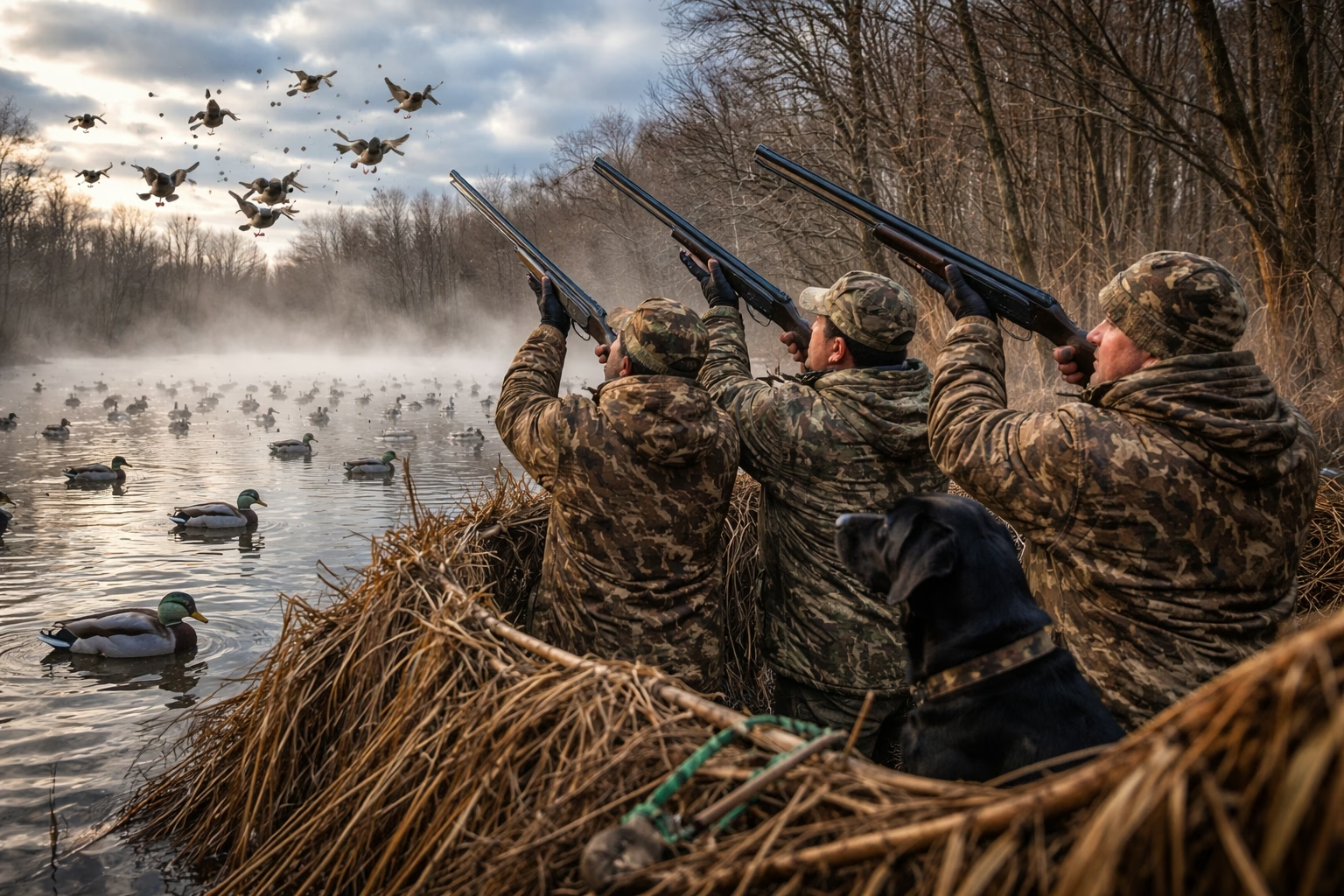
There are good mornings in duck season, and then there are mornings that seem touched by something a little bigger than luck. Mornings when the weather is right, the birds are there, the decoys look alive, and every man in the blind knows he is witnessing something rare. On the north end of Lake Livingston, the opening morning of the second split in December of 1995 was one of those mornings.
The second split of duck season is always greeted with anticipation by the local hunters around the north end of the lake, but this one felt different from the start. On Friday, December 8, Chris Swift, Brian Broadus, and I spent time watching the Jungle and Robbs Lake, two prime bodies of water on the north end of Livingston. A hard north wind had come in, and with it came ducks, riding the front and dropping into the flats and timber in numbers that were hard to ignore.
It was the first serious front of the year, and the forecast called for freezing temperatures to ride in behind it. Everything about it looked right. The wind, the sky, the birds, the feel in the air, all of it pointed toward the kind of hunt waterfowlers wait for and talk about all season.
That night back at my house, we did what duck hunters have always done on the eve of a promising shoot. We ate backstrap fajitas, played what must have been close to a hundred hands of poker, listened to a couple of Hank Williams CDs, and talked through the next morning as though we had the whole thing solved. By bedtime, we had every detail worked out, at least in our own minds.
By 6:00 the next morning, we were in the blind waiting on legal shooting time.
Our decoy spread was serious business: four dozen mallard and black mallard decoys, two dozen teal decoys, and a dozen sprig decoys. Chris always took charge of the spread, and that was fine with us. He had guided for outfitters on the coast and in Alaska, and that kind of experience shows up fast when it is time to read wind, water, and birds. He always had a plan, and more often than not, it was the right one.
The north wind was still blowing hard, the temperature was in the low forties, and the sky hung over us in a low gray blanket of overcast clouds. Birds were visible in every direction. Most were rafts of teal, but there were flights of big ducks too. Just before shooting time, we agreed to try for nine teal first and then devote our attention to larger birds.
The teal, however, were already dropping into the spread before legal light.
By the time shooting time arrived, there were a couple hundred birds in the decoys and more still raining in. It was one of those moments so rich with life and motion that a man almost hated to break it by firing a shot. To this day, I still say I would have traded my shotgun for a video camera in that instant just to capture proof of how spectacular the river can be when it is truly at its best.
Brian first picked up on a flight of teal coming in, then backed off when he saw a bigger bunch behind them. Swift leaned over and whispered, “Don’t shoot, here comes a flight of greenheads.” Brian shifted to the mallards. Swift came up with him. I was blocked out on that side, so I swung on a bunch of teal coming in from mine and doubled.
When the first exchange was over, Brian and Swift had each dropped a mallard, and I had two teal on the water.
Then Duke, the Lab, took over.
There is something deeply satisfying about watching a good retriever work. A fine dog is as much a part of a real duck hunt as a north wind, wet decoys, and coffee in a thermos. Duke made short work of the first three birds, then had to hunt one of my teal that had fallen into the tules. He found it in a hurry and brought it back with the kind of soft mouth every duck hunter appreciates.
By 7:45 we had eleven teal, two mallard drakes, and two pintails. After that, the shooting almost became secondary to the spectacle itself. We sat in the blind until around 9:30, watching wave after wave of birds pass over the river, and none of us could remember ever seeing anything quite like it there before.
Killing a limit on the river was nothing unusual. But this was beyond that. This was one of those rare hunts where the number of birds in the sky left a stronger impression than the number in the game strap. Without exaggeration, we figured we saw three to four thousand ducks that morning, with perhaps four to six hundred actually landing in our spread.
That is not the sort of thing a man sees very often.
We had several more good hunts over the next few days, including a couple more fine limits, but as the weather moderated, most of the birds moved on south. The big push had come with that first hard front, and we had been there at exactly the right moment.
It will be a long time before any of us see another river hunt quite like the opening morning of that second split. Hunts like that are not made by effort alone. A man can scout hard, set his decoys just right, and know the water as well as anybody alive, but in the end he still needs weather, timing, and a little grace from the wild world.
Every duck hunter lives for mornings like that, whether he admits it or not. Not just for the shooting, but for the sight of birds falling out of a gray winter sky, for the sound of wings over timber, for the dog working in cold water, and for the feeling that for a few hours everything in creation is moving exactly as it should.
Maybe, if we are lucky, we will hit it just right again someday.
But even if we do not, that December morning on the north end of Lake Livingston will do just fine to remember.

Am trying to locate a duck guide service for me and my dog to hunt Lake Livingston