
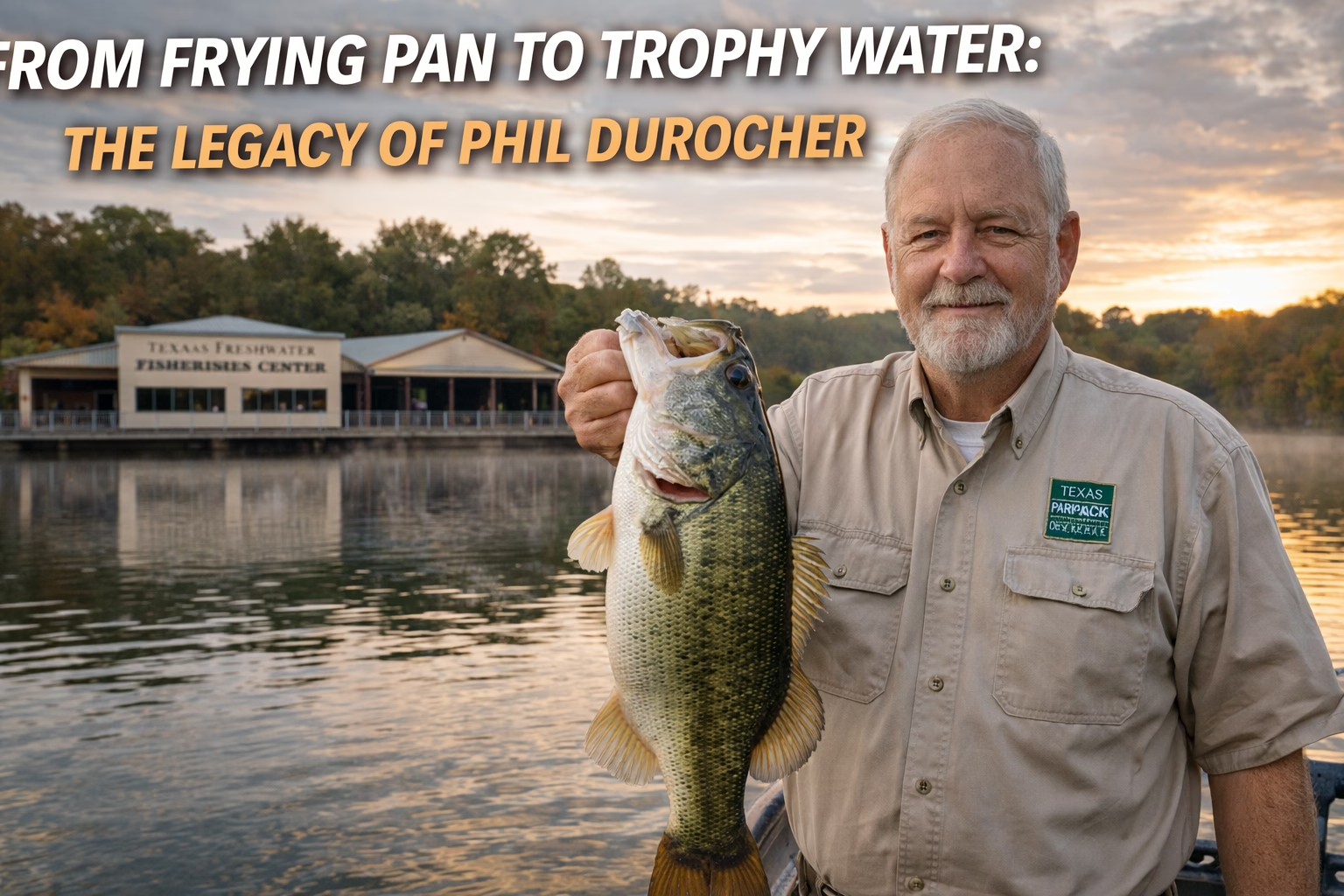
From Frying Pan to Trophy Water: The Legacy of Phil Durocher
There was a time in Texas when a largemouth bass was more likely to end up in a skillet than in a story.
They were caught, kept, and fried alongside catfish and bluegill—just another fish on the table. Trophy bass fishing, as we know it today, didn’t exist. Not yet.
That changed—and a big part of that change can be traced to one man: Phil Durocher.
After a 35-year career with the Texas Parks and Wildlife Department, Durocher is retiring at the end of the year, leaving behind a legacy that reshaped not just how Texans fish—but how the rest of the country sees bass fishing.
A Shift That Changed Everything
The turning point came with a simple but revolutionary idea: bass were too valuable to eat.
“The biggest change,” Durocher said, “was when we moved bass from a consumptive resource to a recreational one. It may not seem significant now, but it was the only way to ensure bass fishing for the future.”
That philosophy—catch and release—wasn’t always the norm. It had to be built, taught, and, at times, defended. But once it took hold, it transformed Texas into a proving ground for trophy bass management.
And the results speak for themselves.
Building a Better Fishery
Durocher’s fingerprints are all over modern fisheries management in Texas.
As director of Inland Fisheries for the past 18 years, he helped guide policies that are now standard practice. Among them: length and bag limits that protect fish long enough to reach their full potential.
The now-familiar 14-inch minimum size limit wasn’t just a regulation—it was a line in the sand. It gave bass time to grow, and in doing so, turned Texas waters into destinations for anglers chasing something bigger than a fish fry.
“People forget,” Durocher said, “we used to have nets in our rivers.”
Those days are long gone.
Under his leadership, Texas also embraced tools like grass carp to manage aquatic vegetation—balancing habitat health with angler access. And earlier in his career, after joining TPWD in 1974 and moving into Inland Fisheries in 1977, he helped develop the Resource Monitoring Program still used today to guide management decisions.
Quiet work, maybe—but foundational.
A National Standard
The impact didn’t stop at the state line.
“Because of Phil Durocher, Texas is viewed nationally as the gold standard in freshwater fisheries management,” said Ross Melinchuk. “His leadership helped guide Texas through some tough battles, and anglers owe him a great deal.”
Durocher also played a key role in two major milestones: the creation of the Texas Freshwater Fisheries Center in Athens, and the passage of Freshwater Fisheries Stamp legislation. Revenue from that program continues to fund hatchery improvements, including the John D. Parker East Texas State Fish Hatchery—investments that will pay dividends for generations.
The Road Ahead
For Durocher, the accomplishments matter—but so does what comes next.
“The part I’m proud of,” he said, “is helping build the national reputation of Texas fisheries. But the battles ahead may be even tougher—especially when it comes to water.”
Population growth is putting pressure on resources, and water—always the lifeblood of any fishery—isn’t getting any more plentiful.
Still, he leaves with confidence.
Texas has the people, the knowledge, and the passion to carry the work forward.
More Than a Career
It’s easy to measure a career in years. Thirty-five, in Durocher’s case.
But a better measure might be found on the water.
In every bass that swims past the 14-inch mark.
In every angler who eases a big fish back into the lake instead of into a cooler.
In every lake where the next cast might produce something unforgettable.
That didn’t happen by accident.
It happened because someone looked at a common fish and saw something more.
And in doing so, helped turn Texas into a place where bass aren’t just caught—
They’re remembered.
“The little part I played in building the national reputation of Texas’ program, that’s what I’m proud of,” he said. “The battles we fought were hard but the people coming after us are going to have tougher battles, particularly with water allocation issues. The population is growing and we don’t have any more water. To maintain the fishery is going to be difficult, but we have dedicated professionals and some passionate supporters, so I feel good about leaving with a solid foundation to face the road ahead."


0 Comments