

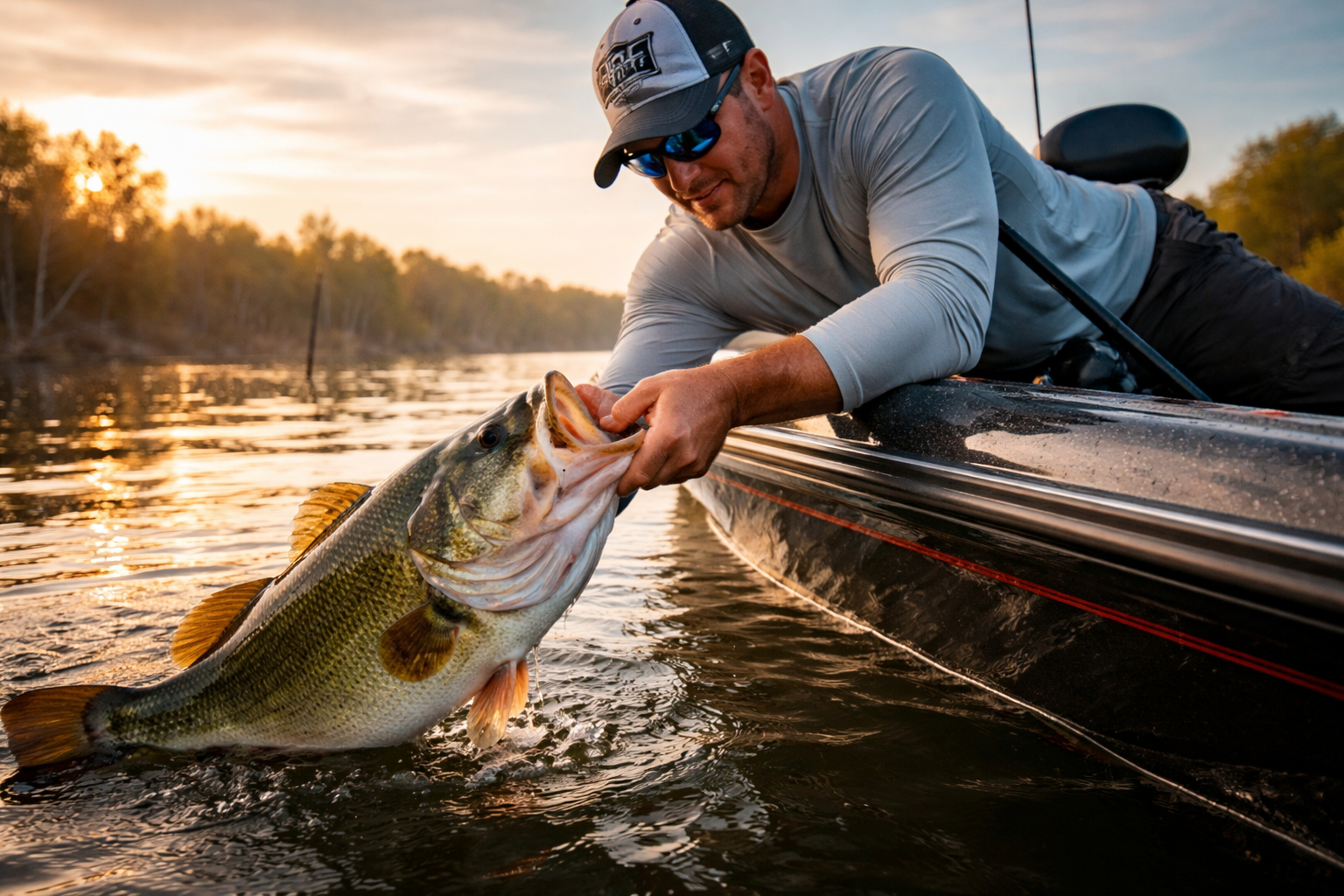
Big bass don’t just happen.
Behind every trophy fish is a long chain of habitat, management, and—more often than folks realize—hatchery work that keeps Texas waters producing year after year.
That’s why a recent decision out of Austin could shape the future of freshwater fishing across East Texas for decades to come.
A Strong Bid Rises to the Top
The Texas Parks and Wildlife Foundation has voted to recommend Jasper County as the site for a new East Texas freshwater fish hatchery to serve the Texas Parks and Wildlife Department.
The final decision now rests with the TPWD Commission, which is expected to consider the recommendation at its November 3 meeting.
Jasper County’s proposal stood out in a competitive field—and not by a narrow margin.
Valued at approximately $28 million over 50 years, the bid exceeded the next closest proposal by more than $4 million. It also offered the largest footprint at 200 acres and featured one critical advantage:
Water delivery by gravity flow.
That single factor reduces long-term operating costs significantly—something that matters when you’re running a hatchery built to serve generations of anglers.
Built for Efficiency and Growth
The proposed site, located near Sam Rayburn Reservoir, sits on land owned by Temple-Inland and is currently part of a managed forest operation.
From a hatchery standpoint, it checks all the boxes:
- Flat terrain ideal for pond construction
- Minimal site preparation required
- Natural water flow reducing pumping costs
- No-cost land clearing
Add to that strong regional support, and the project begins to take on even greater significance.
Partners in the Jasper County proposal include the Lower Neches Valley Authority, the Texas Department of Transportation, and the U.S. Army Corps of Engineers—all contributing resources ranging from water infrastructure to road development.
Local officials have made it clear: this isn’t just a county project—it’s a regional investment.
A Competitive Field
The foundation’s decision followed careful review of proposals from seven bidders, including San Augustine County, Tyler County, Newton County, the Sabine River Authority, and others.
Each bid was evaluated for both technical merit and long-term value, with input from TPWD staff, engineering firms, and financial consultants.
In the end, Jasper County delivered the strongest overall package.
“The Jasper County proposal presented the best value for the anglers of Texas,” said Ed Cox Jr., former foundation chairman and head of the hatchery site selection committee.
Replacing a Legacy Facility
The need for a new hatchery is long overdue.
The existing Jasper Fish Hatchery, originally opened in 1932, has seen little modernization since the late 1940s. While it has served Texas anglers well, time—and evolving demands—have caught up with it.
The new facility is designed to bring hatchery production into the modern era, improving efficiency, capacity, and overall fish quality.
Funding will come from a combination of sources, including the recently implemented $5 freshwater fishing stamp, along with community and corporate support.
An Investment in the Future
For Texas anglers, the payoff goes far beyond the hatchery gates.
Fish hatcheries play a key role in sustaining fisheries—working alongside habitat management, regulations, and enforcement to maintain the quality of fishing across the state.
And the economic impact is no small matter.
Freshwater anglers in Texas generated $1.49 billion in retail sales and $733 million in wages and salaries annually, according to U.S. Fish and Wildlife Service data.
“This approach is a great deal for the 2 million people who fish in Texas,” said TPWD Executive Director Robert L. Cook. “The bottom line is that fishing in Texas will be better.”
Final Cast
Most anglers never see a hatchery.
They don’t watch the ponds, the spawning, or the careful work that goes into raising the next generation of fish.
What they do see is the result—a healthy lake, a strong fishery, and the chance at a lifetime catch.
And if this project moves forward as planned, somewhere down the road, a young angler will set the hook on a bass that started life in those East Texas ponds.
He won’t know where it came from.
But he’ll know exactly how it feels.
And that’s what makes projects like this worth every bit of the effort.


0 Comments