
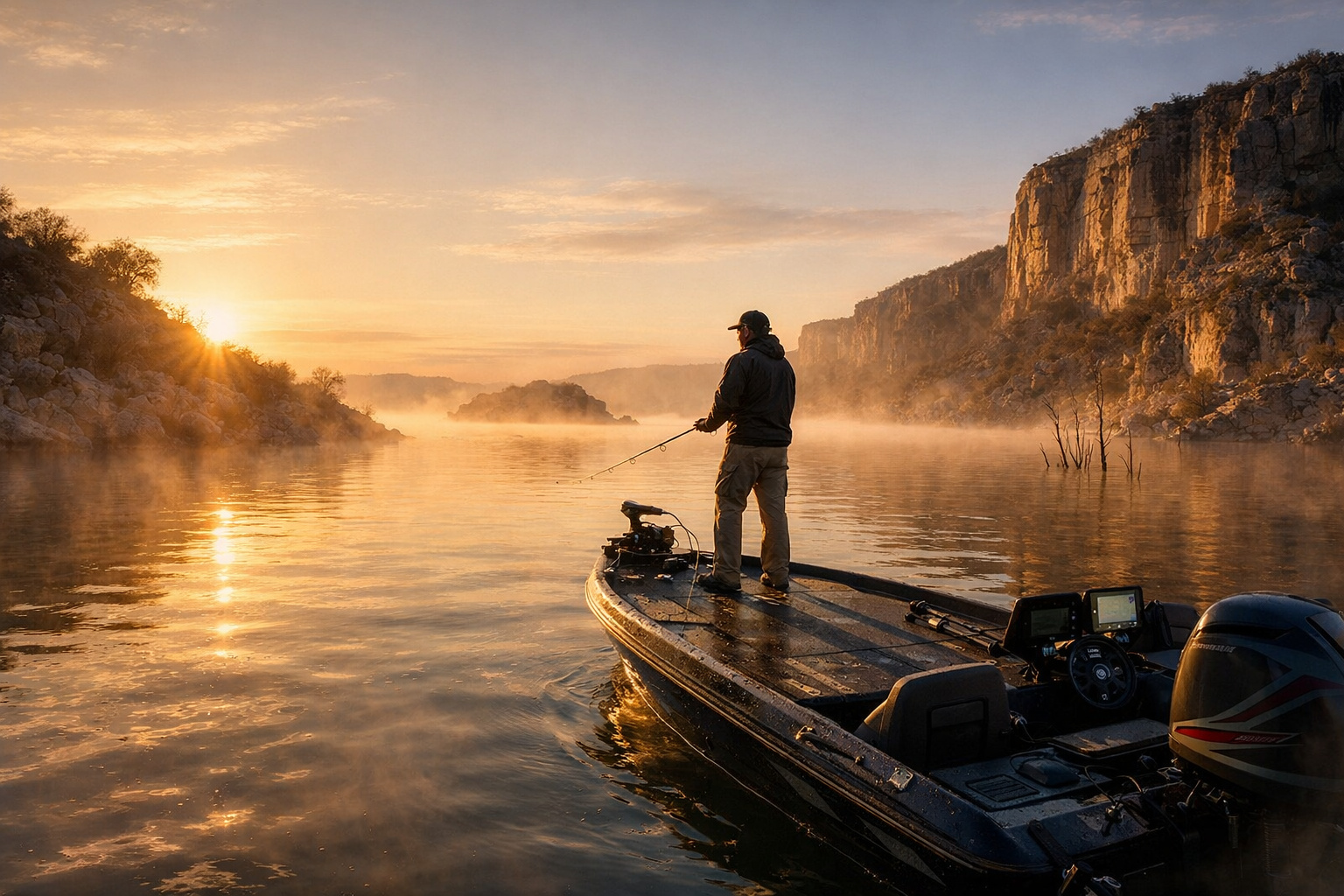
Lake Amistad has long held a reputation among Texas anglers as one of the premier big-bass lakes in the Southwest. Sitting along the Texas–Mexico border near Del Rio, this deep canyon reservoir offers clear water, miles of rocky shoreline, and expansive river arms that create ideal habitat for both largemouth and smallmouth bass. The lake formed in 1969 when Amistad Dam impounded the Rio Grande, Devils River, and Pecos River, creating a massive fishery with diverse structure ranging from flooded brush and hydrilla grass to sheer canyon walls and deep ledges.
For anglers serious about Lake Amistad bass fishing, understanding the seasonal patterns and key areas of the lake is essential. Texas Parks and Wildlife reports consistently highlight patterns involving ledges, deep structure, and seasonal movements between shallow spawning areas and deeper staging zones.
In this guide we’ll cover:
-
The best areas of Lake Amistad for bass fishing
-
Month-by-month patterns from January through December
-
Structure, vegetation, and depth patterns
-
Best lures, colors, and presentations
-
Largemouth and smallmouth bass behavior
-
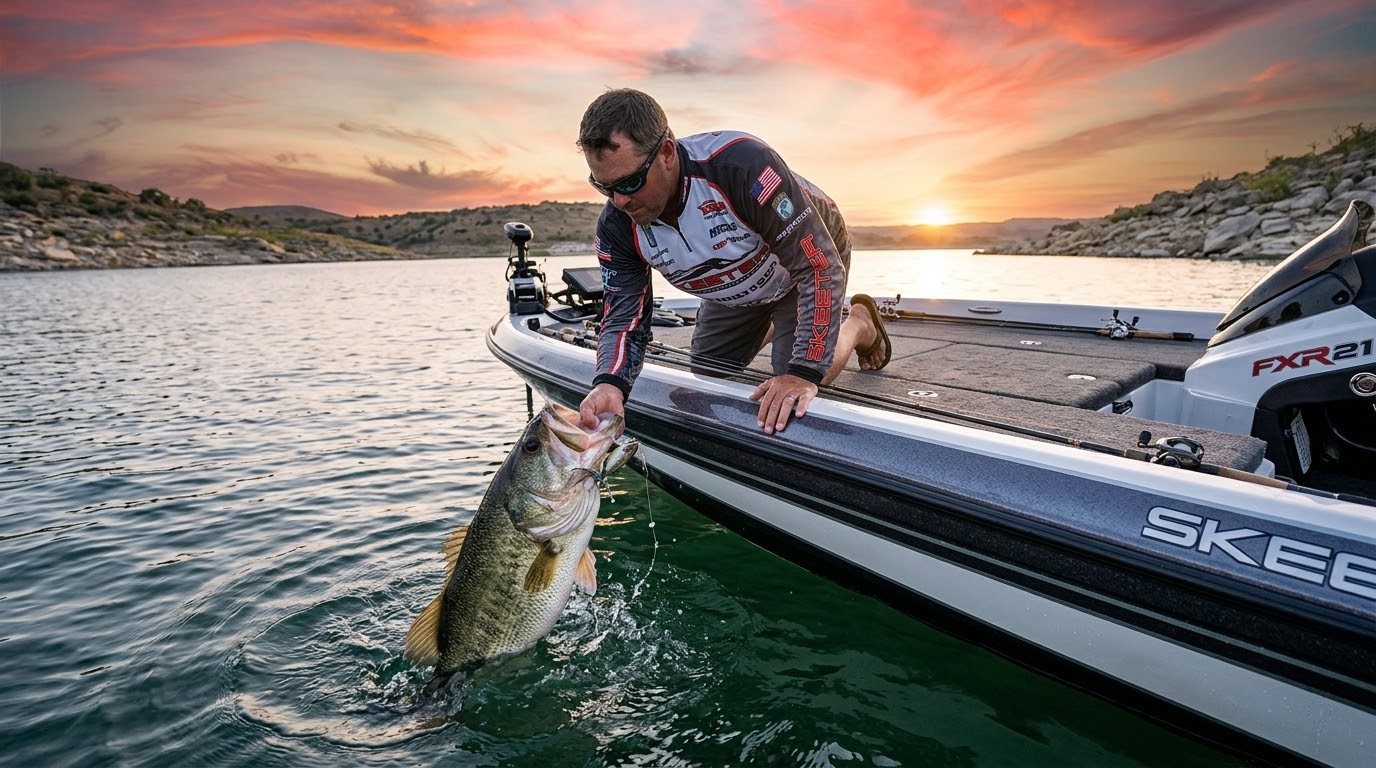
Lake record bass statistics
Whether you fish from a tournament boat, kayak, or even a fly rod, this reservoir remains one of Texas’ true bass fishing treasures.
Overview of Lake Amistad Bass Habitat
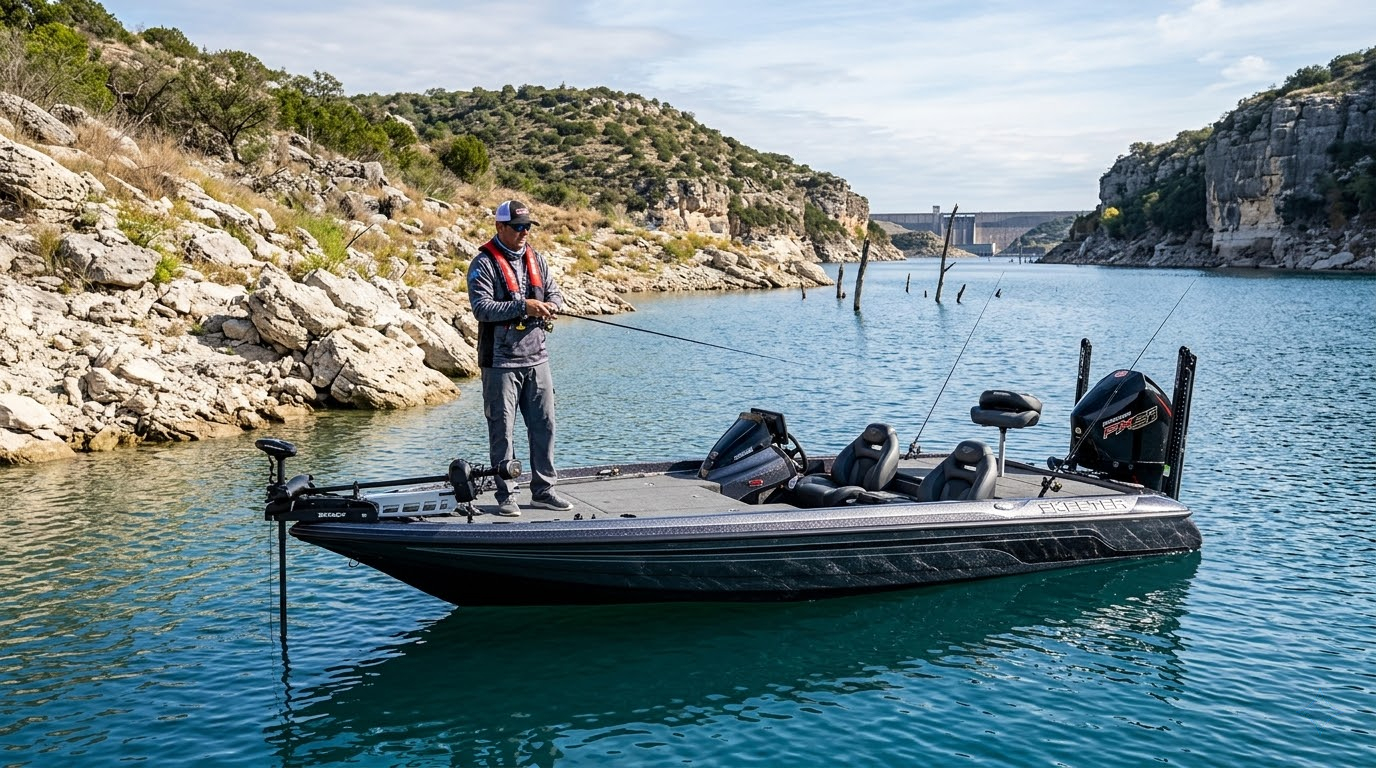
Lake Amistad is famous for its clear water, deep structure, and extensive rocky habitat, making it one of the few Texas reservoirs with a solid population of both largemouth and smallmouth bass.
Several key habitat features influence bass patterns here.
Canyon Structure
Steep limestone cliffs dominate much of the lake, dropping quickly into deep water. These canyon walls create ledges, points, and vertical structure that bass use year-round.
Hydrilla and Aquatic Vegetation
Hydrilla is the dominant aquatic vegetation and can grow in surprisingly deep water, sometimes reaching 30–40 feet deep, creating ideal cover for largemouth bass.
River Channels
Three major river systems feed the reservoir:
-
Rio Grande
-
Devils River
-
Pecos River
These channels form the backbone of the lake’s bass migration routes.
Forage
Primary forage includes:
-
Threadfin shad
-
Gizzard shad
-
Bluegill
-
Crawfish
Lake Amistad Bass Fishing Records
Texas Parks and Wildlife records show the impressive size potential of this lake.
Lake Amistad Bass Records
| Species | Weight | Length |
|---|---|---|
| Largemouth Bass | 15.68 lbs | 28.30 in |
| Smallmouth Bass | 5.37 lbs | 20.25 in |
These fish were caught on rod and reel and demonstrate the trophy potential this reservoir offers.
Best Areas to Fish on Lake Amistad
Devils River Arm
The Devils River arm is widely considered one of the best bass fishing areas on the entire reservoir.
Texas Parks and Wildlife notes that smallmouth bass fishing is particularly strong in the Devils River arm, thanks to the rocky habitat and clear water conditions.
Key Structure
-
Rocky canyon walls
-
Submerged ledges
-
Gravel points
-
Deep bluff banks
Best Techniques
Smallmouth here often hold along vertical rock in 15–40 feet of water.
Effective lures include:
-
3–4 inch tube jigs (green pumpkin)
-
1/4 oz football jigs
-
suspending jerkbaits
-
finesse drop-shot worms
Early morning topwater action along rocky points can also produce explosive strikes.
San Pedro Canyon
San Pedro Canyon lies along the Rio Grande portion of the lake and provides some of the most dramatic scenery on Amistad.
Why it Produces Bass
The canyon offers:
-
deep water close to shore
-
submerged rock piles
-
current breaks when water is flowing
These areas are ideal staging zones for both largemouth and smallmouth bass.
Best Techniques
-
Football jigs dragged down rock slopes
-
Deep crankbaits along points
-
Carolina-rigged worms in 20–35 feet
Large prespawn bass frequently stage along the canyon points during February and March.
Rough Canyon
Rough Canyon is a popular launch area and tournament fishing zone.
Habitat
This region contains:
-
submerged hydrilla beds
-
flooded brush
-
shallow spawning pockets
-
rocky points
The combination of grass and rock structure makes this area a largemouth bass hotspot.
Best Techniques
During spring:
-
Texas-rigged worms
-
creature baits
-
chatterbaits along grass edges
During summer:
-
deep crankbaits
-
Carolina rigs
-
big worms on ledges.
Rio Grande Channel
The Rio Grande channel runs through the center of the lake and forms the main migration route for bass.
Key Structure
-
underwater humps
-
submerged roadbeds
-
deep ledges
-
creek channel intersections
In winter and summer, bass often stack along these structures in 20–45 feet of water.
Best Techniques
Texas Parks and Wildlife reports note success using:
-
Alabama rigs
-
football jigs
-
drop-shot rigs
-
jigging spoons for vertical fishing.
Month-by-Month Lake Amistad Bass Fishing Guide
January – Winter Structure Pattern
Water temperatures typically range from the low 50s to upper 50s.
Bass hold along deep structure near river channels.
TPWD reports indicate bass often group along ledges in 25–40 feet of water during winter.
Best Areas
-
Rio Grande channel ledges
-
deep points near Devils River
-
canyon drop-offs
Best Lures
-
Alabama rigs
-
jigging spoons
-
drop-shot worms
-
football jigs
Colors
-
shad patterns
-
green pumpkin
-
watermelon red
Slow presentations are critical during cold water.
February – Early Prespawn
Bass begin staging near spawning areas.
Depth
15–30 feet
Best Structure
-
rocky points
-
channel swings near flats
-
hydrilla edges
Best Lures
-
suspending jerkbaits
-
football jigs
-
swimbaits
Big females begin feeding heavily before the spawn.
March – Prespawn Feeding
Water temperatures climb into the upper 50s and low 60s.
TPWD reports show bass beginning to move shallow and staging near spawning areas during this period.
Depth
8–20 feet
Best Areas
-
San Pedro Canyon points
-
Rough Canyon grass edges
-
Devils River gravel points
Best Lures
-
chatterbaits
-
lipless crankbaits
-
Texas-rigged worms
April – Spawn
This is one of the most exciting months for Lake Amistad bass fishing.
Bass spawn in shallow pockets and flats.
Depth
4–10 feet
Best Structure
-
gravel banks
-
shallow brush
-
grass pockets
Best Lures
-
soft plastic lizards
-
creature baits
-
weightless stick worms
Sight fishing is often possible in the clear water.
May – Post Spawn
Bass begin recovering from the spawn and move toward deeper water.
Depth
10–20 feet
Best Structure
-
points near spawning coves
-
grass lines
-
submerged brush
Best Lures
-
crankbaits
-
spinnerbaits
-
swimbaits
Shad spawning activity can create excellent early morning fishing.
June – Early Summer
Bass move toward offshore structure.
Depth
15–30 feet
Best Areas
-
main lake points
-
underwater humps
-
channel ledges
Best Lures
-
deep diving crankbaits
-
Carolina rigs
-
football jigs
July – Summer Deep Pattern
Hot weather pushes bass into deeper water.
Depth
20–40 feet
Best Techniques
-
drop shot rigs
-
big worms (10–12 inch)
-
heavy football jigs
Electronics become critical for finding schools.
August – Deep Structure
Bass remain deep but feed during early morning and late evening.
Best Areas
-
Rio Grande channel
-
Devils River ledges
-
offshore humps
Best Lures
-
flutter spoons
-
swimbaits
-
drop shots
September – Transition
Cooling temperatures trigger bass movement.
Depth
10–25 feet
Best Areas
-
creek mouths
-
points leading into coves
-
grass lines
Best Lures
-
lipless crankbaits
-
spinnerbaits
-
topwaters early.
October – Fall Feeding
Bass chase shad aggressively.
Depth
5–15 feet
Best Areas
-
coves
-
shallow flats
-
grass edges
Best Lures
-
squarebill crankbaits
-
spinnerbaits
-
walking topwaters
November – Cooling Water
Bass move back toward structure.
Depth
10–25 feet
Best Lures
-
jerkbaits
-
jigs
-
swimbaits
Rocky points and bluff walls become productive again.
December – Winter Pattern Returns
Cold fronts push bass deeper again.
Depth
20–40 feet
Best Techniques
-
vertical jigging spoons
-
drop shots
-
Alabama rigs
Slower presentations produce best results.
Largemouth vs Smallmouth Behavior on Amistad
Largemouth Bass
Prefer:
-
hydrilla beds
-
brush
-
shallow coves
-
creek channels
Often caught around grass edges and flooded timber.
Smallmouth Bass
Prefer:
-
rocky shorelines
-
canyon walls
-
deep points
Most commonly found in:
-
Devils River arm
-
rocky Rio Grande areas.
Final Thoughts on Lake Amistad Bass Fishing
Lake Amistad remains one of Texas’ most fascinating bass lakes. Its deep canyon structure, clear water, and mix of hydrilla grass and rocky habitat provide ideal conditions for both largemouth and smallmouth bass.
The reservoir’s massive size also means anglers can explore miles of productive water across the Devils River arm, San Pedro Canyon, Rough Canyon, and the Rio Grande channel. With bass moving seasonally between shallow spawning pockets and deep offshore structure, there is always a productive pattern somewhere on the lake.
For anglers who appreciate structure fishing, electronics, and the thrill of catching trophy bass in rugged canyon country, few places match the challenge and beauty of Lake Amistad bass fishing.

0 Comments