
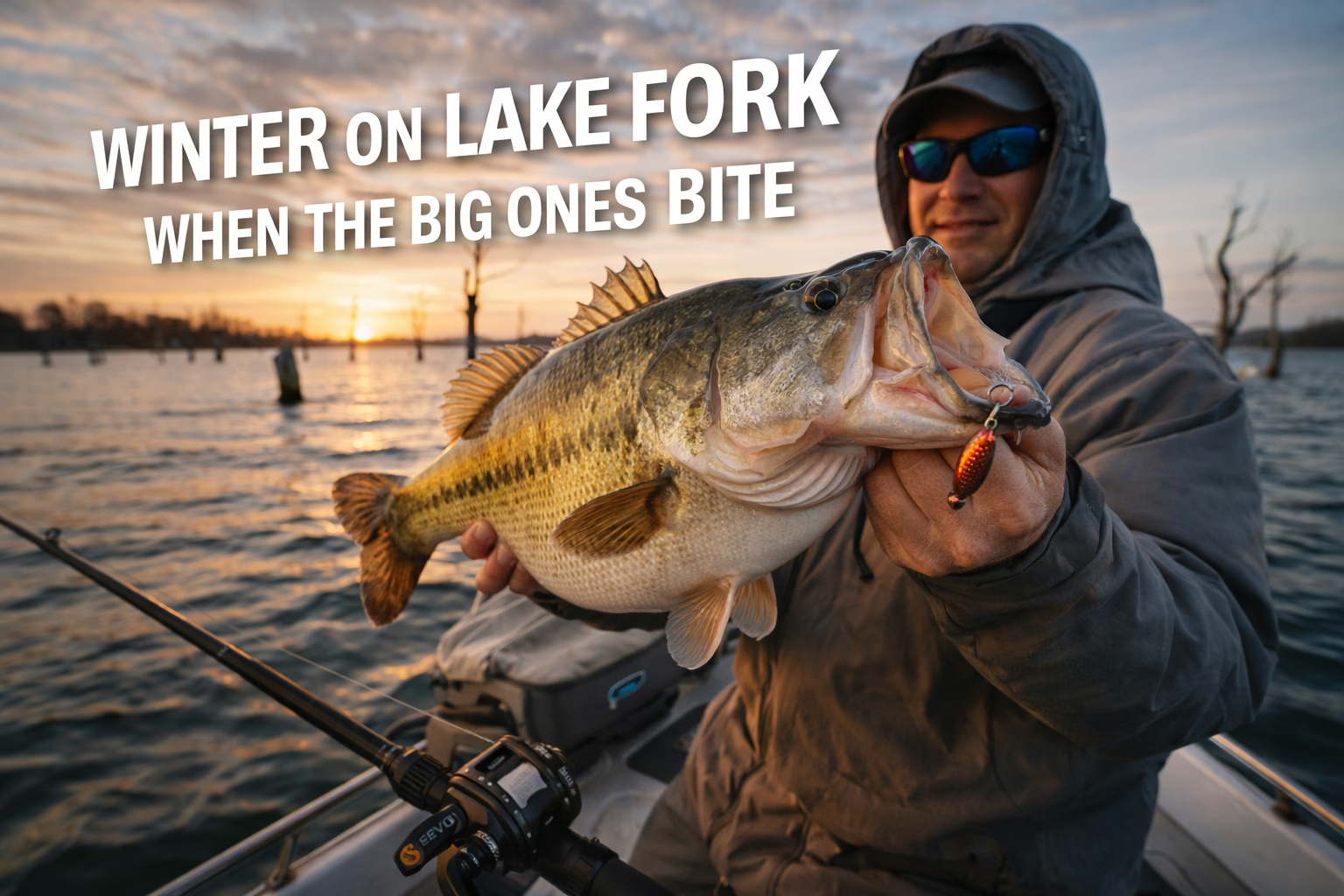
Winter on Lake Fork: When the Big Ones Bite
There’s a quiet time on Lake Fork Reservoir when most boats are pulled from the water, guides catch their breath, and the lake settles into a kind of cold-weather stillness.
That’s when the big ones start to feed.
Right now, winter is shaping up to be one of the most overlooked opportunities of the year to land a true Lake Fork giant. With fewer anglers on the water, your favorite stretches—those well-worn honey holes—are wide open again. And thanks to an unusually warm November, the bite hasn’t slowed the way it normally does.
In fact, it’s just getting started.
Water temperatures have lingered in the 60s well into late fall, delaying the usual feeding surge and leaving a lake full of bass that are still hungry. That means December could turn into something special. Proof is already showing up—recent catches include a bass pushing 16 pounds, along with a string of double-digit fish like 11-year-old Calvin Fease’s 11.04-pound Lake Fork hawg.
That’s not luck. That’s a pattern.
Follow the Bait, Find the Bass
As temperatures finally begin to drop, Lake Fork bass are keying hard on shad, and that’s where your focus should be. Early in the day, look to main lake points, secondary points, and the backs of major creeks where baitfish gather.
If you find the shad, you’ll find the bass. It’s as simple—and as reliable—as it gets.
Shallow grass in 2 to 8 feet of water is prime territory. This is where reaction baits shine:
- Spinnerbaits and chatterbaits in white or white/chartreuse
- Lipless crankbaits in red, red/orange, chrome/blue, or gold
- Swimbaits worked steadily through the grass
Weight matters. A 1/4-ounce bait works well over the shallowest grass, while 1/2 to 3/4-ounce options let you reach the deeper edges.
But more than color or size, success comes down to your retrieve.
There’s a fine line here. Too fast, and you’re skimming over the grass without triggering strikes. Too slow, and you’re fouling constantly. The sweet spot is when your bait ticks the grass—then snaps free. That’s when the bite comes.
And when it does, it’s not subtle.
Big Bites, Slow Presentations
For anglers hunting true trophies, slowing down can make all the difference.
A shallow-running swimbait in the 5- to 6-inch range, fished with a slow, steady retrieve, is deadly this time of year. When a big bass commits, it doesn’t peck—it crushes. It feels like your bait just got run over.
Jigs are another wintertime staple for quality fish. While a wacky worm will still produce numbers, a jig is what you reach for when you’re looking for weight.
Work a 3/8- to 1/2-ounce jig in black/blue, Bama bug, or Texas craw through timber. Pick apart every piece of cover. You may not get many bites—but the ones you do get will matter.
A good approach is to cover water with moving baits first, then slow down and flip those high-percentage areas. Winter bass can be sluggish, but they don’t stop eating.
The Deep Bite is On
Don’t overlook the deeper water. In fact, some of the most consistent action this time of year comes from 18 to 32 feet.
Bass are stacking up on:
- Points and humps
- Roadbeds and pond dams
- Flats near major creek mouths
Once you locate schools—often with electronics—you can dial in quickly.
Productive techniques include:
- Carolina rigs with heavy weights and long leaders
- Jigging spoons worked vertically
- Drop shots for finicky fish
- Heavy swimbaits targeting larger fish
The jigging spoon is especially effective and easy to fish—making it a great option if you’ve got family along. Drop it to the bottom, lift, and let it fall. Most strikes come on the drop, and it’s not uncommon to hook into multiple species—including a true giant.
A Season Most Anglers Miss
Winter fishing on Lake Fork isn’t about numbers—it’s about opportunity.
It’s about having water to yourself. It’s about working through an area slowly, knowing the next bite could be the one you remember for the rest of your life. And it’s about understanding that while others are waiting for spring…
The fish are already there.
Hungry.
Waiting.
And if you’re willing to launch the boat when the air turns cold and the lake goes quiet, you just might find that the best fishing of the year isn’t in the crowds of March or April—
It’s right now, in the stillness of winter.
GuideJamesCaldemeyer

0 Comments