
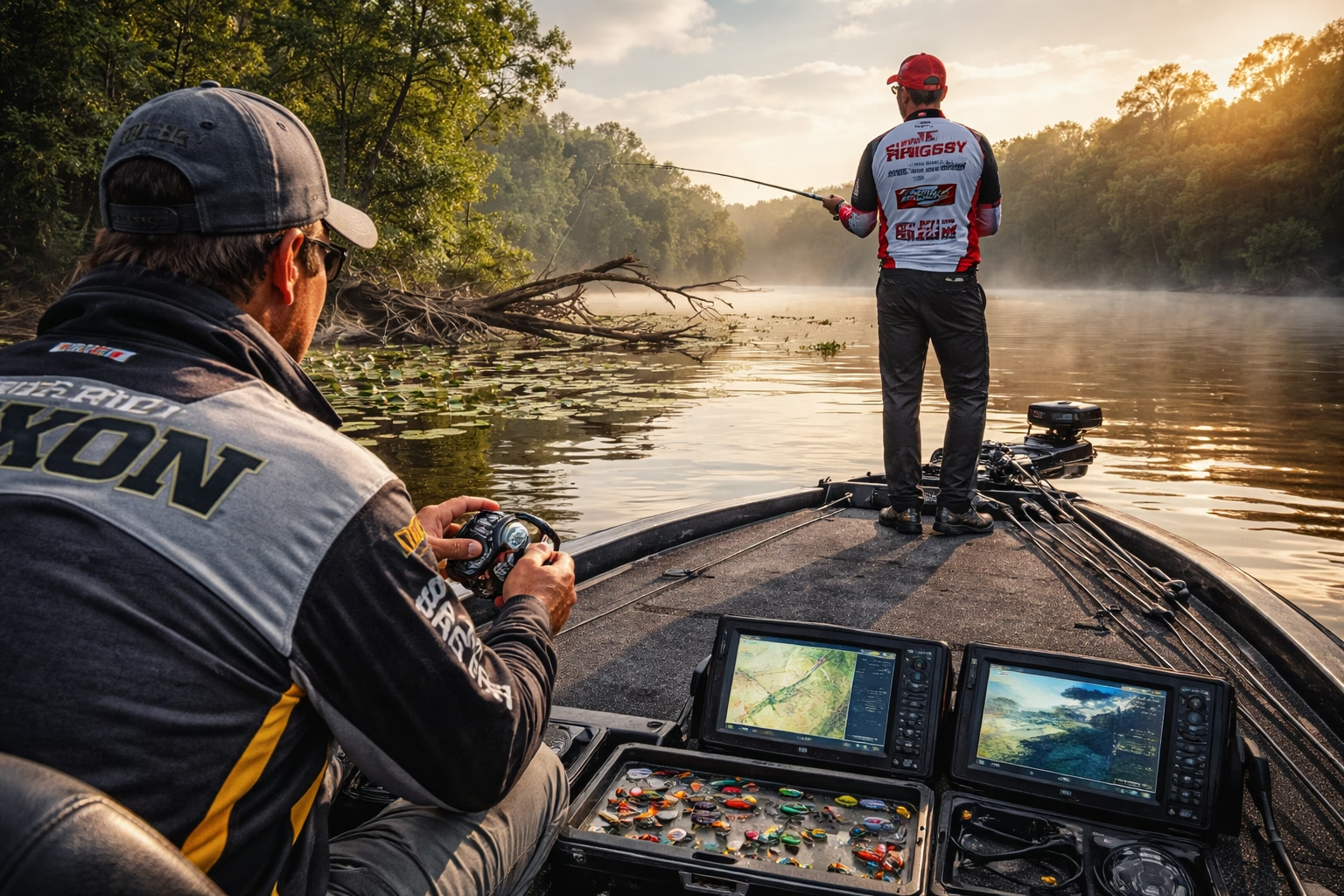
In my January column, “Little Things,” I wrote about the many small steps an angler takes and how those small steps work together to make him better on the water. This month, I want to stay with that theme, because the truth is that bass fishing is still very much a game of little things.
Those little things matter no matter how much experience you have. Some of the points I am going to discuss may be things you already know. If so, that does not make them any less valuable. In fact, there is real benefit in being reminded of the small habits, observations, and techniques that sharpen your edge. A fisherman’s mind works a lot like his tackle box. Every now and then, it pays to open it up, sort through it, and make sure the right tools are still close at hand.
Whether these ideas are new to you or not is beside the point. Revisiting the right tips can stir up new thoughts, open the door to fresh approaches, and help you discover useful tricks within your own style of fishing. No one fisherman invents every good way to catch bass. Some of the best refinements in this sport come from anglers paying attention, making adjustments, and building on what they already know.
You can do that just as well as any professional.
Great fishermen were not born great. They became great through years of time on the water. Some developed faster than others because they learned to recognize patterns more quickly. And those patterns are not limited to fish movement alone. There are patterns in mechanics, patterns in decision-making, patterns in timing, and patterns in efficiency. The more of them a man learns to recognize, the better he becomes.
If you want to learn from somebody, pay close attention to the older, seasoned veteran pros who have been doing this for years. I probably do not even need to name them. Most fishermen already know who the true “daddies” are.
The reason I point to those men is simple. They almost always go about their work in the easiest, cleanest, and most efficient way possible. They move through situations without wasted effort. Even when conditions are difficult, they seem to travel the path of least resistance. That is not laziness. That is refinement.
Those fellows flow through their surroundings because the water has become familiar ground. They have spent thousands of hours there, and it shows. They do not merely react to weather changes, pattern changes, or shifting conditions. More often, they move with them. They seem to act in rhythm with what is happening around them, and that kind of rhythm is no accident. It is earned.
There are many little things wrapped up in that idea, but I want to focus on one in particular.
Watch how great fishermen move.
A good way to do that is by watching two television shows, one hosted by Larry Nixon and the other by Shaw Grigsby. Both men are champions, and every move they make on the water is the product of years of tournament experience. Every little motion has been shaped by success, failure, repetition, and correction.
Now, if you do not trust that the lures they are throwing on television are always the exact same ones they rely on in major tournament competition, that is fine. Sometimes I am skeptical of that myself.
So ignore the lure.
Instead, watch their mechanics.
Watch every move they make. Watch how they stand. Watch how they cast. Watch how they work the bait. Watch how they position the boat. Watch how they approach cover. Watch how they handle the rod, reel, and line. Watch what they do before the cast, during the retrieve, and after the bait comes back to the boat.
That is where the education is.
You can learn a tremendous amount just by studying those mechanics. Then, the next time you get on the water, pick out one thing they do well and practice it. Not ten things. One thing. Work on it until it feels natural. Then add another. Over time, those small improvements stack up, and before long you are operating more smoothly, more efficiently, and with greater confidence.
That is how better fishermen are made.
Not by magic. Not by secrets. Not by buying every new lure on the shelf.
They are made by mastering the little things.
And among the little things that matter most, few are more important than your mechanics. If your mechanics improve, your fishing improves. It really is that simple.



0 Comments