
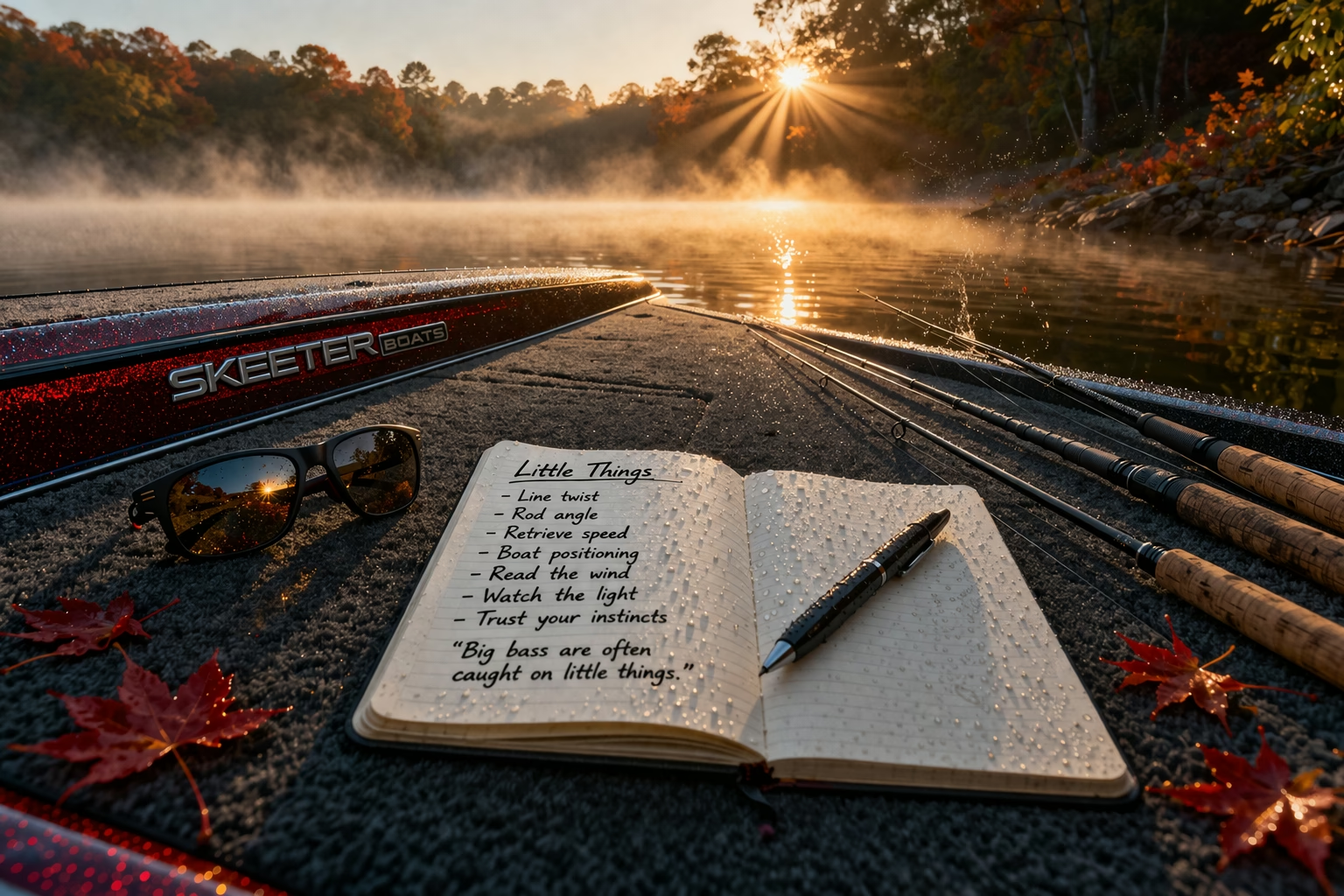
In bass fishing, it is usually the little things that make the biggest difference.
Most anglers overlook them. They still catch fish because they do enough things right to cover up the things they do not do quite right. Over time, a bass fisherman builds confidence in the methods that work for him, and that confidence is important. In fact, confidence is one of the true cornerstones of successful bass fishing.
But there is a catch.
If confidence in one productive technique keeps a man from experimenting, then sooner or later that same confidence can fish him straight into a rut. What once helped him become a good fisherman can begin to keep him from becoming a better one.
That is where growth in bass fishing really begins.
A truly elite angler is more than just a man who catches bass consistently. He is someone who has learned the seasonal patterns, understands the changing moods of fish, and combines both the scientific and instinctive sides of fishing into one working knowledge. I am certainly not claiming to be an elite angler. But what I have learned through experience is that experience itself is the road that leads in that direction.
You do not get there by standing still.
Bass fishing reminds me a lot of golf. A golfer who can consistently shoot scratch is a very good golfer. But he is still a long way from the man who can post a 60 or 61. The difference is not always found in the obvious things. More often, it is found in the details.
The first golfer may be highly skilled, but he has settled into a style that feels safe. He has confidence in it, but he is reluctant to experiment for fear of losing his game. The second golfer has reached another level because he has built confidence through constant refinement, experimentation, and adjustment. He is not afraid to tinker, not afraid to learn, and not afraid to fail in the short term if it helps him improve in the long run.
Bass fishing works the same way.
The fear of not catching fish keeps many anglers from experimenting and improving on the very techniques they already trust. They stay with what is proven, even when a few small changes might make that method even more productive. That is why little things are what separate elite anglers from merely great bass fishermen.
Those little things come only through time on the water. They are learned through trial and error, long hours of tournament competition, and fishing through changing weather, changing seasons, and changing water conditions. Over time, all of those small adjustments begin to add up. They shape a style. They sharpen an angler’s understanding. They create a feel for the water that becomes unique to that fisherman alone.
After a while, a seasoned angler no longer sees a situation in simple terms. He takes it in with all his senses. He notices the angle of the wind, the feel of the water, the mood of the fish, the light, the cover, the bait activity, and a dozen other things that less experienced fishermen may never even register. What he knows then becomes a chain of confident actions.
And most of those actions are built on little things.
Over the next few months, I am going to spend some time focusing on those little things, the details that can help a fisherman experiment, improve, and move his game to the next level. That is the goal all of us are chasing, whether we admit it or not: to become a more complete angler than we were yesterday.
In the meantime, pay attention to the little things in your own fishing. Think about the habits, adjustments, and instincts that define you on the water. Sometimes just becoming aware of those details is the first real step toward improvement.
Big bass are often caught on little things.
And more often than not, the fishermen who rise above the rest are the ones who learn not to overlook them.



0 Comments