
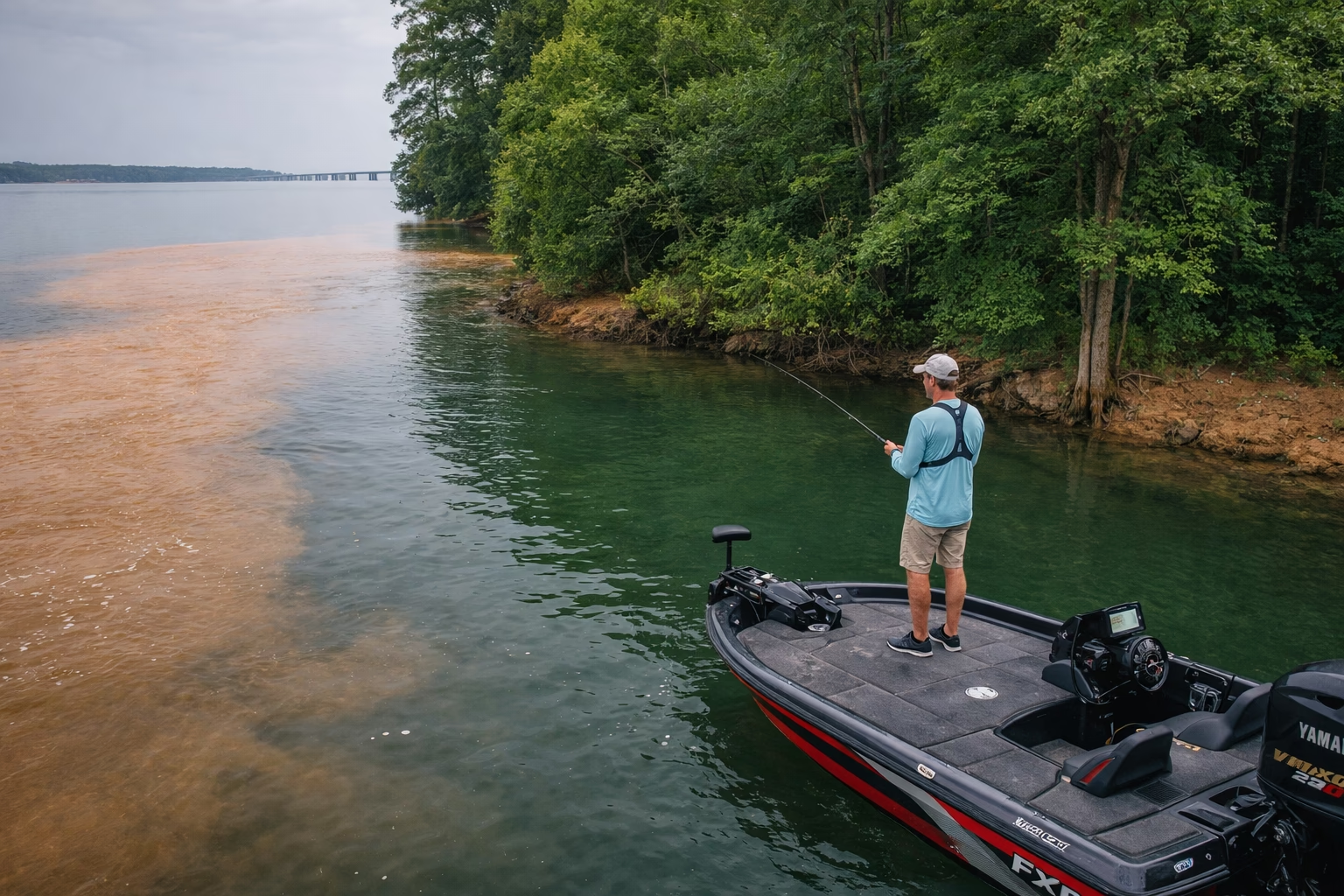
For the past six years, living on Lake Livingston has taught me a number of things about bass fishing and about the lake itself. Above all else, it has taught me one word: change.
That single word explains both the promise and the frustration of bass fishing on Livingston. It also explains why this lake sometimes gets a bad name from anglers who only visit it now and then. Lake Livingston is a lake that can fool you. One trip, you find fish and build confidence. A short time later, you come back expecting the same pattern, only to discover that rain, runoff, and water movement have changed everything. On this lake, yesterday’s good information can become nearly worthless in a hurry.
The massive Trinity River feeds Livingston, and a number of substantial creeks pour into it as well. Because of that, change is a constant companion. Rainfall is the biggest factor of all. Heavy rains north of the lake, anywhere along the Trinity basin and even as far north as the Dallas area, can nearly wreck black bass fishing on the north end of the reservoir. Heavy local rains can muddy the backs of the creeks, and within a few days an entire creek can become unfishable.
That is where much of the lake’s bad reputation comes from. Anglers come down, catch fish, and think they have the lake figured out. Then they return under what seems like the same seasonal pattern, only to find that a recent rain has moved the fish up or down the creek in search of cleaner water. Suddenly, the fish are gone from the places where they were last time, and the search begins all over again.
The truth is, learning to deal with Lake Livingston is really not all that complicated. But to understand it, you have to think bigger than one cove, one creek bend, or one productive stretch. You have to consider the whole lake and how water moves through it.
The easiest black bass to catch are usually found in the major feeder creeks, the smaller tributaries, and the ditches that feed both. In those areas, the fish I target are almost always holding in the clearest water I can find, especially water with that dark, emerald-green color that seems to signal life and stability.
I should point out that my view is somewhat biased because I live on the north end of the lake, where rainfall has its greatest effect. The creeks on the north end are long, and some of them run for miles. That is an advantage, because those long creeks often hold fishable water even during periods of heavy rainfall.
Over time, I have come to rely on a few simple rules.
Rule No. 1: Local rainfall dirties the backs of the creeks first, and then that dirty water begins moving toward the main lake at a speed that depends on how much rain has fallen. After a heavy local rain, the main channel of a creek may be badly stained or completely blown out. Even so, up and down that same creek there are often small ditches and draws holding pockets of clear water.
Those little ditches and feeder cuts can stay clear even when the creek itself is dirty. Often they receive very little runoff, or they have a silted-in sandbar at the mouth that acts like a buffer against the muddy water. Those places may not look like much on a map, but under the right conditions they can save a day of fishing.
Rule No. 2: Heavy rains upriver will send muddy water down the Trinity and stain the river, the jungle, and much of the main lake above the Highway 190 bridge. But if the major creeks were in decent shape to begin with, they will often stay fishable unless the river keeps pumping in a truly overwhelming volume of muddy water.
Yes, the river and main lake may turn dirty, and yes, that off-colored water will try to push into the creeks. But most of the bigger creeks on Livingston are long enough that the muddy water does not move very far into them unless the lake is rising hard. And even when it is, that kind of change usually takes time. A big creek does not get wiped out overnight unless conditions are extreme.
Rule No. 3: If the lake has been in good shape and then gets hit by heavy local rain at the same time muddy water is coming down the river from the north, there will still be fishable water somewhere. You may have to hunt for it, but it will be there.
Somewhere between the main lake and the backs of the creeks, there will usually be stretches of clear water in the creek channels, along with pockets of clean water in the ditches and feeder creeks. That clear water may only last temporarily, but while it does, it often loads up with bass seeking refuge from the mud.
There are, of course, hundreds of possible scenarios on a lake this size, and you could write rules for all of them. The three I have listed are broad, but they are true, and they come directly from time spent living here and watching this lake do what it does.
A perfect example came last November when the Bassmaster Tournament Trail visited Livingston, just after the major October flood. The lake had been hammered by high water and had not yet recovered from the heavy rains. Rick Clunn probably summed it up better than anyone during that event when he said, “What the rains have done is made a very large lake very, very small.”
That was exactly right.
What he meant was that the field had been forced to concentrate in the scattered pockets of clear water up and down the lake. On a reservoir as large as Livingston, the fishable water had been reduced to a fraction of its normal range. The bass, and the fishermen chasing them, were all compressed into the same limited zones.
That is the lesson Lake Livingston teaches over and over again. During periods of rainfall, clear water is everything, and dark emerald-green water is the real prize. Find it, and you are in business. Ignore it, and you are likely wasting time.
In spite of all the change, or maybe because of it, Livingston can be an outstanding fall bass lake. By then, most tournament trails are winding down, except for the Classic and a few final events, and it is a fine time to make a trip. Fall on Livingston is a season for covering water and sharpening every major bass tactic you own: flipping, cranking, spinnerbaiting, and working topwaters.
Lake Livingston may never be a lake that gives itself away easily. It changes too much for that. But for the angler willing to pay attention to water color, runoff, and movement, it can be a rewarding place to fish. On this lake, success does not belong to the man who remembers where the fish were last time. It belongs to the one who understands why they moved.
And on Lake Livingston, they are always moving.

0 Comments