
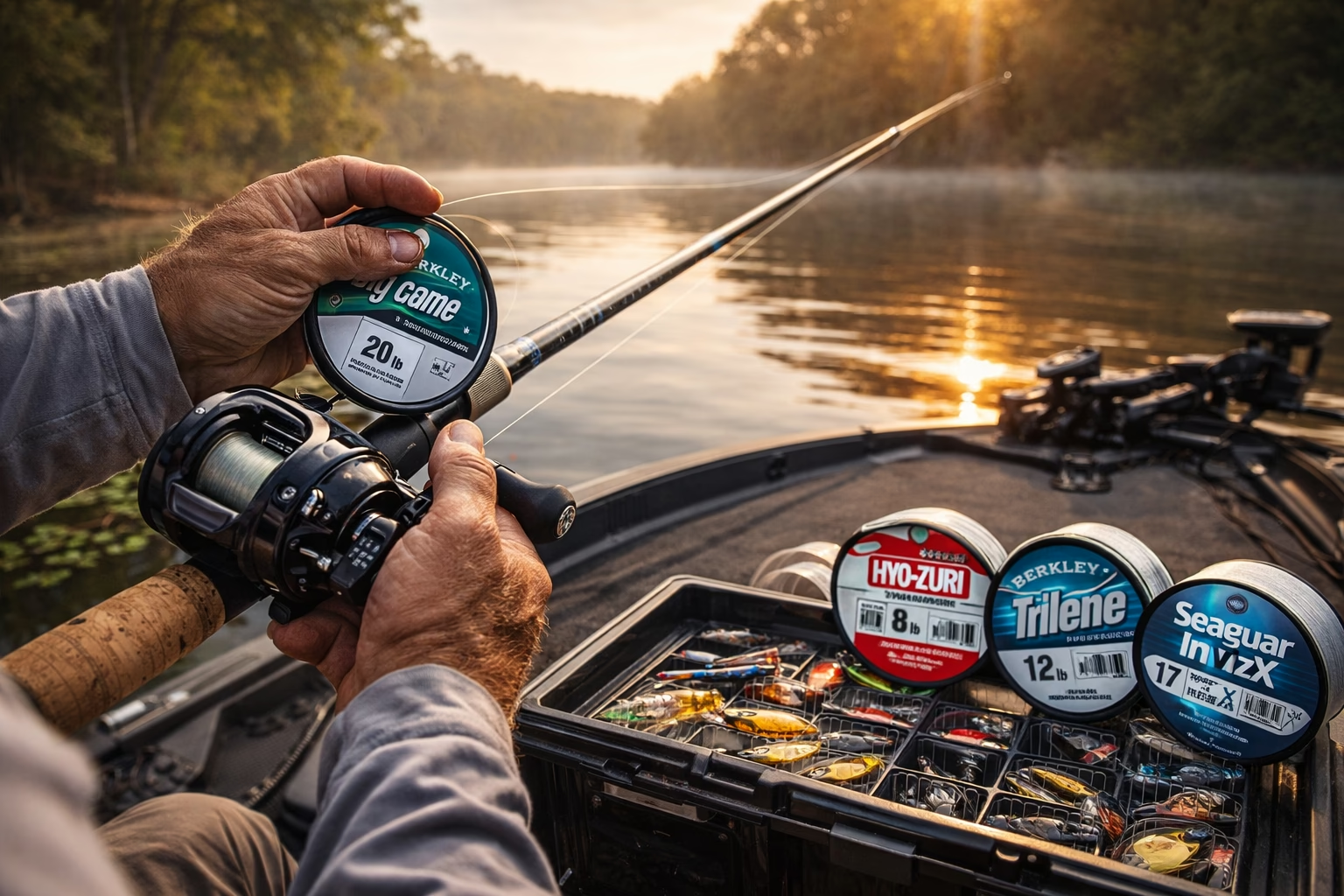
Most bass fishermen have done it.
You tie on a bait, make a few casts, and know full well you are not throwing it on the right line. Maybe the line is too heavy. Maybe it is too light. But instead of stripping off a spool and respooling the reel, you fish it anyway and hope for the best.
The problem is, deep down, you know better.
When you fish a lure on the wrong line size, you are asking that bait to do something less than its best. And if the bait is not working at its full potential, neither are you. That may sound like a small detail, but bass fishing is built on small details. Over time, the little refinements in your tackle, mechanics, and decision-making add up to the difference between an average fisherman and a consistently good one.
No single change will make a man the ultimate angler. But learning one little thing at a time, and putting all those little things together, is exactly how better fishermen are made.
Matching line to lures is one of those little things.
Every bait has a line size that lets it perform properly. Whatever line diameter allows that lure to show its best action, that is the line you want to be throwing. The smaller and more subtle the bait, the more important this becomes.
A little bait needs little line.
Small crankbaits, for example, perform best on lighter line because the line itself creates resistance in the water. The heavier the line, the more drag it produces, and that drag can choke down the lure’s action. A small bait simply does not have enough force working against the line to overcome that resistance.
Take a Model 3A Bomber as an example.
If you throw it on 17-pound test, it may dive only four or five feet and have a fairly moderate vibration. Put that same bait on 12-pound test, and it may run six to eight feet deep with considerably more action. Drop down to 8-pound test, and now you are getting about everything that bait has to offer. It may reach depths of ten feet or more and vibrate with much more freedom than it ever could on heavier line.
And more action often means more attraction.
The harder a bait works, the more vibration it creates, and in many cases, the more sound it puts out as well, both from its rattles and from the water it displaces. That added action can be the very thing that turns a following fish into a biting one.
Now, that does not mean lighter line is always the answer.
This is where common sense comes in.
If you are fishing a shallow timber flat with stumps everywhere, you may not feel too comfortable throwing light line. In that situation, you have to weigh the risk. You can beef up and give up a little bait performance in exchange for more pulling power, or you can stay with the lighter line, get the best action out of the bait, and accept that you may lose a fish if it wraps you up.
That is part of fishing.
Sometimes line selection is the difference between getting bites and not getting bites at all, especially in heavily pressured water. And it is worth remembering that before you can lose a fish in the cover, you have to get the fish to bite in the first place.
Reaction baits, on the other hand, are not the only category to think about.
Vertically presented baits such as jigs and craw worms are a different story. These lures generally need heavier line. The object with a jig is often to drop it straight down into heavy cover and put it right on the fish’s nose. In that situation, heavier line has very little effect on the action of the bait because the lure is falling mostly straight down. The fish usually never gets much look at the line anyway. It sees the bait, reacts to the bait, and that is that.
Heavy line also makes sense because this style of fishing is usually close-quarters combat.
You are making short pitches, setting the hook at close range, and often pulling fish out of thick timber, brush, or hydrilla. That is no place to be underlined.
Over the years, I have settled into some line-and-lure pairings that I trust. They are not the only answers, but they are combinations I live by in my own fishing:
- Shallow-diving crankbaits, 1 to 3 feet: 8- to 10-pound test
- Medium divers, 3 to 12 feet: 10-pound test
- Deep divers, 12 feet and deeper: 12-pound test
- Ultra-deep crankbaiting: 8- or 10-pound test can help big crankbaits reach maximum depth
- Spinnerbaits, 1/4 ounce: 12-pound test
- Spinnerbaits, 3/8 to 1/2 ounce: 14- to 17-pound test
- Spinnerbaits, 3/4 to 1 ounce: 17-pound test and up
- Rogues: 10- to 12-pound test
- Jigs around heavy timber: 20- to 25-pound test
- Hydrilla fishing: 25-pound test
- Small jigs, around 1/4 ounce: 12- to 17-pound test
- Topwaters: 12-pound test
- Topwaters around hydrilla: 20-pound test
- Carolina rigs: 17-pound test
None of those pairings are random. Each one is built around letting the lure do what it was designed to do while still giving the angler enough control to fish effectively in the conditions at hand.
That is really what line selection comes down to. Balance.
You want enough line to handle the cover, the fish, and the presentation. But you do not want so much line that you rob the bait of its built-in action. Somewhere in that balance is the setup that lets your lure work naturally and still gives you confidence when the strike comes.
That is the kind of little thing that catches more fish over the long haul.
And in bass fishing, the long haul is where the better anglers separate themselves. Not with one magic lure, one miracle knot, or one secret honey hole. They do it by paying attention to details most people overlook.
Line size is one of those details.
Get it right, and a lure comes alive.
I hope this helps you make better line choices and put a few more bass in the boat. Good luck fishing.



0 Comments