
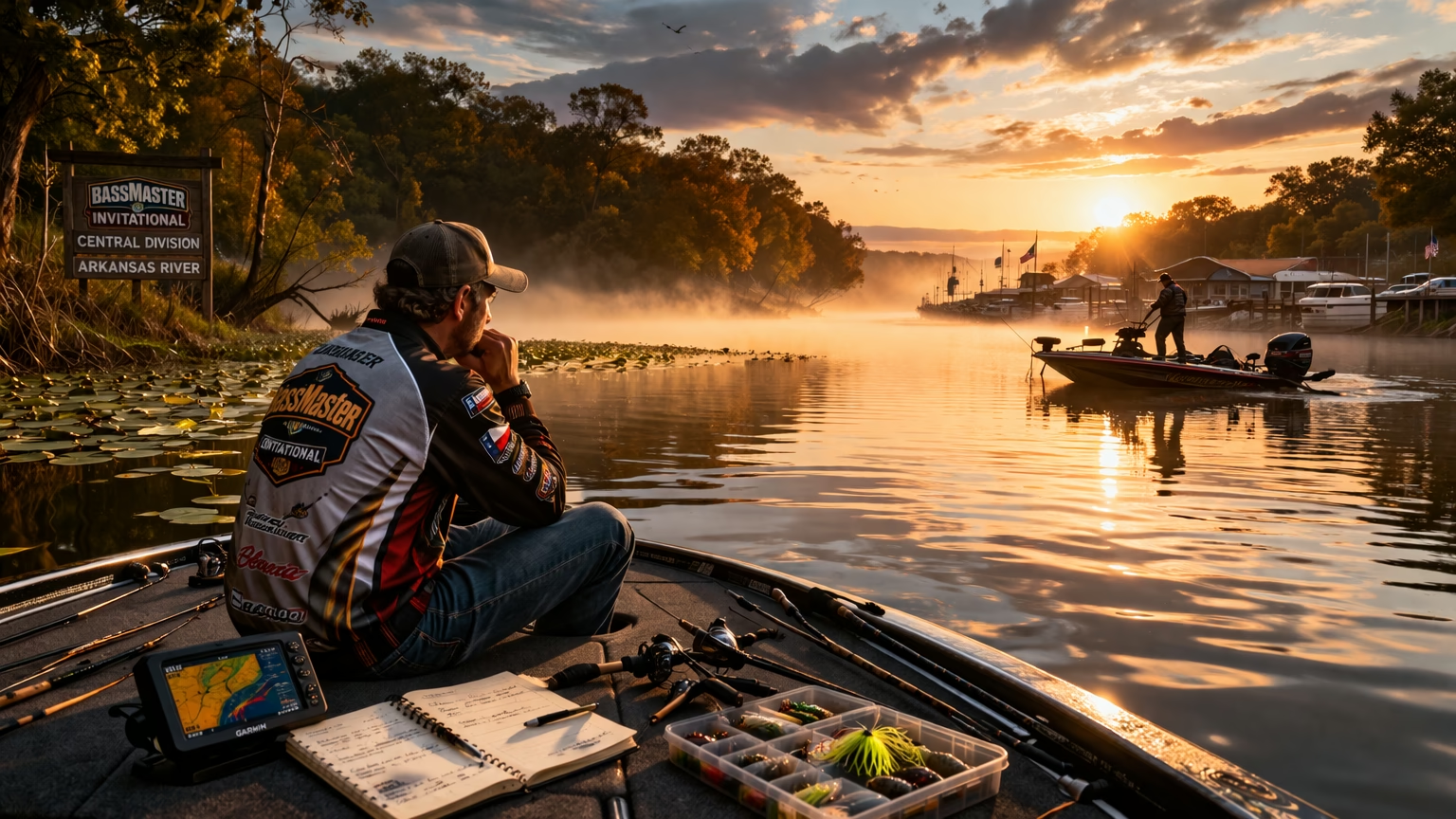
Tournament fishing has a way of teaching the same lesson more than once, especially when a man is stubborn enough to think he has finally outsmarted the game. Last month on the Arkansas River, I got another reminder that in bass fishing, nothing is certain until the fish are in the livewell and the scales have settled.
I headed back to the Arkansas River to fish the first Bassmaster Invitational of the Central Division, still trying to get my footing on the Invitational Circuit. The section of river open to us stretched roughly 100 miles, and like the year before, I chose to concentrate on the southern end of the tournament waters.
My plan was simple and, on paper, sound. It was fall, and I expected the shad to be back in the creeks, with the bass right behind them. That dependable fall pattern had treated anglers well for years, and once again it proved true. I found a strong concentration of fish in the back of a main creek, and from the moment I laid eyes on it, the place looked textbook.
The creek had everything a bass fisherman could want: deep water, standing timber, milfoil, coontail, lily pads, and small feeder tributaries draining into it. It was one of those places that seemed to gather fish naturally, the kind of area you look for all through practice and rarely find in such complete form.
I spent two days on those fish, both of them under heavy rain, trying to pin down the best way to catch them. Under normal circumstances, I probably would have saved some of that figuring for the tournament itself, but in this case time was too precious. Those fish were a two-hour run away, one way, which meant actual fishing time would be cut down to only about three and a half hours a day. When you are giving up that much of the clock, you need to know exactly what you are going to do when you get there.
Even late on the second day of practice, after all that rain, the water in the creek remained clear. It looked like the runoff might not affect it much at all. The aquatic vegetation was so thick, so matted, and so extensive that I convinced myself it would act as a filter if more runoff came. In my mind, the grass would protect the creek. With my “ace in the hole” secured, I headed north for the third day of practice and fished near the harbor. The tournament would launch there, and it is always wise to have a few backup fish close to home, just in case.
So far, everything was lining up.
At the pairings meeting Wednesday night, I drew a partner from Kentucky for the first day, and we agreed to head south to my fish the next morning. Things were still looking good.
We launched out of the harbor in Flight 2C right on time. But just before reaching the Arkansas River, we ran headlong into a wall of fog so thick we could barely see the front of the boat. Fortunately, we were close enough to the bank to at least have some kind of reference point. My partner mentioned that he had a nearby creek where he had caught fish in practice, so we idled over to it.
We did not have much choice. It was simply too dangerous to run in that fog with 152 other tournament boats on the water, not to mention spectator boats, barges, and the ever-present rock dikes lining the river and harbor.
So we stayed in the harbor all day.
I managed to catch a limit, and while I felt reasonably good about salvaging the day, I also knew I likely could have done better had we made it south to my backwater fish. Still, I was off to a decent start and sitting in the top 50.
For day two, my partner agreed to make the southern run.
We left Friday morning in Flight 1B and pointed the boat downriver on what would be a two-hour trip. The actual running time was closer to an hour, but to get that far south required locking through twice, and each lock usually cost about thirty minutes. After the second lock, it was still another thirty-five minutes to my fish.
I was shaving every corner I could. I ran the inside edges of the buoys, skimmed past the ends of rock dikes, and did everything possible to trim away a little time. Once we turned off the river and into the creek, I kept the boat wide open. I could hardly wait to get there.
And that was part of the problem.
Somewhere during that long run, I had quit thinking like a tournament fisherman and started thinking like a man headed to a private honey hole. I forgot about contingencies. I forgot about variables. I forgot that Mother Nature rarely honors anyone’s plans.
As I reached the back of the creek and began to slow down, an ice-cold chill went through me.
The water was muddier than Trinity Bay on a north wind.
I looked around once, and I knew immediately the place was shot, at least for the little time we had available. I picked up a spinnerbait and made a few casts while trying to think through what to do next. My partner, a sharp bass fisherman from Oregon, quickly agreed. In the time window we had, the place was hopeless.
Between the second day of practice and the second day of the tournament, two full days had passed. That was enough time for the runoff to drain into the creek and wreck the entire backwater.
The fish were still there, no doubt about it. But bass in newly muddied water often go sour for a while. They are still around, but they become lethargic, unsettled, and much less willing to bite. A man might still trigger a reaction strike if he puts a bait right in their face, but this was not just stained water or even off-colored water. This was rolling mud.
And that was new to me.
Any time in the past that I had found water that muddy, I had simply gone somewhere else. I had never really tried to fish bass in conditions like that because I had always had the option of moving. This time, unfortunately, my key area was the place that had gone bad.
I did have two lesser backup areas, and we fished them both. We scratched up a couple of fish apiece, but the day fell nowhere near the expectations I had built for it. The third day was even worse, and by then I had slipped completely out of contention.
But I did walk away with a lesson, or more accurately, a lesson I had to relearn.
Never count your chickens before they hatch.
I had convinced myself I had a sure thing in that backwater. I trusted it so completely that I had not truly prepared myself for the possibility that it might go bad. I had backup areas, yes, but not a backup mindset. I had not fully thought through the alternatives or mentally prepared for what I would do if the whole plan unraveled.
Looking back, the truth is as plain as a spinnerbait on a dock cable. In tournament fishing, you have to roll with the punches. You have to roll with the weather. You have to adjust to whatever Mother Nature deals out. In a word, you have to get into her flow.
I was nowhere close to that flow in this tournament.
In tournament bass fishing, there are always variables at work, and those same variables can either make you look like a hero or leave you standing there like a zero. That is part of the game, and part of the education.
So the learning continues.
Later this month, I will start the whole tournament process over again in Georgia at Lake Hartwell, a little wiser and, I hope, a little less certain of anything too early.
And before I close, a special congratulations goes to my friend and traveling partner, Brian Utecht, for finishing 12th in the Arkansas tournament. Brian’s fish held up through all the rain, and he did an outstanding job of coaxing them into biting with three different baits along a twenty-yard stretch of shoreline.
Good job, Bro.

0 Comments