
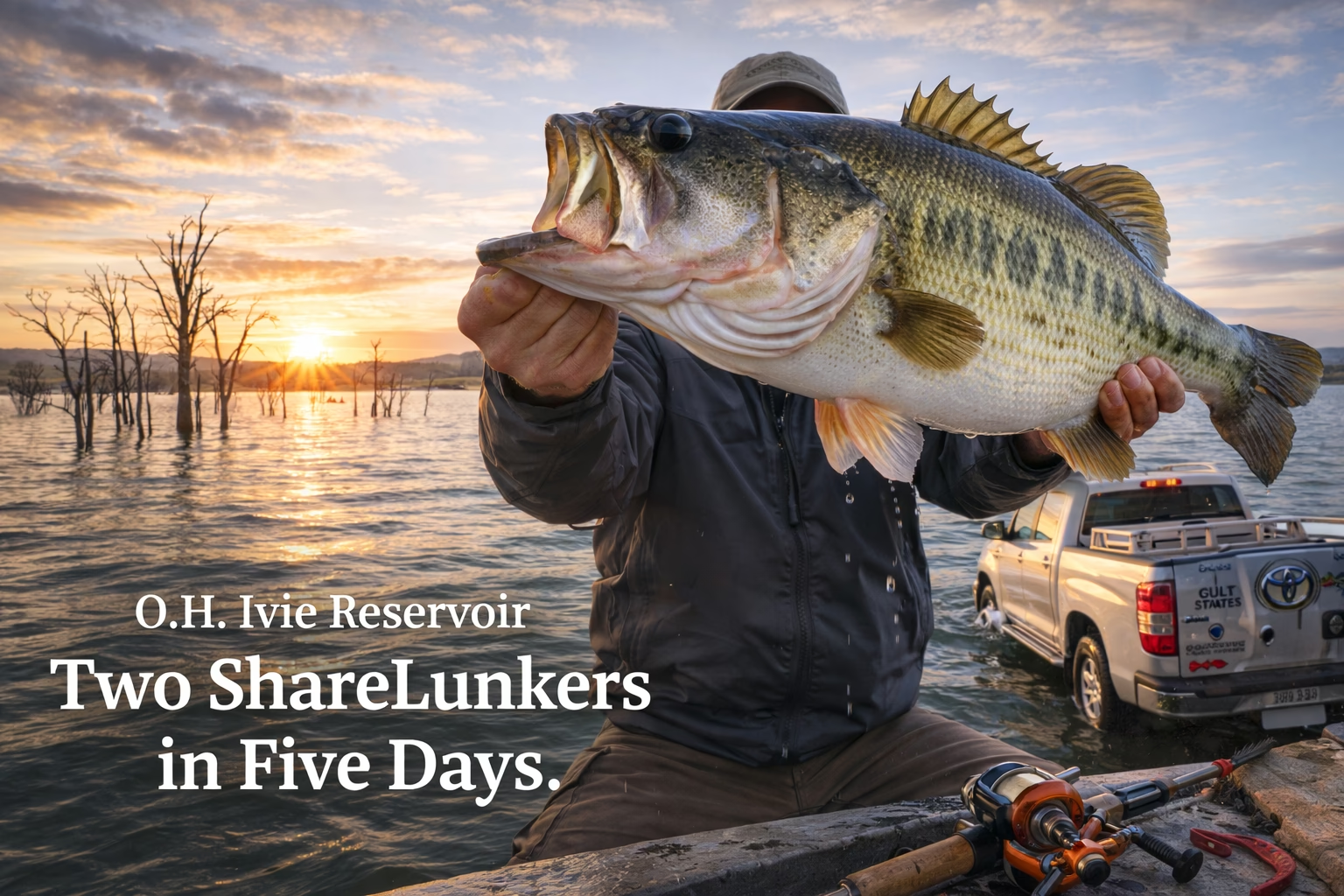
O.H. Ivie isn’t just back—it’s on a tear.
Five days. Two ShareLunkers. And just like that, a West Texas lake that had been quiet for years is suddenly making up for lost time in a hurry.
On January 21, O.H. Ivie Reservoir sent its second Toyota ShareLunker of the week to the Texas Freshwater Fisheries Center. Wesley Pullig of Eden landed a 13.09-pound largemouth—26.125 inches long with a 19.75-inch girth—from 25 to 30 feet of 48-degree water. The bait was an X-Lock jig paired with an Xcite Baits Raptor Tail Craw, the kind of bottom-hugging combination that finds fish when they’re sulking deep.
The bass is now ShareLunker No. 477. More importantly, it’s confirmation that what’s happening at Ivie is no accident.
Texas Parks and Wildlife Department inland fisheries biologist Mandy Scott saw this coming years ago.
West Texas had endured a punishing drought that stretched from the late 1990s into the early 2000s. When the rains finally arrived in 2005, Ivie rose—flooding shoreline vegetation and resetting the lake’s biological clock.
“We got about 15 feet of water that flooded saltcedar,” Scott said. “That benefited the spawns. We had bigger year classes, more baitfish, and better habitat conditions overall.”
Before that rise, the lake had too many small bass chasing too little forage. Growth stalled. The easy answer—stock more fish—was on the table. But Scott and her team chose patience over pressure.
“A lot of people thought we should have stocked bass after the lake rose, but it would have been a waste,” she said. “The water rise helped fish that were already there reproduce, and adding fingerlings might have hurt the growth of those fish. We decided to wait and let Mother Nature work. It’s hard to do that sometimes, especially when you’re getting pressure from a lot of people to put something in.”
That kind of restraint doesn’t always win applause in the moment—but it often wins in the long run.
And in a show of boots-on-the-ground cooperation, local bass clubs stepped in to help balance things out. Tournament-caught fish from Ivie were relocated to Twin Buttes Reservoir, where water levels had dropped so low that bass populations were struggling.
“The clubs were very cooperative and supportive,” Scott said. “It helped both lakes to do that.”
The payoff began to show on January 16, when Ben Blaine of Merkel landed a 14.02-pound ShareLunker—No. 475. Pullig’s fish, just days later, proves that wasn’t a one-off lightning strike. It’s a pattern.
So far this season, six ShareLunkers have been entered into the program: two from private East Texas waters, two from Ivie, and two from Falcon International Reservoir. And notably, some of the state’s traditional heavyweights—Fork, Choke Canyon, Conroe, Amistad—haven’t even weighed in yet.
That’s the kind of statewide setup that gets attention.
ShareLunker program manager David Campbell isn’t one for bold predictions, but even he can read the signs.
“I’m glad I’ve got a new Toyota Tundra to pick them up,” he said. “It rides really well with a full tank of water.”
By season’s end, he may get plenty of chances to test that suspension.
For anglers hoping to join the list, the rules are straightforward. Any legally caught largemouth bass weighing 13 pounds or more—from public or private Texas waters—between October 1 and April 30 qualifies for the Toyota ShareLunker program. A call to Campbell sets the process in motion, with Texas Parks and Wildlife Department personnel retrieving the fish within 12 hours.
Those fish go on to serve a larger purpose. At the Texas Freshwater Fisheries Center, they become part of a selective breeding program designed to improve bass size and growth rates across the state—an investment in future seasons that starts with a single cast.
The program itself is supported through the Texas Parks and Wildlife Foundation and Gulf States Toyota, a partnership that continues to fuel conservation and fisheries management across Texas.
And out on Ivie, where flooded timber and rising water have quietly rewritten the script, something familiar is happening again.
The lake rose.
The forage followed.
And now the bass are catching up—fast.

0 Comments