

Not every field trip requires a school bus.
Thanks to an interactive Webcast from the Texas Parks and Wildlife Department, more than 10,000 schoolchildren across Texas and beyond will get a front-row seat to one of the state’s greatest natural wonders without ever leaving the classroom.
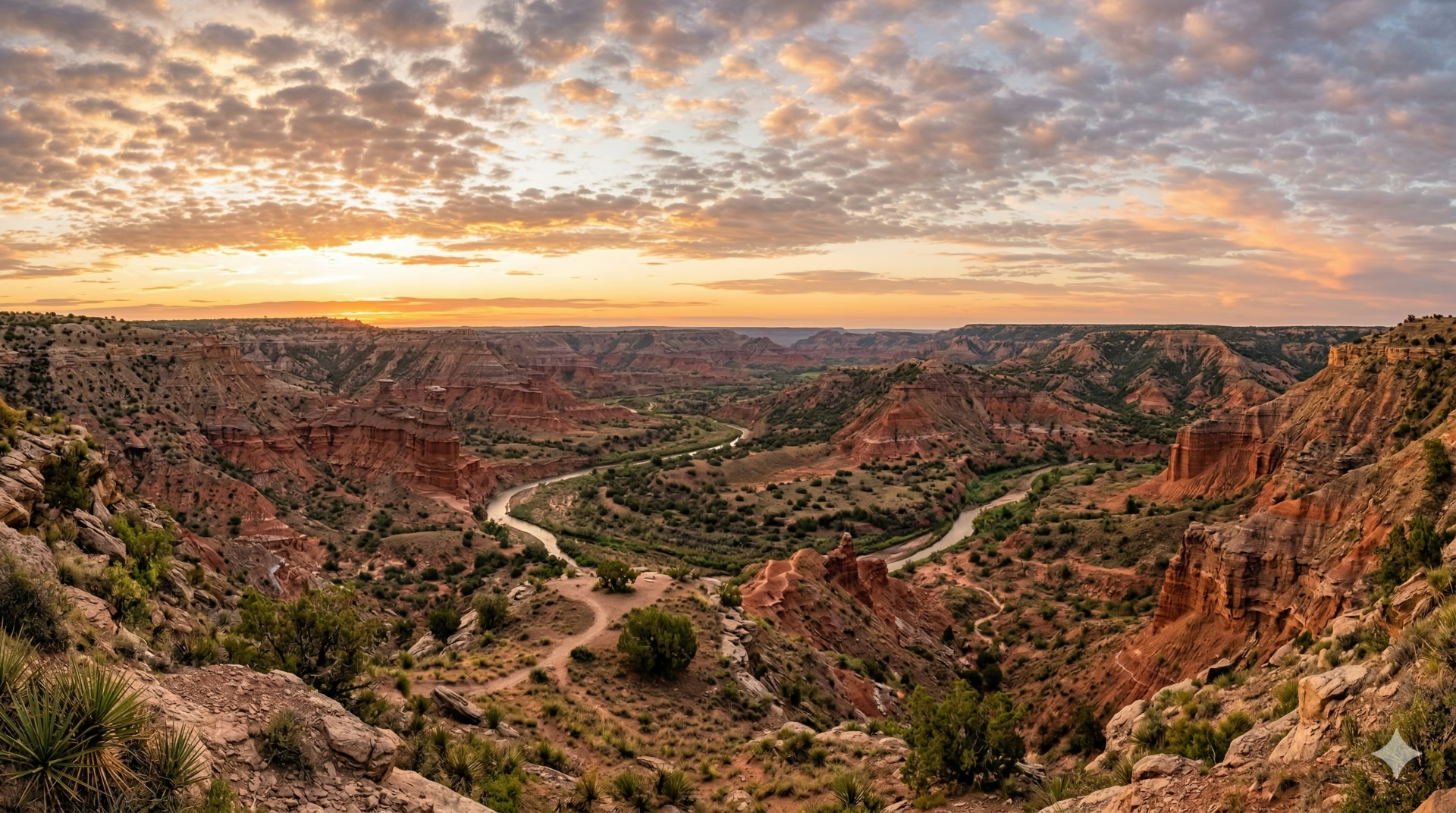
The event, titled “Life on the Edge — Where Ecological Regions, Cultures, Past and Present Meet,” is scheduled for Friday, November 15, from 8:30 to 11:30 a.m. The program will offer students a virtual journey into Palo Duro Canyon, often called the Grand Canyon of Texas, and one of the most remarkable landscapes in the Lone Star State.
Broadcast live from the Panhandle-Plains Historical Museum, the Webcast will guide students from the broad plains above the canyon rim down into the dramatic world below, exploring both the natural history and the human story of the region. The program is designed to bring the canyon to life by blending science, history, culture, and a little fun along the way.
Students will not just be watching scenery.
The Webcast will feature live-streaming video of living-history reenactors in uniform and native dress as they recreate the final battle of the Red River War. Biologists and scientists will also take part, helping students uncover the area’s rich geology and remarkable diversity of plant and animal life. Along the way, viewers will learn more about the people, wildlife, and ecosystems that make Palo Duro such a distinctive place.
And this is not meant to be a passive lesson.
Local students will take part in lighthearted educational games designed to reinforce what they are learning, while students watching from other locations can join in through chatroom participation and polling questions. They will even have the opportunity to ask questions of experts during the live Webcast.
That kind of interaction is what sets a program like this apart.
Dozens of schools from across Texas have already registered, including campuses in Abilene, Austin, Beaumont, Bryan, Corpus Christi, Dallas, Fort Worth, Harlingen, Houston, Midland, San Antonio, and Waco.
Nancy Herron, Texas Parks and Wildlife Department education coordinator, says the agency’s Webcasts have earned a national reputation for quality, and she clearly takes pride in what they offer students.
“The TPWD Webcasts have gained a national reputation for excellence, and it is truly a joy to provide this experience for our kids,” Herron said. She noted that the program includes outstanding guests, a “play along” game show to challenge student knowledge and observation skills, and polling questions designed to keep the Internet audience involved. In her words, the event promises to be “fun, fast-paced and student-centered.”
Herron has produced 21 educational Webcasts for Texas Parks and Wildlife since 1998, with support from organizations such as NASA, Texas A&M, the University of Texas, the University of Houston, and other public and private partners interested in using the Web as a teaching tool.
That kind of support says a lot about where education is heading.
According to Herron, TPWD recognized early on the potential of the Web as an interactive learning platform. Used responsibly, she says, it can reach thousands of children, either as an introduction before they visit one of the department’s sites in person or as a follow-up to an educational experience already underway. She also noted that other organizations across the country are beginning to follow Texas Parks and Wildlife’s lead in offering virtual field trips and expert access online.
Anyone may view the Webcast, and teachers can register online ahead of time to receive educational materials that accompany the program. Links to TPWD Webcasts are available on the department’s home page, which also includes archived programs on subjects such as Texas Wild, Spaceship Earth: The Water Planet, Wild in the City, Lone Star Dinosaurs, Mysteries of the Lower Pecos, Travel the Texas Time Machine, and Treasures of the Gulf Coast.
In a time when attention is hard to hold and good teaching tools matter more than ever, this kind of program does more than fill a school morning. It opens a window to the land, to history, and to the kind of curiosity that can stay with a child for a lifetime.
And if a few thousand youngsters come away wanting to see Palo Duro Canyon with their own eyes someday, then this Webcast will have done exactly what good outdoor education ought to do.

0 Comments