
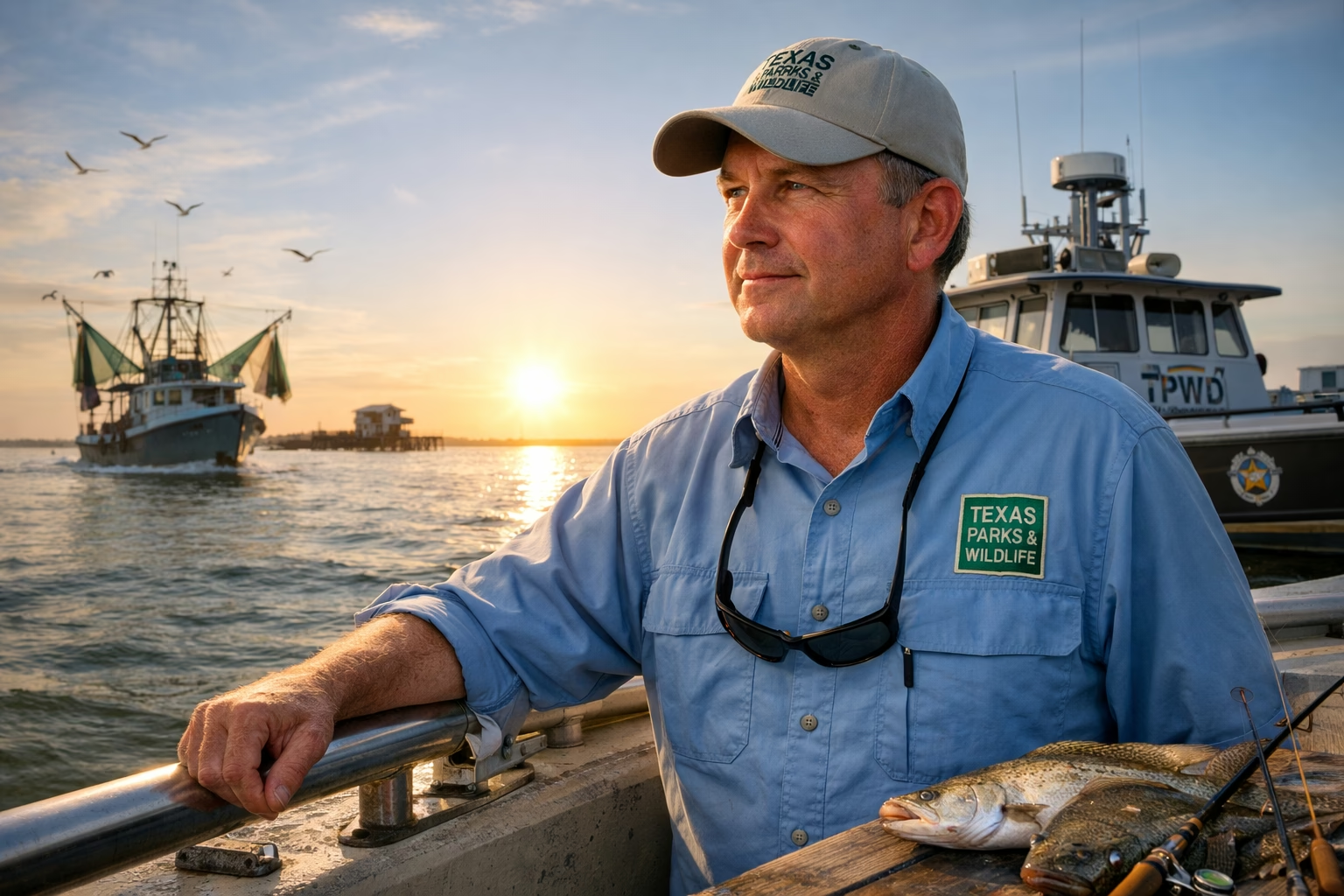
There’s a quiet kind of leadership that doesn’t make waves—but keeps the tides in balance. After a nationwide search, the Texas Parks and Wildlife Department has tapped one of its own, Robin Riechers, to take the helm of its Coastal Fisheries Division—a move that feels less like a hire and more like a steady hand taking the wheel.
Riechers, a TPWD veteran since 1988, steps into the role on February 1 after serving as Science and Policy Director. His career has been spent in the trenches of coastal fisheries management, where science meets saltwater and policy must hold its ground against both nature and human demand.
“Robin brings a wealth of institutional knowledge about the key issues and challenges facing our state’s coastal fisheries resources,” said TPWD Executive Director Carter Smith. “He has demonstrated strong leadership skills and the ability to build consensus among diverse stakeholder groups.”
That ability has been tested—and proven—over decades. Riechers has played a central role in shaping modern coastal fisheries management in Texas. On the commercial side, he helped develop and implement limited-entry programs for shrimp, crab, and finfish fisheries—efforts widely credited with improving long-term sustainability. For recreational anglers, his fingerprints are on conservation strategies for spotted seatrout and flounder, as well as initiatives protecting fragile seagrass habitats—the very nurseries of the Gulf.
“Our valuable coastal resources are under increasing pressure from a variety of environmental, developmental, and societal factors,” said Ross Melinchuk, TPWD Deputy Executive Director for Natural Resources. “Robin Riechers possesses the resource knowledge, leadership skills, and strategic vision necessary to lead the Coastal Fisheries Division through these challenging yet exciting times.”
Riechers’ path through TPWD began not on the water, but behind the numbers—as an economist. Early in his career, he built and managed the department’s “human dimensions” program, a now-essential piece of fisheries policy that considers not just the fish, but the people who depend on them. It’s a perspective that has served him well in an arena where biology, economics, and public interest often collide.
“When I stepped into the job here, we were known as one of the best conservation resource divisions in the country—and we still have that reputation today,” Riechers said. “Working with the Coastal Fisheries team, I want to ensure we continue that legacy. We have the finest conservation professionals in the nation, and I am honored to have the opportunity to lead such a consummate group of individuals.”
Beyond Texas waters, Riechers has also carried the state’s voice into the broader Gulf. Since 2000, he has represented TPWD on the Gulf of Mexico Fishery Management Council, where he served as the Council’s first-ever two-term chairman in 2006 and 2007—a testament to both his expertise and the respect he commands among his peers.
Still, the challenges ahead are as relentless as a tide chart. Texas coastal fisheries face mounting pressures from population growth, competing user demands, freshwater inflow concerns, and the unpredictable blows of nature—freezes, storms, and red tide among them.
“As we see more pressure on the resource from a growing population, our goal is to work closely with the various user groups to ensure a healthy future for Texas coastal resources,” Riechers said. “Our challenge is to effectively manage a limited resource for the benefit of all stakeholders.”
That’s the job in plain terms: balance. Not just between fish and fishermen, but between today’s opportunity and tomorrow’s inheritance.
Riechers, a graduate of Texas A&M University, now takes charge at a time when the margin for error is thin and the stakes are high. But if his career has shown anything, it’s that he understands both the science beneath the surface and the people standing along the shoreline.
And in a world where coastal waters are pulled in more directions than ever, that kind of steady, seasoned leadership may be the strongest current of all.


0 Comments