
Every year, ICAST rolls out a fresh batch of tackle designed to tempt both fishermen and fish. Some of it is hype. Some of it is window dressing. And every now and then, a bait comes along that looks like it might flat-out earn a place in the boat.
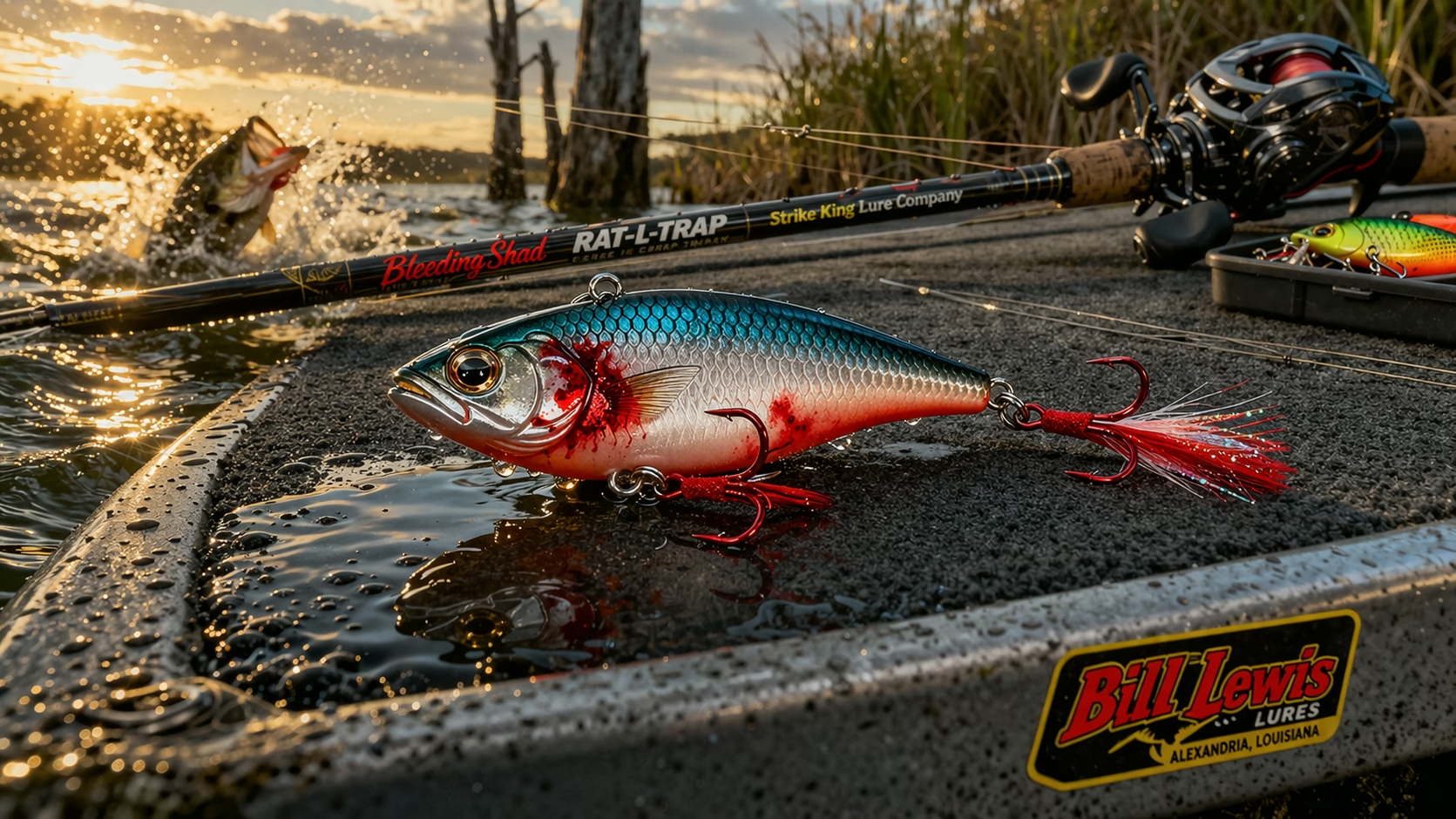
One of the most talked-about new lures from the recent ICAST show in Las Vegas came from Bill Lewis Lures, the folks who brought us the legendary Rat-L-Trap. Their new Bleeding Shad series is designed to imitate an injured baitfish, and at first glance it looks like a lure that could be hard for any predator to ignore.
Like any proud papa, Ken Chaumont is high on the new bait and expects this lipless crankbait to be one of the hottest lures going into spring. That ought to get the attention of Texas bass fishermen, because if there is one thing we know, it is this: big fish feed on little fish, and they get especially reckless when those little fish look wounded.
That is the idea behind the Bleeding Shad.
The lure combines vibration, an erratic swimming action, natural sound, and red “bleeding” accents around the gills, fins, and belly, along with Eagle Claw Reflex Red hooks. The whole package is built to trigger the strike reflex that predator fish are already wired to have.
According to the 2003 Rat-L-Trap catalog, “Studies from our G-Net-X research center confirm this attack mode is a generic reflex that all predators possess.” That may sound like lab-coat language, but on the water the meaning is simple enough: make a lure look and sound like easy prey, and something is liable to eat it.
Chaumont says one of the key ingredients that separates the Rat-L-Trap from the crowd is its Liv-N-Sound feature.
“Independent tests have proven that the Rat-L-Trap produces natural sounds that are nearly identical to sounds made by schooling shad under distress,” Chaumont said. “These specific sounds are highly effective for attracting bass and other gamefish and for stimulating aggressive feeding behavior.”
That is a strong claim, but any angler who has spent much time chunking a Trap already knows that something about that bait gets under a bass’s skin.
If you are a Texas bass fisherman, you also know that red is the color when spring rolls around and bass move up into skinny water. At that time of year, red often outsells other colors by a wide margin, and for good reason. It shows up well, suggests injury, and flat-out gets bit. The Bleeding Shad takes that proven trigger and uses it with a little restraint, adding blood-red accents in just the right places instead of overdoing it.
That subtle red, paired with the lure’s sound and flash, could make the Bleeding Shad a dangerous little package in springtime water.
One of the best things about fishing a Rat-L-Trap is that it is hard to fish one wrong. Even so, most pros will tell you that a burn-and-stop retrieve is still the money presentation. Cast it out, wind it back fast, and then kill it every so often. More often than not, the strike comes right when the bait stops or just as it starts again. That sudden change in speed and direction seems to flip a switch in a bass.
These baits are also deadly when thrown parallel to submerged grass edges, or around flooded timber and brush. If fish are holding at a particular depth, the old countdown method still works like a charm. Start retrieving as soon as the bait hits the water on one cast. On the next, count to two before starting. Then count to three on the following cast, and keep experimenting until the fish tell you where they are holding.
Bill Lewis also offers a floating Rat-L-Trap for working open pockets in weedbeds. A slow, erratic retrieve through those holes can look just like a struggling shad, and when a fish decides to eat it, the strike can be downright violent.
Another productive trick is the bumping technique. Cast beyond a dock post, rock, stump, or tree, then bring the bait back so it ricochets off the cover. There is something about a Trap deflecting off an object that can make a fish react when a straight retrieve will not get so much as a sniff. A Bleeding Shad ticking off cover has all the makings of trouble.
The Bleeding Shad is offered in three sizes: 1/4-ounce, 1/2-ounce, and 3/4-ounce. It also comes in eight colors: chrome/green, orange, gold green, lemon, chrome blue, white, chartreuse, and tequila sunrise. Having tested a few of them, I would not bet against chrome blue or chrome green. Those two ought to be especially tough to beat.
And do not make the mistake of thinking Rat-L-Traps are strictly freshwater tools.
According to Chaumont, “The redfish just eat them up.” That should not surprise anyone who has watched aggressive saltwater fish hammer a fast-moving shad imitation. My guess is that redfish will not be the only saltwater customers. Other toothy critters are likely to find the Bleeding Shad and its sister colors just as hard to resist.
For anglers who chase trout, crappie, smallmouth bass, white bass, or panfish, Bill Lewis also offers the Tiny-Trap, a 1/8-ounce version that carries the same sound and action as the original in a downsized package. It is a natural fit for fishermen using light line with spinning or spincast tackle.
Bill Lewis Lures, based in Alexandria, Louisiana, has been building baits for more than 30 years, and they did not get there by accident. The company has long had a reputation for producing quality lures backed by people who understand fishermen and what fish respond to.
The tackle world introduces plenty of new baits every year. Most come and go without much fanfare once they hit real water. But every once in a while, a lure comes along that looks like more than a gimmick.
The Bleeding Shad just might be one of those.
If you are looking for a bait that can put a few extra fish on the stringer this spring, it may be worth tying one on. Odds are good you will not be disappointed.
For more information on the Bleeding Shad and other Bill Lewis products, call 1-800-633-4861 or visit the company online.



0 Comments