

Texas has long been known for big bass, sprawling reservoirs, flooded timber, and anglers who believe a casting rod and plastic worm are the proper tools for the job. Yet there’s another way to chase those same fish that brings a different rhythm to the water. A slower rhythm. One where line unrolls in the air like a silk ribbon and a bug lands softly beside a stump.
Fishing Texas bass on a fly rod is not new, but in recent years it has grown steadily in popularity as anglers rediscover the simple joy of catching largemouth bass with flies.
For many fishermen, the first bass on a fly rod is a revelation. The strike is explosive, the fight feels twice as strong, and the entire experience reconnects you with a style of fishing that rewards patience, observation, and presentation.
Whether you’re fishing shallow grass on Lake Conroe, probing timber on Sam Rayburn Reservoir, or stalking calm coves on Toledo Bend, bass fishing with a fly rod can be both productive and deeply satisfying.
This guide explores how to fish Texas bass on a fly rod, including gear, flies, seasonal patterns, and the best lakes and conditions for success.
Why Fish Texas Bass on a Fly Rod?
Bass are among the most ideal fish for fly anglers. They are aggressive, adaptable, and thrive in shallow water where fly fishing techniques shine.
Across Texas, largemouth bass inhabit nearly every lake, reservoir, and slow-moving river. Many of these waters feature:
- flooded timber
- hydrilla and aquatic vegetation
- shallow coves and flats
- shoreline cover
All of these environments create prime fly-fishing opportunities.
The beauty of fly fishing for bass lies in its simplicity. Instead of relying on heavy tackle and fast retrieves, anglers focus on presentation and timing.
When a bass inhales a deer hair popper beside a cypress stump at sunrise, the result is pure electricity.
Best Fly Rod Setup for Texas Bass
Choosing the right gear makes fishing Texas bass on a fly rod far more enjoyable.
Rod
Most anglers prefer a 7-weight or 8-weight fly rod for bass fishing.
These rods provide enough backbone to:
- cast large flies
- handle windy Texas conditions
- pull bass away from cover
An 8-weight rod is often the most versatile choice.
Reel
Bass do not typically require complex reels with powerful drag systems, but a good reel should:
- balance the rod
- hold plenty of backing
- have a smooth drag
Large arbor reels help retrieve line quickly when a bass charges the boat.
Fly Line
For most situations, a weight-forward floating line works perfectly.
Floating lines excel when fishing:
- poppers
- frogs
- shallow streamers
- weed edges
For deeper presentations around submerged timber or ledges, an intermediate sinking line can be useful.
Leader and Tippet
Bass are not particularly leader shy.
A typical setup includes:
- 7.5 to 9 foot leader
- 12–20 lb tippet
Heavier tippet helps pull fish out of vegetation and prevents break-offs.
Best Flies for Texas Bass
One of the joys of fly fishing is experimenting with different patterns. Bass flies tend to be larger and more durable than trout flies.
Topwater Poppers
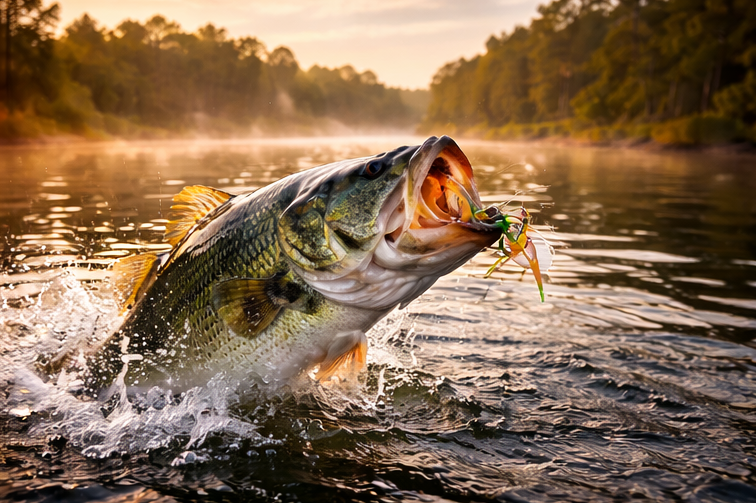 Topwater flies are often the most exciting way to fish Texas bass on a fly rod.
Popular patterns include:
- deer hair poppers
- foam poppers
- frog patterns
- cork poppers
These flies imitate frogs, insects, or wounded baitfish.
Fish them early in the morning or late in the evening for explosive strikes.
Streamers
Streamers imitate baitfish and work well throughout the day.
Common patterns include:
- Clouser Minnow
- Lefty’s Deceiver
- Woolly Bugger
- Game Changer style flies
Strip them through open water, along grass lines, or beside submerged timber.
Crawfish Patterns
Texas lakes are full of crawfish, making these flies extremely effective.
Use crawfish patterns when fishing:
- rocky banks
- riprap
- submerged ledges
Slow retrieves often trigger strikes from larger bass.
Best Texas Lakes for Bass Fly Fishing
Texas offers hundreds of excellent bass lakes, but several stand out as particularly well suited for fly fishing.
Lake Conroe
North of Houston, Lake Conroe provides abundant shoreline cover, boat docks, and shallow vegetation.
Fly anglers find success by:
- casting poppers around docks
- working streamers along grass edges
- targeting shallow pockets at dawn
Calm mornings on Conroe can produce unforgettable topwater action.
Sam Rayburn Reservoir
Often considered one of the greatest bass lakes in the country, Sam Rayburn Reservoir offers incredible opportunities for fly anglers.
Rayburn’s features include:
- flooded timber
- hydrilla beds
- shallow spawning flats
During spring, bass move shallow to spawn, making them perfect targets for fly rods.
Toledo Bend Reservoir
Straddling the Texas–Louisiana border, Toledo Bend Reservoir is legendary for its bass fishing.
Fly anglers can find success:
- along grass lines
- in shallow coves
- around submerged timber
Calm spring mornings often produce outstanding topwater fishing.
Lake Texoma
Located on the Texas–Oklahoma border, Lake Texoma is famous for striped bass, but it also holds excellent largemouth populations.
Fly anglers target bass:
- around rocky shorelines
- in shallow coves
- along vegetation edges
Wind can be a challenge here, making an 8-weight rod especially useful.
Amistad Reservoir
Clear water and rocky structure define Amistad Reservoir.
Fly fishing works particularly well:
- early in the morning
- near shallow structure
- along rocky shorelines
Streamer patterns that mimic baitfish perform well here.
Falcon Lake
Few lakes have produced more giant bass than Falcon Lake.
When water levels allow access to shallow areas, fly anglers can experience outstanding action around flooded brush and shoreline cover.
Seasonal Patterns for Texas Bass on a Fly Rod
Understanding seasonal patterns greatly improves success when fishing Texas bass on a fly rod.
Spring
Spring is arguably the best time to fly fish for bass.
As water warms, bass move shallow to spawn. This places them within easy reach of fly anglers.
Effective techniques include:
- popping bugs around spawning beds
- streamer retrieves near shallow cover
- slow crawfish patterns along banks
The months of March and April are especially productive.
Summer
Summer fishing can still be excellent if you focus on the right times of day.
Fish early morning and late evening when bass move shallow to feed.
Look for:
- shade lines
- dock edges
- grass beds
Topwater flies often produce spectacular strikes during these low-light periods.
Fall
Fall bass become aggressive as they feed heavily before winter.
Baitfish patterns shine during this time.
Focus on:
- creek channels
- coves with baitfish
- windblown banks
Streamers retrieved quickly can trigger reaction strikes.
Winter
Winter bass tend to move deeper but still feed during warmer afternoons.
Slow presentations work best.
Weighted streamers fished near structure can produce surprisingly good results.
Boat Positioning and Presentation
Successful fly fishing often depends on stealth and positioning.
Approach fishing areas quietly and avoid excessive boat noise.
Ideal casting targets include:
- stumps
- dock posts
- grass edges
- fallen trees
Allow flies to land softly and let them sit momentarily before retrieving.
Many bass strikes occur right after the fly hits the water.
Fly Fishing Techniques That Catch More Bass
Several techniques consistently produce when targeting Texas bass on a fly rod.
The Pop-and-Pause
With poppers, retrieve using short pops followed by pauses.
The pause often triggers the strike.
Slow Strip Retrieve
Streamer patterns work well with slow strips.
This imitates injured baitfish and often attracts larger bass.
Bottom Crawl
Crawfish flies should move slowly along the bottom.
Use short strips to imitate natural crawfish movements.
Weather and Water Conditions
Texas weather can change quickly, and conditions often influence bass behavior.
Best fly fishing conditions include:
- calm mornings
- overcast skies
- light wind
Windy conditions can make casting difficult, but heavier rods help overcome this challenge.
Why Fly Fishing for Texas Bass Continues to Grow
More anglers are discovering that fly fishing for bass offers something traditional bass fishing sometimes lacks: rhythm and connection.
Instead of rapid casts and power fishing, fly anglers slow down.
They watch the water.
They study the shoreline.
They feel the line roll through the air.
When a bass explodes on a fly in shallow water, the experience becomes unforgettable.
Final Thoughts on Texas Bass on a Fly Rod
Fishing Texas bass on a fly rod combines two great traditions: the excitement of bass fishing and the elegance of fly casting.
From the timbered coves of Sam Rayburn to the rocky shores of Amistad and the dock-lined banks of Lake Conroe, Texas offers endless opportunities for anglers willing to trade spinning gear for a fly rod.
The gear is simple.
The flies are creative.
And the rewards can be spectacular.
If you have never caught a largemouth bass on a fly rod, the next calm Texas sunrise might be the perfect time to begin.
Step onto the bow, strip out a little line, and send a popper toward the edge of the grass.
When the water erupts and your line tightens, you’ll understand why so many anglers have fallen in love with fishing Texas bass on a fly rod.
0 Comments