
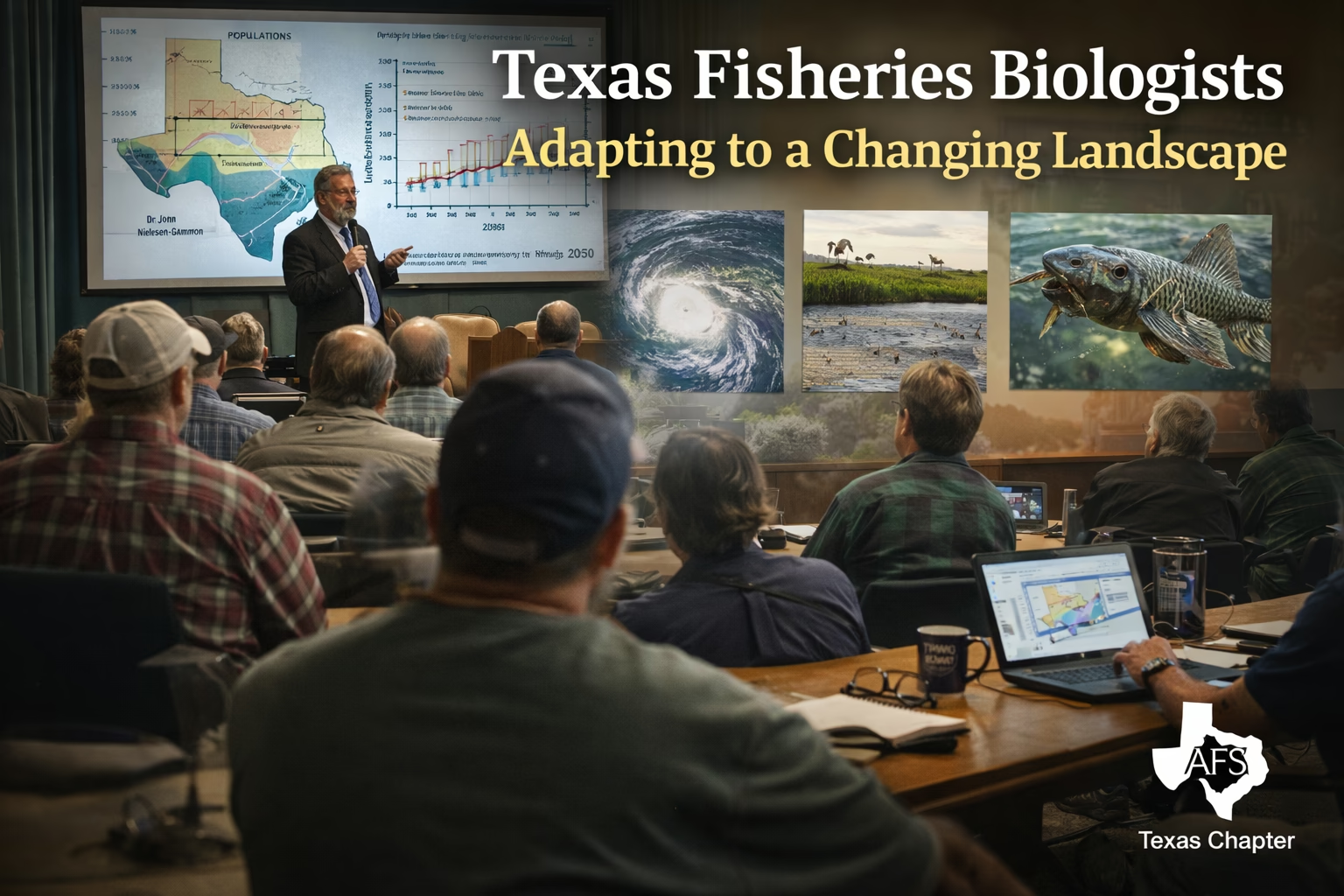
The job of a fisheries biologist used to be straightforward—count the fish, study the water, manage the resource.
Not anymore.
Today, the work stretches far beyond the shoreline, shaped by shifting weather patterns, growing populations, and an evolving science that refuses to stand still. On January 22, Texas fisheries professionals will take a hard look at that changing landscape during the annual meeting of the Texas Chapter of the American Fisheries Society.
The gathering will be held at the Texas Freshwater Fisheries Center, inside the Richard M. Hart and Johnny Morris Conservation Center—a fitting place to talk about the future of fish and the people who manage them.
This year’s program reads less like a routine conference and more like a preview of what’s coming.
Dr. John Nielsen-Gammon, Texas State Climatologist, will explore how climate has already reshaped the state—and what lies ahead. Dr. Karl Eschbach, Texas State Demographer, will outline the pressures of a rapidly growing population. And Dr. Scott Bonar, leader of the Arizona Cooperative Fish and Wildlife Research Unit, will tackle a topic that hits close to home: how fisheries management itself is changing in the modern West.
Together, those conversations frame a simple reality—fish don’t live in isolation, and neither do the people charged with protecting them.
The discussions don’t stop there.
Over the course of the meeting, biologists and researchers will dive into both freshwater and coastal systems, covering everything from the health of Texas bays and estuaries to the growing threat of invasive aquatic species. Presentations will range from the practical to the puzzling—examining the impact of suckermouth catfish in the San Marcos River, unraveling years of fish kills at Fairfield Lake, and assessing the status of spotted seatrout in Aransas Bay.
There will also be a look back at one of the Gulf Coast’s defining events in recent years—the toll of Hurricane Ike on oyster reefs in Galveston Bay—reminding everyone in the room that sometimes the biggest challenges arrive on the wind and tide.
Much of the work presented comes from the Texas Parks and Wildlife Department, along with universities and private research partners. It’s a broad mix of science, experience, and field-tested knowledge—all aimed at understanding systems that are anything but simple.
Members of the media are invited to attend and sit in on the sessions, with opportunities to speak directly with the scientists behind the research. For those planning to be there, a quick RSVP helps keep things running smoothly.
But beyond the presentations, the charts, and the data, there’s something more important taking place.
A recognition.
That the waters of Texas—its lakes, rivers, bays, and estuaries—are changing. And that the men and women tasked with managing them must change right along with them.
Because in the end, the future of fishing in Texas won’t be decided by a single study or one good year-class of bass.
It will be shaped by how well we understand what’s coming next—and how ready we are when it arrives.

Our fisheries have survived and are starting to flourish again. The hurricanes over the past 10 years have really negatively effected our fisheries on the gulf coast. With time, new laws & regulations and the help of everyone including mother nature, we have rebounded and I fell we are on a great path to a great fishing future.