
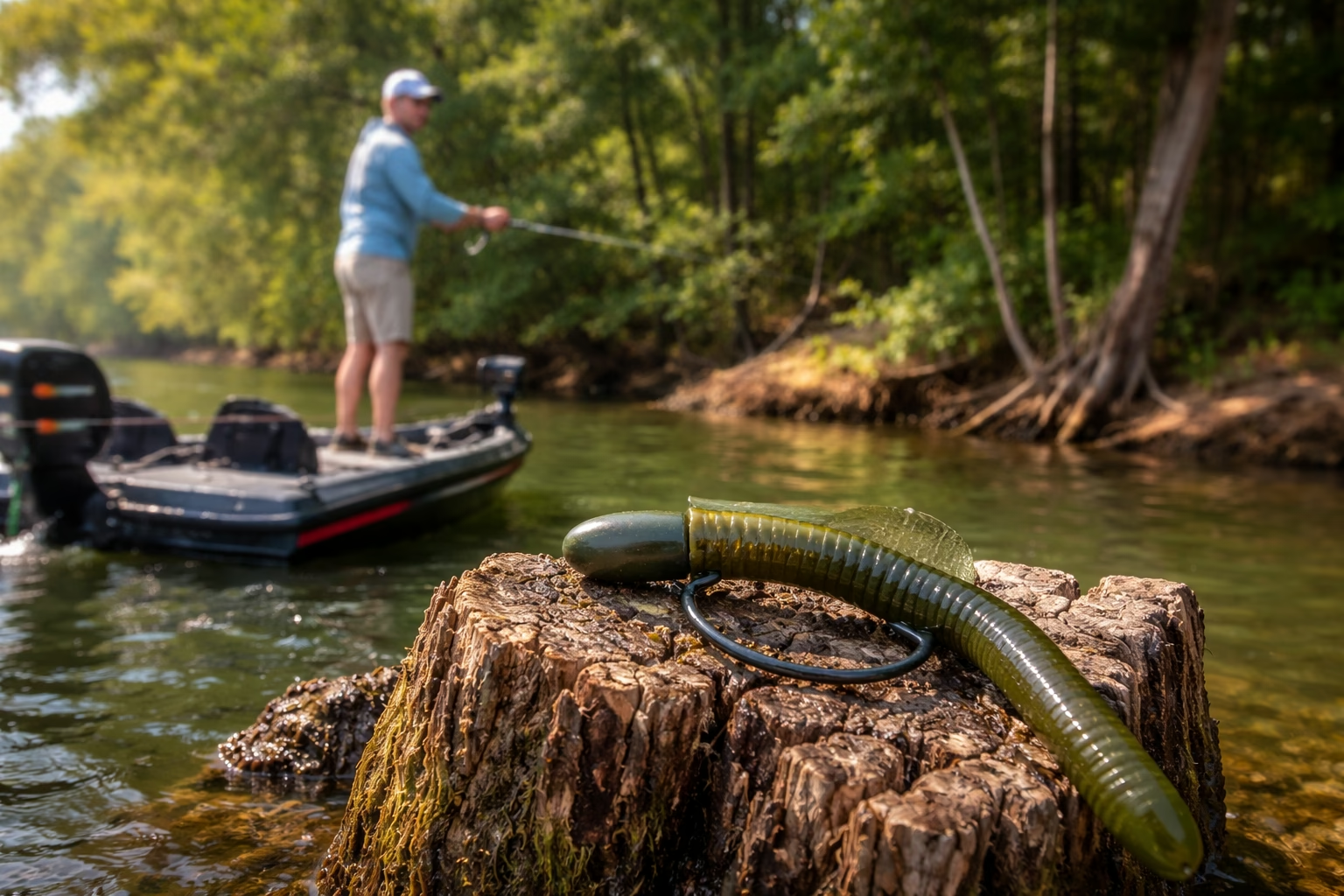
When it comes to picking apart shallow shoreline cover for largemouth bass, few methods have stood the test of time like a Texas-rigged worm. It is simple, precise, and deadly effective. For anglers willing to slow down and fish it the way it was meant to be fished, the Texas rig remains one of the finest tools ever designed for catching bass in shallow water.
Its strength lies in its ability to slip quietly and cleanly into places where bass live and hide. Shallow-water structure can mean a lot of things: tree stumps, laydown logs, boat docks, bulkheads, rocks, hydrilla lines, and drop-offs. Any object or break in shallow water that offers a bass shade, ambush cover, or security can become a holding spot, and the Texas rig is built to fish those places with both thoroughness and precision.
That precision matters. In shallow water, accuracy is everything. A bait that lands too far from the cover may never get noticed. A bait that crashes into the target can spook the very fish you were trying to catch. One of the great advantages of the Texas rig is that, when cast properly, it can be dropped right alongside cover with little more than a soft entry. That quiet presentation can make the difference between getting bit and getting ignored.
Bass tucked tight to shallow cover are wary by nature. They are often holding in only a few feet of water, and they do not tolerate much commotion. A worm that slips into their world without a splash has a far better chance of being eaten than one that announces its arrival like a brick.
Rigging a Texas-rigged worm is simple enough, but a few small details can make the bait fish better and help the angler detect strikes more clearly. The basic setup consists of a bullet weight, a No. 2 worm hook, a toothpick, and a plastic worm.
Start by running the line through the small end of the bullet weight. Then slide the weight up the line and run the line through the eye of the hook. Tie the hook on securely and clip the tag end.
Next, slide the weight back down toward the hook. Take a toothpick and insert it firmly into the larger end of the bullet weight, the end facing the hook. Push it in as tightly as possible, then break it off. Trim away any splinters with clippers. What you have done is peg the weight so it stays fixed at the head of the worm instead of sliding freely up and down the line.
Now rig the worm itself. Insert the hook point into the head of the worm for about a quarter inch, then bring the point back out and slide the worm up the shank of the hook. Turn the worm and bury the hook point back into the body so the bait lies straight and the point is concealed. The goal is to make the bait as weedless as possible. If the hook point protrudes, the worm will catch on every limb, stick, and strand of cover it touches.
Once the worm is in place, slide the pegged weight down to the head of the bait. Pegging the weight improves the overall action of the worm and also makes the rig easier to cast accurately. Just as important, it helps eliminate false strike sensations. When the weight is allowed to slide, it can bump the worm each time you lift the rod, and that can sometimes feel like a fish. With the weight pegged, strike detection becomes cleaner and more direct.
Fishing a Texas-rigged worm, however, is not about speed. In fact, patience is one of the biggest parts of the equation. Like most forms of worm fishing, the Texas rig has to be fished painfully slow. There is an old saying often used when teaching beginners how to fish plastic worms: “If you are fishing a worm slowly, you are still fishing it too fast.”
That line may get a smile, but there is a great deal of truth in it.
Suppose you ease your boat into a small cove and notice several stumps that look as though they ought to hold fish. Position the boat so you are not crowding the cover, but still close enough to make an accurate cast. Cast beyond the stump and let the worm fall all the way to the bottom. Then do nothing. Let it sit there for eight to ten seconds.
After that, slowly lift the rod tip to about the eleven o’clock position without reeling. If you do not detect a strike, ease the rod back down to nine o’clock while reeling up the slack at the same time. Let the bait settle again for a few seconds, then repeat the process.
As the worm moves closer to the stump, your concentration should sharpen. The area around a stump, dock post, rock, or any other piece of cover where a bass is likely to be holding is what anglers call the strike zone. That is where the odds are highest, and that is where your attention needs to be at its absolute best.
When the worm enters that strike zone, bear down mentally and watch for anything different. A strike may be obvious, but often it is subtle. The line may jump, move sideways, or simply feel a little heavy. Many good bass are lost because an angler’s mind wanders just as the worm reaches the critical zone around the cover.
When a strike does come, a strong hookset is essential. Largemouth bass have hard, bony jaws, and if the hook is not driven home with authority, it may never gain enough penetration to hold during the fight.
A proper hookset comes down to two basic rules: reel up the slack and set the hook hard.
That means once you detect the strike, you should quickly take up any slack in the line and then drive the hook home by jerking the rod back with force, away from the fish. A lazy hookset leads to heartbreak. A strong one buries the hook and gives you the best possible chance of bringing the bass to the boat.
For all the lures and gadgets that come and go in bass fishing, the Texas-rigged worm continues to endure because it works. It is not flashy. It is not fast. It does not rely on gimmicks. It simply allows an angler to fish shallow cover carefully, quietly, and thoroughly, which is exactly what shallow bass fishing often demands.
In the end, the Texas rig rewards the fisherman who is willing to do the little things right: make the quiet cast, work the bait slowly, pay attention in the strike zone, and hit the fish hard when the moment comes. That is not complicated, but it is effective. And in bass fishing, effective never goes out of style.



0 Comments