
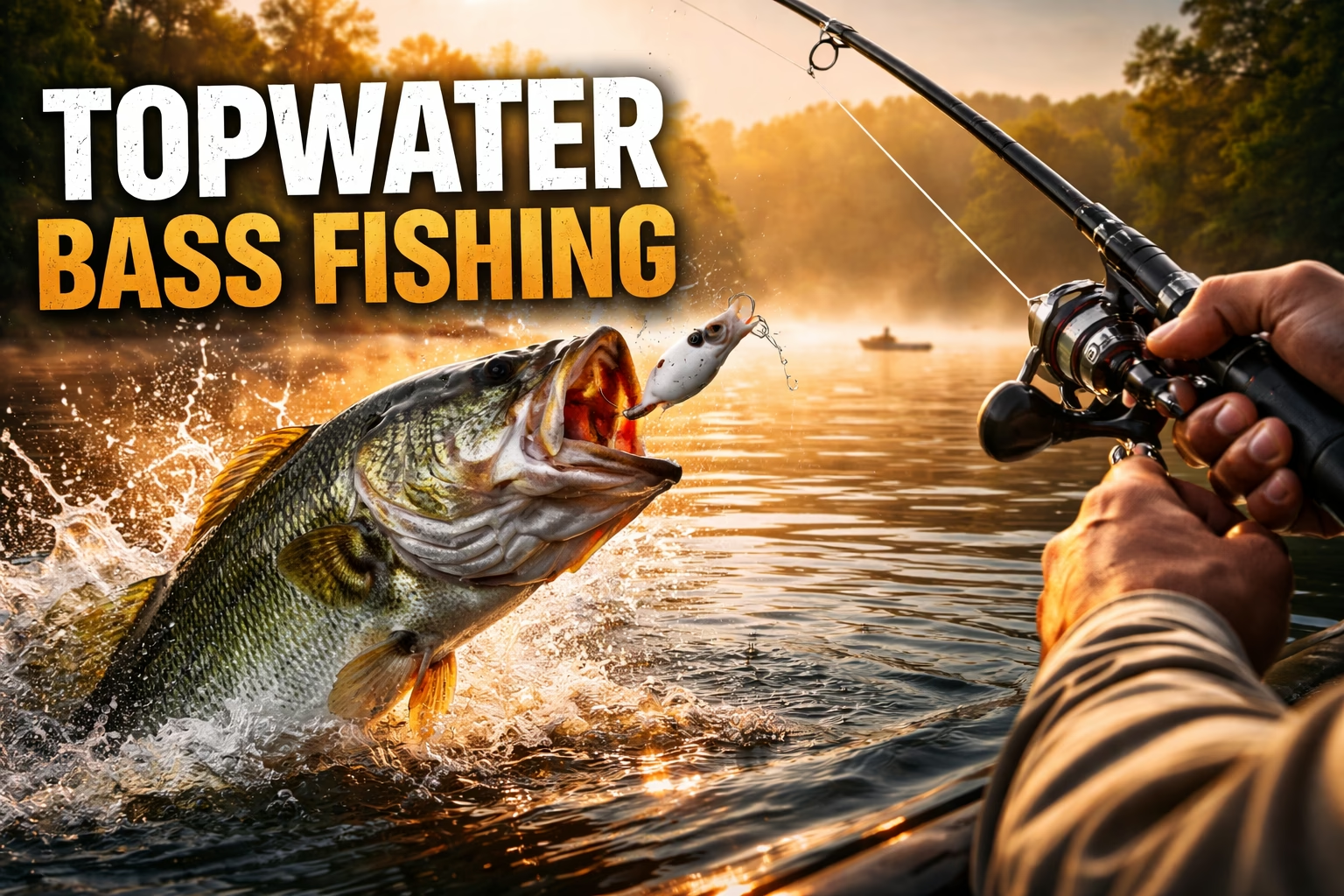
There are few moments in fishing that can jolt a man’s heartbeat like a topwater strike. One second your bait is sitting quietly on the surface… the next, the water erupts in a violent explosion, and a bass tries to take the rod out of your hands.
It’s the kind of moment that keeps anglers coming back long before sunrise.
But here’s the truth most folks learn the hard way: excitement is the enemy of success in topwater fishing.
We’ve all been there. You make the perfect cast into a promising stretch of water. The bait lands, you give it that first twitch… and then—WHAM! A bass blows up on it. Your instincts take over, you jerk the rod—and suddenly your lure is flying back at your face like it’s got somewhere else to be.
Sound familiar?
Don’t worry. It happens to everyone, even seasoned anglers. The difference between frustration and success in topwater fishing often comes down to a few small adjustments in technique, equipment, and patience.
Let’s walk through what really matters.
Why Topwater Fishing Stands Apart
Topwater fishing is as much about sight as it is about feel. It’s visual, explosive, and downright addictive. Watching a bass track, stalk, and finally attack your lure is something no other method quite matches.
Over the years—through guiding trips, bass fishing schools, and more emails than I can count—I’ve seen firsthand how anglers gravitate toward this style of fishing. It’s exciting, yes, but it also demands discipline.
That’s what this column is about: helping you turn those missed blowups into landed fish.
Choosing the Right Equipment
You don’t need a dozen rods to be effective on topwater baits. In fact, I keep things simple with just two:
- 6’6” Medium Action Rod
- 7’ Medium-Heavy Action Rod
Both are baitcasting setups in my boat, though plenty of anglers do just fine with spinning gear. Comfort and confidence matter more than brand or style.
Speaking of gear, rods today range anywhere from bargain rack to premium showroom. I’ve used both ends of the spectrum and learned something important: you don’t have to break the bank to catch fish.
That said, when I found the Kistler Helium LTA series, I stopped looking. It offers the feel and performance of high-end rods without the sticker shock. Think Cadillac ride without Cadillac pricing.
Matching Rod Action to Hook Style
This is where many anglers miss the mark.
Not all topwater baits are created equal, and neither are their hooks.
Small Treble Hooks
For baits with smaller trebles, you want a medium action rod. The softer tip allows the fish to take the bait without tearing it free during the hookset.
A stiff rod here is a recipe for heartbreak.
Larger Trebles, Single, or Double Hooks
When you step up to larger hooks, it’s time for the medium-heavy rod. You need backbone to drive those hooks home and control the fish.
The longer rod also helps take up slack quickly—something that becomes critical during a topwater strike.
My Go-To Topwater Baits
Over the years, I’ve narrowed down a list of reliable performers. These aren’t ranked, because conditions always dictate what works best—but every one of them has earned its place.
Zara Spook (Heddon)
A classic “walk-the-dog” bait that has fooled bass for generations. No built-in action—you provide it.
- Cast, let it settle
- Rod tip down
- Light rhythmic twitches while reeling slack
Pause occasionally. That side-to-side glide is pure magic when done right.
Senko (Gary Yamamoto)
Not traditionally thought of as topwater, but deadly near the surface.
- Rig weightless, Texas style
- Keep rod tip up
- Work it just under or on the surface
It’s subtle—and often irresistible.
Floating Worm (Yum)
One of the most overlooked big-fish producers.
- Use a small swivel and leader to prevent line twist
- Texas rig with a light wire hook
- Twitch gently across the surface
White, bubblegum, and a color called sherbet have all produced for me, especially in larger sizes.
Super Fluke (Zoom)
A soft jerkbait with an injured baitfish action.
- Rig weightless on a 3/0 offset hook
- Twitch and pause
- Keep it near the surface
Simple to fish, deadly effective.
Torpedo (Heddon)
A prop bait that shines with patience.
- Let it sit
- Twitch lightly to create subtle bubbles
- Pause again
Think dragonfly landing on water—small movement, then stillness.
Buzzbait (Lazer Eye)
Pure chaos in lure form.
- Start retrieving immediately after it hits the water
- Keep it on top
If a bass is nearby, it’ll find it.
Stick Bait / Rogue (Smithwick)
A floating hard jerkbait that’s easy for beginners.
- Cast, twitch, pause
- Repeat
It produces when nothing else will.
Pop-R (Rebel)
A surface chugger that calls fish in.
- Twitch to create a “gurgle”
- Let it sit between movements
Pro tip: file the lower lip slightly to create a sharper spitting action.
Tournament Frog (Snag Proof)
Your go-to in heavy cover.
- Fish it in pads, grass, reeds, and timber
- Work it slowly across the surface
Big bass live where this bait shines.
Spinnerbait (Topwater Technique)
Yes, a spinnerbait can be fished on top.
- Retrieve fast enough to “wake” it
- Keep it just at or under the surface
This bulging action can trigger aggressive strikes.
The Most Important Tip of All
If you take one thing from this column, make it this:
Don’t set the hook until you feel the fish.
Topwater fishing plays tricks on your instincts. You see the explosion, your adrenaline spikes, and you react too quickly.
Instead:
- Let the bass take the bait
- Allow it to pull slack from your line
- Wait until you feel steady pressure
Then—and only then—set the hook.
That single adjustment will put more fish in your boat than any lure ever will.
Final Thoughts
Topwater fishing isn’t just a technique—it’s an experience. It’s the anticipation, the strike, and the story that comes with it.
Slow down. Trust your bait. Let the fish commit.
Do that, and those missed blowups will turn into solid hooksets and more bass in your hands.
And when that next explosion happens—and it will—just remember:
wait… feel… then set.
Tight lines.

0 Comments