
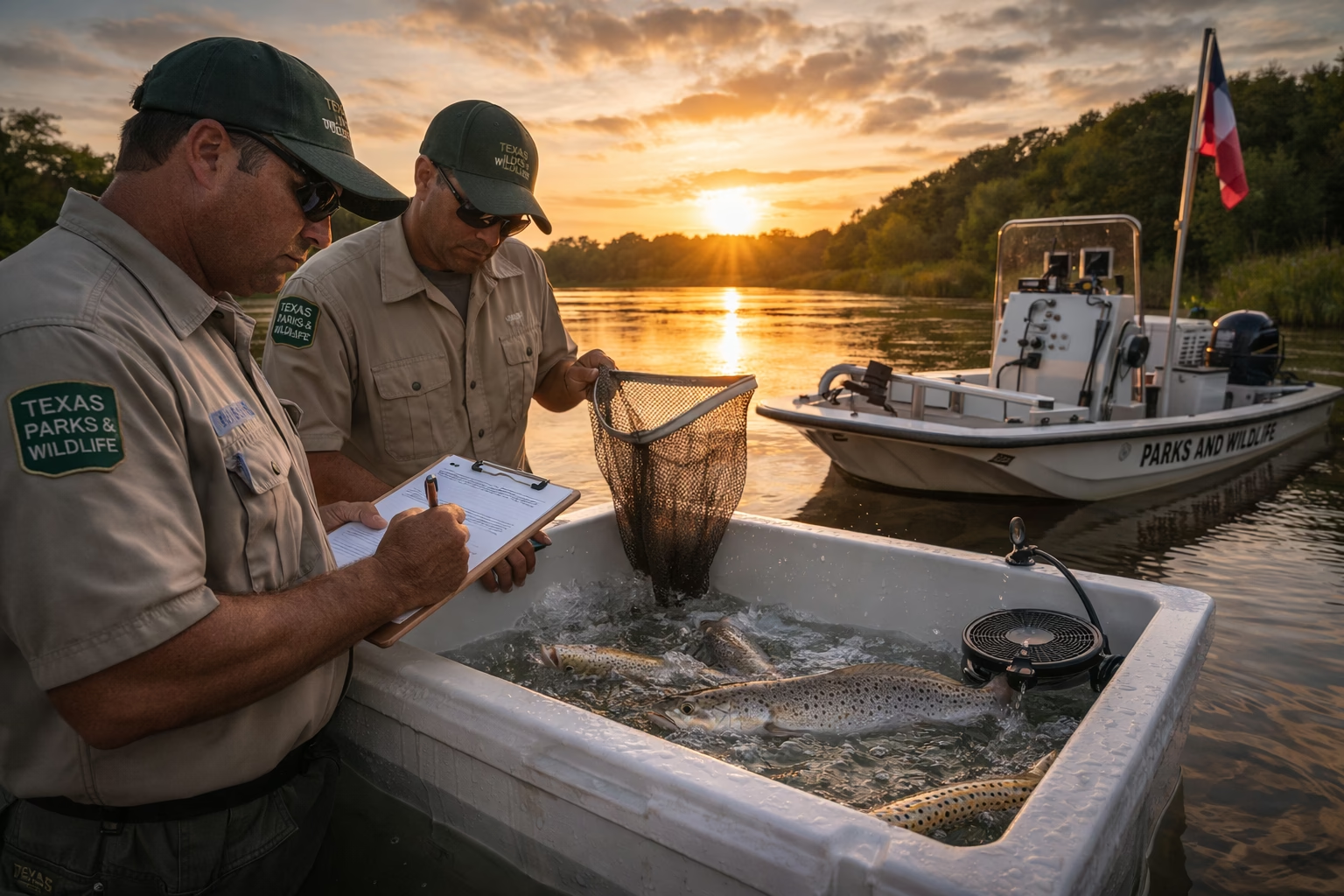
Water has always been the quiet backbone of Texas—flowing through rivers, filling bays, shaping wildlife, and, whether folks realize it or not, determining the health of everything from fisheries to local economies. When the water’s right, everything else tends to follow. And right now, Texas Parks and Wildlife is making a move to make sure it stays that way.
In a significant shift, the Texas Parks and Wildlife Department (TPWD) is reorganizing its internal structure, folding the Resource Protection Division into its field divisions. Agency leaders say the move is designed to sharpen the department’s focus on one of Texas’ most pressing concerns: water.
The Resource Protection Division has long served as the scientific backbone of TPWD. Its teams track fish kills and water pollution, evaluate large-scale development projects, and study the water needs of rivers, bays, and estuaries. In short, it’s been the group quietly working behind the scenes to keep Texas waters—and the life they support—in balance.
Now, instead of operating as a standalone division, those responsibilities will be integrated directly into TPWD’s Coastal and Inland Fisheries divisions, as well as other field operations.
“A key goal of this reorganization is to make sure water resource functions are evident in all we do—in wildlife, fisheries, law enforcement, and state parks,” said Scott Boruff, TPWD deputy executive director for operations. “We’re about to enter our next round of strategic planning, and for the first time, that process will be built around watersheds. This reorganization will help integrate water conservation throughout the agency.”
It’s a shift in philosophy as much as structure.
Rather than treating water issues as a separate specialty, TPWD is embedding them into every level of its operations—recognizing that water isn’t just one piece of the puzzle. It’s the piece everything else depends on.
Boruff was clear on one point: the mission itself isn’t changing.
State law requires TPWD to investigate fish kills and pollution, provide guidance on development projects that affect fish and wildlife, and recommend appropriate freshwater inflows to Texas estuaries. Those responsibilities remain firmly in place.
“We cannot stop providing those functions, and we have no intention of doing so,” Boruff said. “On the contrary, by merging them with Coastal and Inland Fisheries—where much of that work naturally fits—we expect to gain efficiencies and provide more resources to support and enhance those efforts.”
As part of the reorganization, Larry McKinney, Ph.D., former director of Resource Protection, will step into a new role as director of the Coastal Fisheries Division, replacing Hal Osburn, who retired in August.
McKinney brings a clear vision to the position.
“I have two broad goals for Coastal Fisheries,” he said. “One is the ecological health of our bays and estuaries. The other is sustainable fisheries—both recreational and commercial. Those two goals are absolutely tied, because you can’t have a healthy coastal economy without a healthy ecology.”
That connection is something anglers have understood for generations, even if they didn’t put it in those exact words. Good fishing starts with good water. Always has.
The Resource Protection Division itself has a long and meaningful history within TPWD. Created in 1985 following a state Sunset Commission review, it reflected a growing recognition that conserving fish and wildlife required more than just managing species—it required protecting the environments that sustain them.
Over the years, the division has tackled some of the state’s most complex environmental challenges. It led extensive bay inflow studies that spanned more than a decade. It established TPWD’s Geographic Information Systems lab, giving the agency powerful tools for mapping habitats and analyzing ecosystems on a broad scale. It also directed wetlands conservation efforts and helped secure millions of dollars in federal funding for coastal habitat restoration.
Just as important, its staff played a critical role in shaping environmental standards—working through the fine print of regulations to ensure that fish and wildlife needs weren’t overlooked when policies were written.
It wasn’t always the most visible work, but it was essential.
Now, that expertise will be spread across the agency, where it can directly influence day-to-day operations in the field.
Details of the transition are still being finalized, with an internal TPWD work group handling the logistics. The reorganization is expected to be completed as part of the agency’s fiscal year 2005 budgeting process.
For those who spend time on the water—whether chasing redfish on the flats, casting for bass upriver, or simply enjoying a quiet stretch of shoreline—the implications are straightforward.
Stronger integration means better coordination. Better coordination means healthier water. And healthier water means the kind of fishing and outdoor experiences Texans have come to expect.
Because in the end, it all comes back to that one simple truth: take care of the water, and it will take care of everything else.

0 Comments