
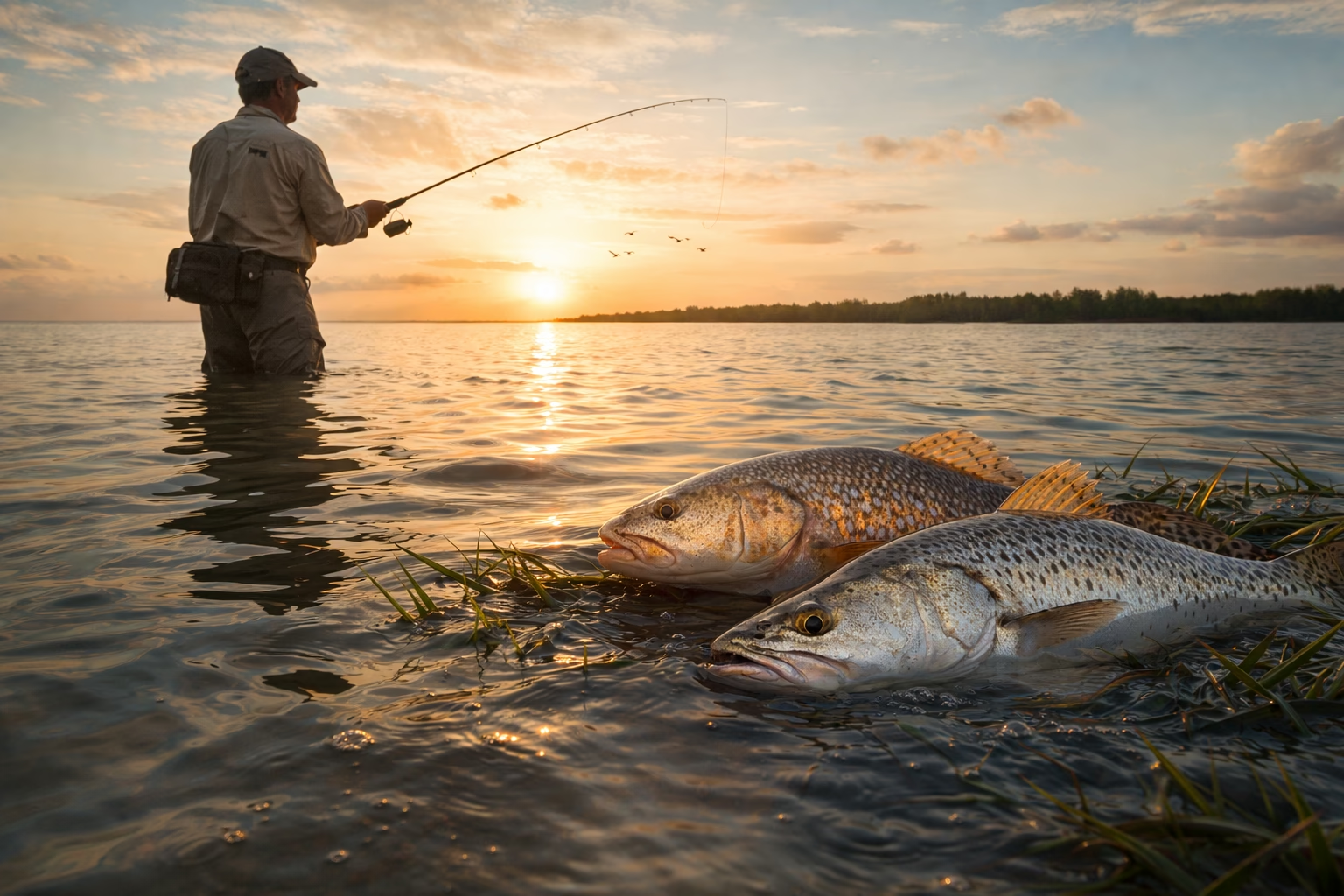
There are times along the Texas coast when the tide, the light, and the fish all seem to line up just right. This is shaping up to be one of those times.
Fresh off the latest coastwide gill net surveys, the word out of Austin carries a tone every saltwater angler likes to hear: the fish are there, and in strong numbers.
According to the Coastal Fisheries Division of the Texas Parks and Wildlife Department, current survey results point to healthy and stable populations across several key species. For anglers who measure their seasons in sunrise launches and slick-calm mornings on the flats, it’s the kind of report that puts a little extra purpose in every cast.
“It was a great way to welcome me onboard,” said Larry McKinney, Ph.D., newly appointed head of the division. “What caught my eye was the continued rise in redfish numbers, some of the highest since 1998, and spotted seatrout numbers, which have been high, continue to hold at those levels.”
Those two species—red drum and spotted seatrout—remain the backbone of Texas coastal fishing. And right now, both are telling a reassuring story.
The gill net surveys, while only one piece of a broader coastal monitoring effort, offer a reliable snapshot of fish populations across Texas bays. They track not only sportfish but also important commercial species such as blue crab, flounder, and Atlantic croaker. Taken together, the data paints a clear picture: the system is holding steady, and in many cases, improving.
Spotted seatrout, known up and down the coast as “specks,” have been on a steady climb since the early 1990s. While this year’s numbers didn’t push higher, they’ve settled comfortably at strong levels—a sign of consistency rather than decline. In the fishing world, steady at the top is just fine.
Redfish, meanwhile, continue a slow and encouraging rise. Their numbers are approaching levels not seen since the mid-1990s, a trend that mirrors what many anglers have been reporting firsthand while poling shallow shorelines or working grassy flats at first light.
Beyond the headline species, the supporting cast is showing strength as well.
Atlantic croaker, a staple baitfish and an important part of the coastal ecosystem, has stabilized after years of fluctuation. That kind of consistency helps support both recreational fishing and the broader food chain.
Then there’s the blue crab—a species that’s been quietly making a comeback. Survey results confirm what wade fishermen and bay guides have been noticing underfoot: crab numbers have rebounded sharply from their all-time low in 2000, climbing to levels not seen since 1992.
Flounder, long a concern among fisheries biologists, are finally showing signs of leveling off. While their population hasn’t rebounded significantly, the steep decline of previous years appears to have bottomed out. It’s not a victory lap yet, but it is a step in the right direction.
“What it tells me,” McKinney noted, “is that the comprehensive shrimping regulations adopted by the Parks and Wildlife Commission in August of 2000 are working. Combined with limited entry programs for commercial fisheries, crab trap removal, and continued efforts to ensure freshwater inflows, good water quality, and sufficient habitat, we are headed in the right direction.”
In other words, good management is beginning to pay dividends.
That’s something seasoned anglers have always understood, whether they put it into words or not. Healthy fisheries don’t happen by accident. They’re built over time, through careful balance between use and conservation, and a respect for the resource that runs deeper than any single season.
Looking ahead, TPWD biologists see no reason to expect anything less than a promising spring and summer along the coast. Barring unusual weather or environmental disruptions, anglers should find themselves in the middle of some very productive fishing.
And the impact goes well beyond the water.
Saltwater anglers—roughly 860,000 strong—pump nearly $2 billion annually into Texas coastal communities. Every boat launched, every bait stand visited, every motel room booked ties directly back to the health of these fisheries. When the fish are thriving, so are the towns that depend on them.
Even more encouraging, the number of anglers continues to grow year after year. More folks are discovering what generations before them already knew—that there’s something timeless about standing knee-deep on a quiet flat, watching the water come alive.
“There are many ways to analyze this information, and all of it is positive,” McKinney said. “But the bottom line is simple for me—and hopefully for other Texans as well—it’s time to go fishing.”
And along this stretch of coast, when the science lines up with what your instincts have been telling you all along, that’s about as good a green light as you’re ever going to get.

0 Comments