
In the world of outboards, horsepower isn’t the only thing driving competition.
Pricing can be just as powerful—and when it crosses the line, it can shake an entire industry.
That’s exactly what happened this month when the U.S. Department of Commerce stepped in.
A Major Ruling from Washington
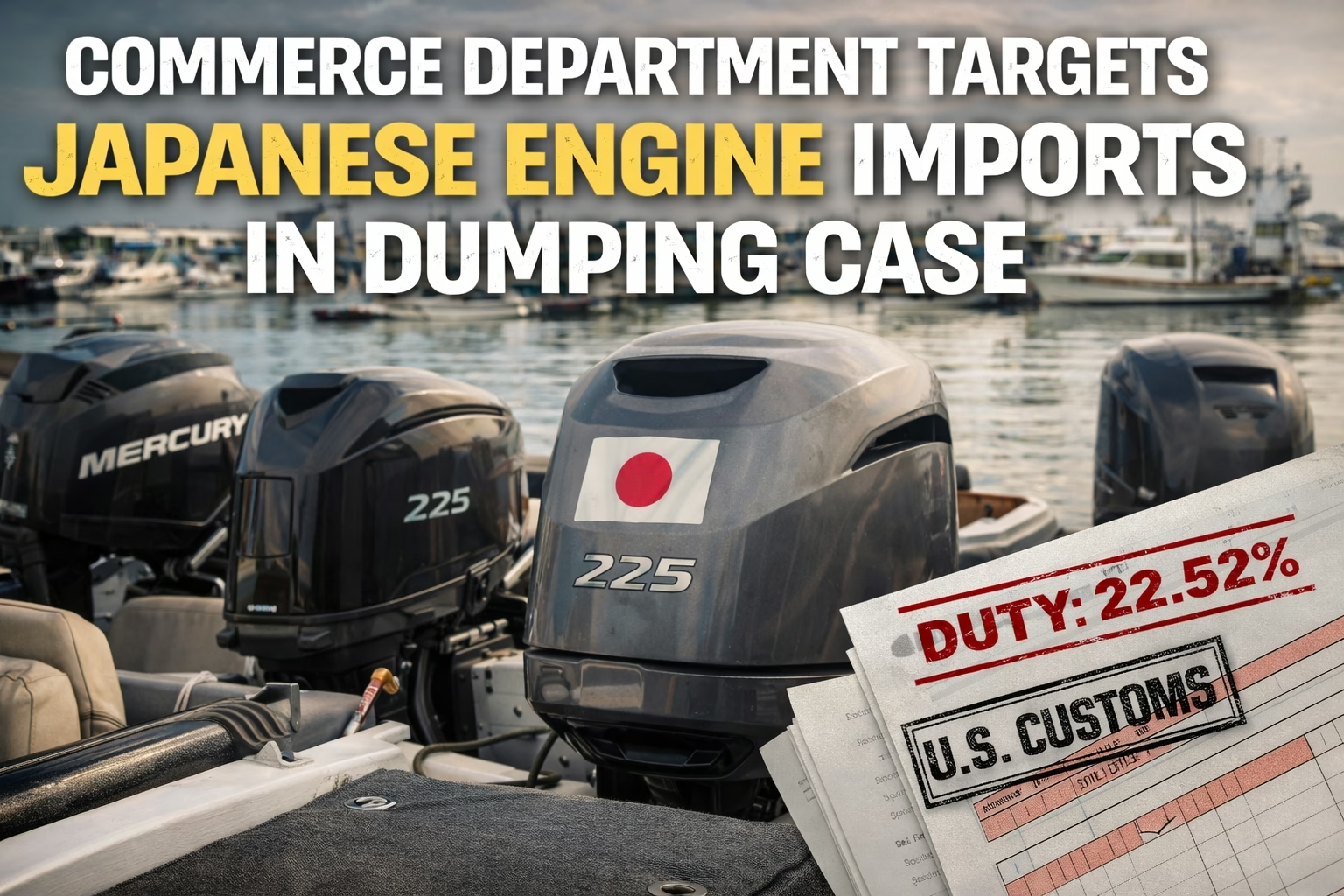
On August 6, the U.S. Department of Commerce announced a preliminary finding that Japanese outboard engine manufacturers had engaged in “dumping”—selling products in the United States at unfairly low prices.
As a result, the agency ordered that a 22.52 percent import bond be posted on each Japanese outboard engine entering the country.
The ruling follows an investigation launched earlier this year after Mercury Marine, based in Fond du Lac, Wisconsin, filed a petition with both the Commerce Department and the U.S. International Trade Commission.
Mercury Marine Speaks Out
Mercury Marine President Patrick C. Mackey welcomed the decision, calling it confirmation of long-standing concerns within the domestic marine engine industry.
“We are pleased the Commerce Department’s investigation has confirmed Mercury’s contention that Japanese outboard engine makers have been violating U.S. anti-dumping laws by engaging in unfair pricing practices,” Mackey said.
He emphasized that the move was not made lightly.
“This was not an action undertaken lightly,” he added. “Even though engines Mercury imports from Japan will be subject to the duty, we believed it was our responsibility—to our shareholders, our employees, and the U.S. marine engine industry—to follow this course.”
At the heart of the issue, Mackey said, is the desire for a level playing field—one where manufacturers compete based on product quality, features, and value, rather than pricing strategies that undercut the market.
What “Dumping” Means
Under U.S. law, dumping occurs when a foreign manufacturer sells goods in the United States at prices significantly lower than those in its home market—particularly when that pricing harms domestic producers.
Anti-dumping laws are designed to prevent exactly that.
According to findings presented during the investigation, Japanese manufacturers had gained market share rapidly by underselling U.S. competitors. Evidence suggested that this pricing pressure not only eroded market share but also suppressed domestic prices across the board.
The impact was especially pronounced among large boat builders and dealers, where aggressive pricing can influence high-volume purchasing decisions.
What Happens Next
The Commerce Department’s order will take effect once it is formally published in the Federal Register, expected within days of the announcement.
From there, the process continues.
The Department will issue a final determination on the duties in the coming months, while the U.S. International Trade Commission will evaluate the extent to which these pricing practices caused material harm to U.S. manufacturers.
The outcome of those decisions could shape the competitive landscape of the outboard engine market for years to come.
Final Wake
Out on the water, most anglers don’t think much about trade policy.
They think about reliability, performance, and getting back to the dock without trouble.
But behind every outboard on the transom is a larger story—one of manufacturing, competition, and the rules that keep the playing field fair.
And when those rules are tested, as they are now, the ripples reach far beyond the showroom floor.
Because in the end, fair competition doesn’t just protect companies.
It protects the future of the industry itself.



0 Comments