
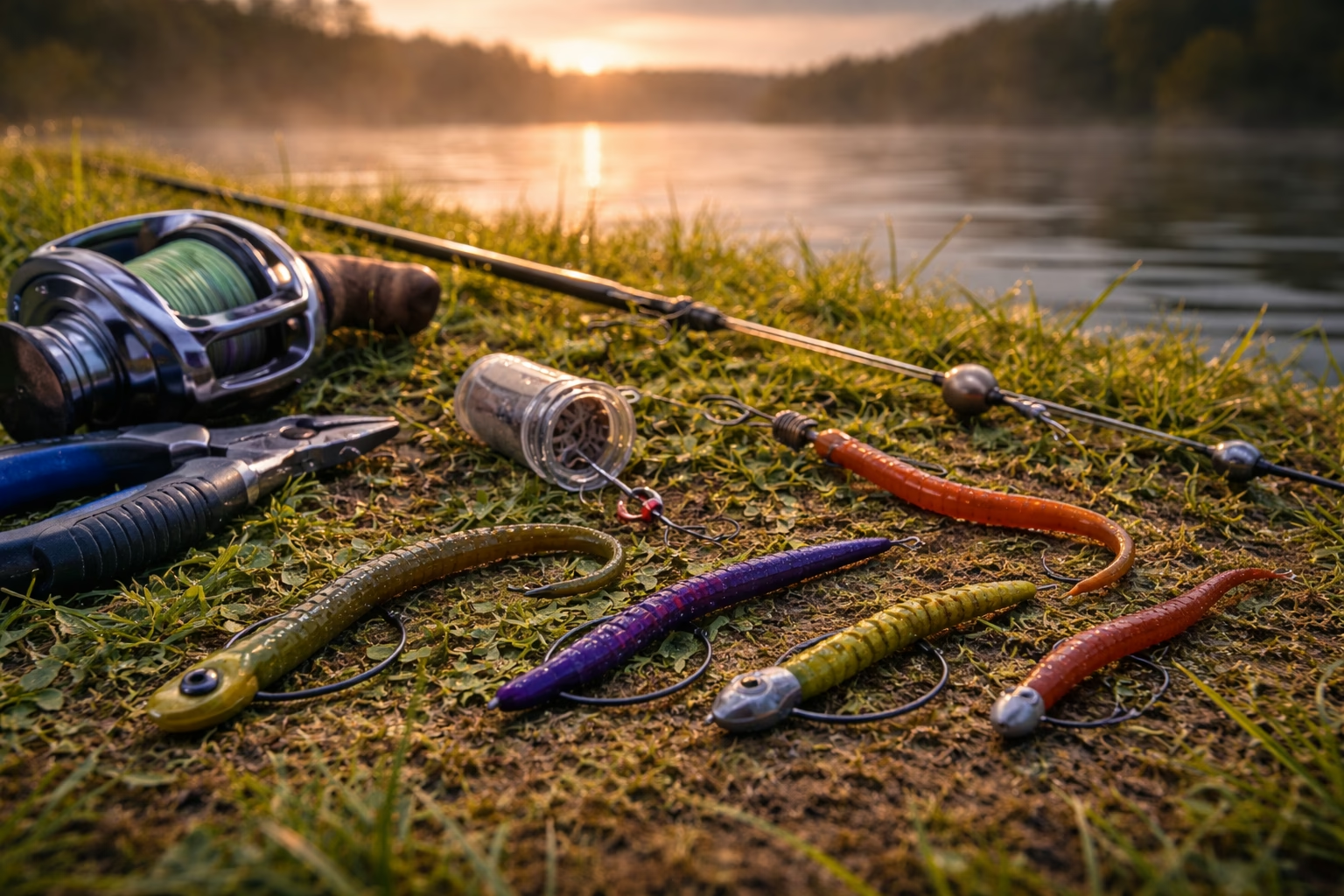
When bass get buried in grass, moss, or other heavy vegetation, brute force is not always the answer. Sometimes the best way to catch a black bass is to back off, lighten up, and let finesse do the work.
That is where techniques like split-shotting, weightless worms, Florida rigs, and do-nothing worms earn their keep.
These are not methods built on noise, speed, or power. They are built on subtlety. They let a worm move naturally, slip through cover cleanly, and stay where the fish live. And on tough days, especially when bass are pressured or not actively feeding, these finesse presentations can save a trip.
Split-Shotting
One of the classic finesse methods for bass fishing is split-shotting.
This rig is designed for fishing a worm through mossy areas and other light aquatic vegetation without constantly hanging up. Instead of placing a worm weight directly at the head of the worm, a tiny split-shot weight is pinched onto the line about a foot and a half above the bait. That small weight, usually about the size of a BB, provides just enough mass to help with casting and depth control while still allowing the worm to flutter naturally.
That natural action is the whole point.
Because very little weight is used, the worm has a soft, easy fall and a more lifelike look. It can be worked across loose moss and vegetation with far less trouble than a standard weighted worm, and that makes it especially useful in areas where bass are holding in or around sparse cover.
The split-shot rig is best fished with a spinning rod and 8- to 12-pound-test line. The total rig weighs less than a quarter-ounce, so light line helps both with casting distance and with reducing wind resistance. A medium-action rod is usually best, and the hook needs to be razor sharp. Since light line will not hold up to a violent hookset, the sharp hook helps you get good penetration with a much milder sweep.
To rig it, run the line through the eye of the hook and tie your knot. Then rig the worm just as you would a Texas-rigged worm. Once the bait is in place, crimp a split shot onto the line about 18 inches above the worm. A pair of pliers makes this much easier.
Fishing the split-shot worm is very similar to fishing a Carolina rig. Cast it across the vegetation and bring it back slowly, using a deliberate retrieve and letting the rig fall into open pockets in the grass or moss. That gentle fall often draws the strike. When a fish bites, use a moderate hookset and rely on the reel’s drag to do its job.
That drag matters.
With light line, the reel should be set so line can slip before reaching the breaking point. Big bass can absolutely be landed on light tackle, but only if you let them run and resist the urge to horse them back to the boat. As with so many finesse techniques, patience is a big part of success.
The Weightless Worm
The weightless worm is closely related to the split-shot worm, only in this case there is no weight at all.
This rig is designed for situations where the vegetation is so thick that even a tiny split shot becomes more trouble than it is worth. A worm by itself has enough buoyancy to float and glide over thick vegetation, and even with a No. 1 or No. 2 worm hook, it can still be fished weedless across grass mats and dense surface cover.
That is what makes it so valuable.
There are not many techniques that let you fish truly heavy vegetation cleanly, but a weightless worm can do it. Dragging or easing that worm across thick grass has produced bass for years, particularly in areas where fish do not see many baits.
And that is another big advantage.
Fish buried deep in hard-to-reach cover are often less conditioned than bass living around open structure or frequently fished banks. The more often a fish sees a lure, or sees another bass get caught nearby, the greater the chance that fish becomes wary. In areas where very few baits ever reach, that conditioning is often minimal. A weightless worm lets you go after those less-pressured fish.
The Florida Rig
The Florida rig is almost identical to a pegged Texas rig, but with one important difference: the weight itself.
Instead of using a standard worm weight and pegging it with a toothpick, the Florida rig uses a specially designed weight with a small spring attached to the end nearest the worm. That spring is screwed directly into the head of the worm, which holds the weight in place and eliminates the need for toothpicks.
It is a simple improvement, but a useful one.
The fishing techniques and action of the Florida rig are essentially the same as the Texas rig. It is still a compact, weedless presentation built for pitching, flipping, and working through cover. The main benefit is convenience. The weight stays put, the worm stays streamlined, and the rig is quicker and cleaner to assemble.
The Do-Nothing Worm
Then there is the do-nothing worm, one of the best names ever given to a bass-fishing technique.
This method comes into play after a cold front or any time bass have turned sour and seem unwilling to feed. On those days, fish often have little appetite and will not chase a bait. They have to be coaxed, teased, and sometimes practically force-fed.
That is where the do-nothing worm shines.
Usually this involves a small finesse worm, around four to six inches long, rigged on a very light jig head, often less than one-eighth ounce. Like split-shotting, this is light-tackle fishing. The goal is to fish the bait slowly, subtly, and tight to cover, giving it just enough movement to tempt a bass that does not really want to eat.
This is not a power technique.
It is a discipline technique.
You slow down, stay patient, and fish carefully even when conditions are poor and the bass are in a negative mood. Done properly, the do-nothing worm can catch fish when many faster, louder presentations fail completely.
Finesse Has Its Place
A lot of bass fishermen naturally prefer heavy tackle, strong hooksets, and aggressive presentations. There is certainly a time for all of that. But there is also a time to lighten up, fish softer, and let subtle presentations do the work.
Split-shotting, weightless worms, Florida rigs, and do-nothing worms all have one thing in common: they help you fish places and conditions where more aggressive methods lose their edge. They slip through vegetation, stay in the strike zone, and show fish a worm in a more natural, less threatening way.
And when the bite gets tough, that can be the difference between a long day and a good one.
Sometimes catching more bass is not about throwing harder or moving faster.
Sometimes it is about doing less, and doing it better.

0 Comments