
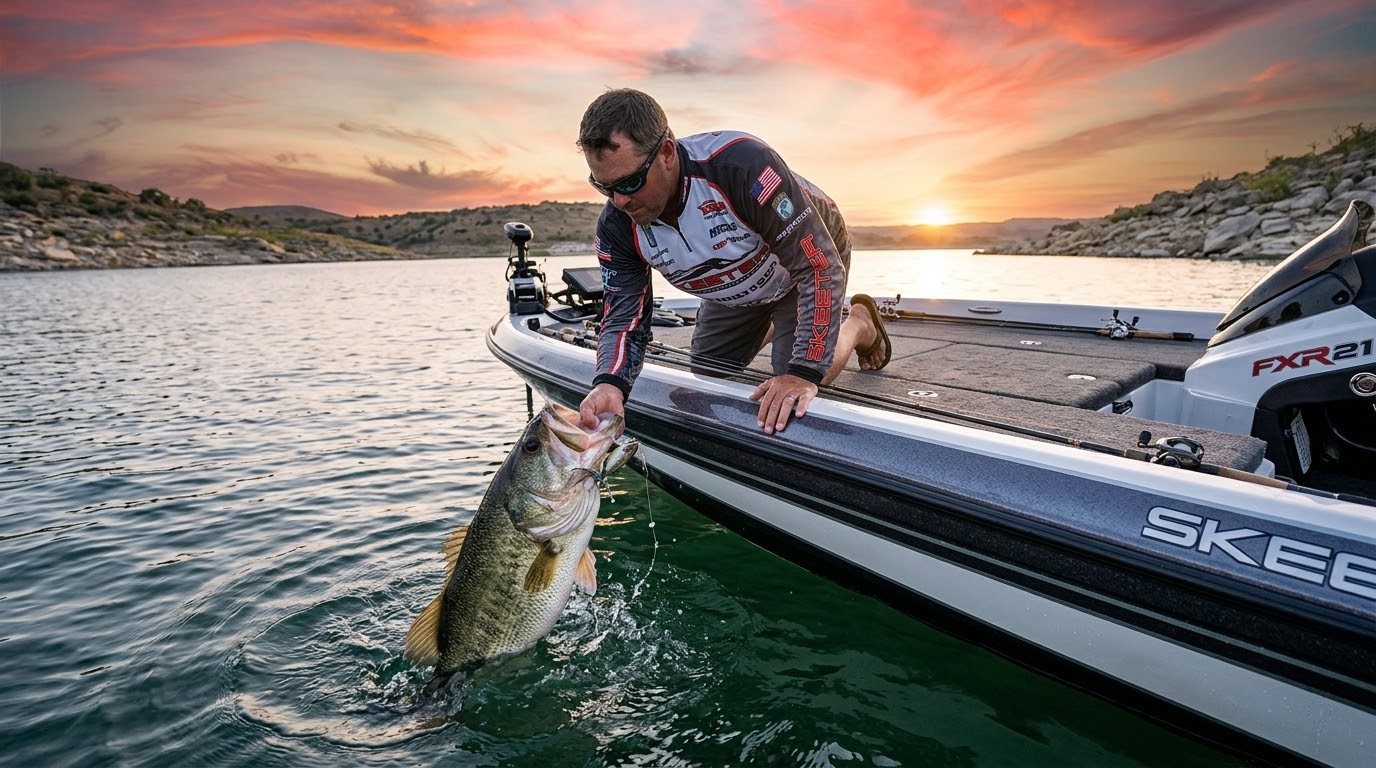
A Complete Guide to Structure Fishing on One of Texas’ Greatest Bass Lakes
Among Texas bass anglers, Amistad Reservoir holds an almost legendary reputation. Built in 1969 by damming the Rio Grande along the Texas–Mexico border, this massive desert reservoir sprawls across roughly 63,680 acres at conservation pool and reaches depths exceeding 200 feet in some areas.
While the Devils River arm often steals the spotlight for smallmouth bass, seasoned anglers know the Rio Grande river channel is a largemouth bass factory. The old river course winds through steep desert canyons, forming long submerged ledges, stair-step drop-offs, and rocky points that concentrate baitfish and predators throughout the year.
Add Amistad’s famously clear water, scattered hydrilla beds, and an abundance of shad and sunfish forage, and the result is one of the most productive structure fishing environments in the Southwest.
This guide focuses specifically on Amistad Reservoir largemouth bass fishing in the Rio Grande river channel, including seasonal patterns, structure locations, aquatic vegetation, lure selection, and month-by-month strategies drawn from Texas Parks and Wildlife fishing reports and fisheries data.
Understanding the Rio Grande Channel Structure
Before discussing seasonal patterns, it helps to understand why the Rio Grande arm consistently produces largemouth bass.
Old River Channel Geography
When the reservoir filled, the Rio Grande valley flooded, leaving behind a complex underwater landscape that includes:
-
Deep canyon channels
-
Submerged rock ledges
-
Long tapering points
-
Creek channel intersections
-
Rock piles and bluff walls
The original river course is easy to trace on modern electronics because the channel typically drops 20–80 feet deeper than surrounding flats.
Bass rarely live directly in the deepest water, but they stage along edges, stair-step ledges, and channel swings where baitfish move through.
Key Structural Zones
The most productive Rio Grande channel structure generally falls into five categories:
1. Channel Bends
Sharp river turns create inside flats and outside drop-offs where bass trap bait.
2. Ledges and Stair-Steps
Old river terraces form shelves at depths like 12, 20, or 30 feet.
3. Creek Channel Intersections
Where small feeder creeks enter the Rio Grande channel.
4. Bluff Walls and Vertical Rock
Steep canyon walls where bass suspend.
5. Points Extending Into the Channel
These act like underwater highways.
When water levels fluctuate, bass often adjust vertically but rarely abandon these structural areas.
Aquatic Vegetation and Habitat
Unlike grass-choked East Texas reservoirs, Amistad’s vegetation is limited but extremely important.
Hydrilla
The primary aquatic vegetation is hydrilla, which can grow surprisingly deep in the clear water, sometimes reaching 40 feet depending on water levels.
Hydrilla provides:
-
Ambush cover
-
Oxygen production
-
Baitfish habitat
-
Spawning protection
When grass is present along the Rio Grande channel edges, it becomes a magnet for bass.
Rock Structure
Much of Amistad is dominated by rock ledges, steep drop-offs, and rocky shorelines, which largemouth bass use throughout the year.
Rock retains heat in winter and hosts crawfish populations, making it particularly important during prespawn and winter patterns.
Forage Base
Primary forage species include:
-
Gizzard shad
-
Threadfin shad
-
Sunfish
These prey populations support strong largemouth growth rates in the reservoir.
Lake Record Largemouth Bass
Lake Amistad has produced numerous double-digit largemouth bass.
According to Texas Parks and Wildlife records:
-
Largemouth Bass Record: 15.68 pounds
-
Length: 28.30 inches
-
Date: December 28, 2005
-
Angler: Tom Sutherland
Fish over 10 pounds are caught every year, particularly in spring and early winter.
Month-by-Month Rio Grande Channel Largemouth Bass Fishing
January – Winter Structure Fishing
Water temperatures typically drop into the mid-50s to low-60s during winter. Bass slow down but remain predictable.
Texas Parks and Wildlife reports indicate winter bass often hold on ledges and points near deep water, where slower soft-plastic presentations work best.
Where to Fish
-
Channel ledges
-
Bluff walls
-
Rock points
-
Grass edges in 15–25 feet
Depth
15–30 feet
Best Lures
-
Football jigs (½–¾ oz)
-
Carolina rigs
-
Deep jerkbaits
-
Alabama rigs
Colors
-
Green pumpkin
-
Watermelon red
-
Shad patterns
Presentation
Slow bottom crawling or suspending retrieves.
February – Late Winter Transition
Bass begin staging closer to spawning areas.
River arms warm faster than the main lake, making the Rio Grande channel especially productive.
Structure Targets
-
Secondary points near flats
-
Channel swing banks
-
Hydrilla edges
Depth
10–20 feet
Best Lures
-
Lipless crankbaits
-
Suspended jerkbaits
-
Texas-rig worms
Lure Size
6–8 inch worms
Colors
-
Red craw
-
Green pumpkin
-
Smoke
March – Prespawn Migration
Prespawn is prime time for Amistad Reservoir largemouth bass fishing.
Water temperatures approach 58–65°F, triggering bass movement toward spawning areas.
Key Structure
-
First drop-offs near flats
-
Rock transitions
-
Grass lines
Reports show bass commonly caught in 0–10 feet of water during prespawn, especially on moving baits.
Best Lures
-
Chatterbaits
-
Squarebill crankbaits
-
Spinnerbaits
April – Spawn Season
Large female bass move onto shallow spawning flats.
Typical spawning depth ranges from 4–8 feet depending on water clarity.
Best Locations
-
Protected pockets
-
Gravel flats near channel edges
-
Grass beds
Best Lures
-
Soft plastic creature baits
-
Tube jigs
-
Floating worms
Presentation
Pitch quietly and work slowly.
May – Post-Spawn Feeding
After spawning, bass slide back toward deeper water.
Many fish hold along secondary ledges near the Rio Grande channel.
Depth
10–20 feet
Best Lures
-
Topwater walkers
-
Swimbaits
-
Carolina rigs
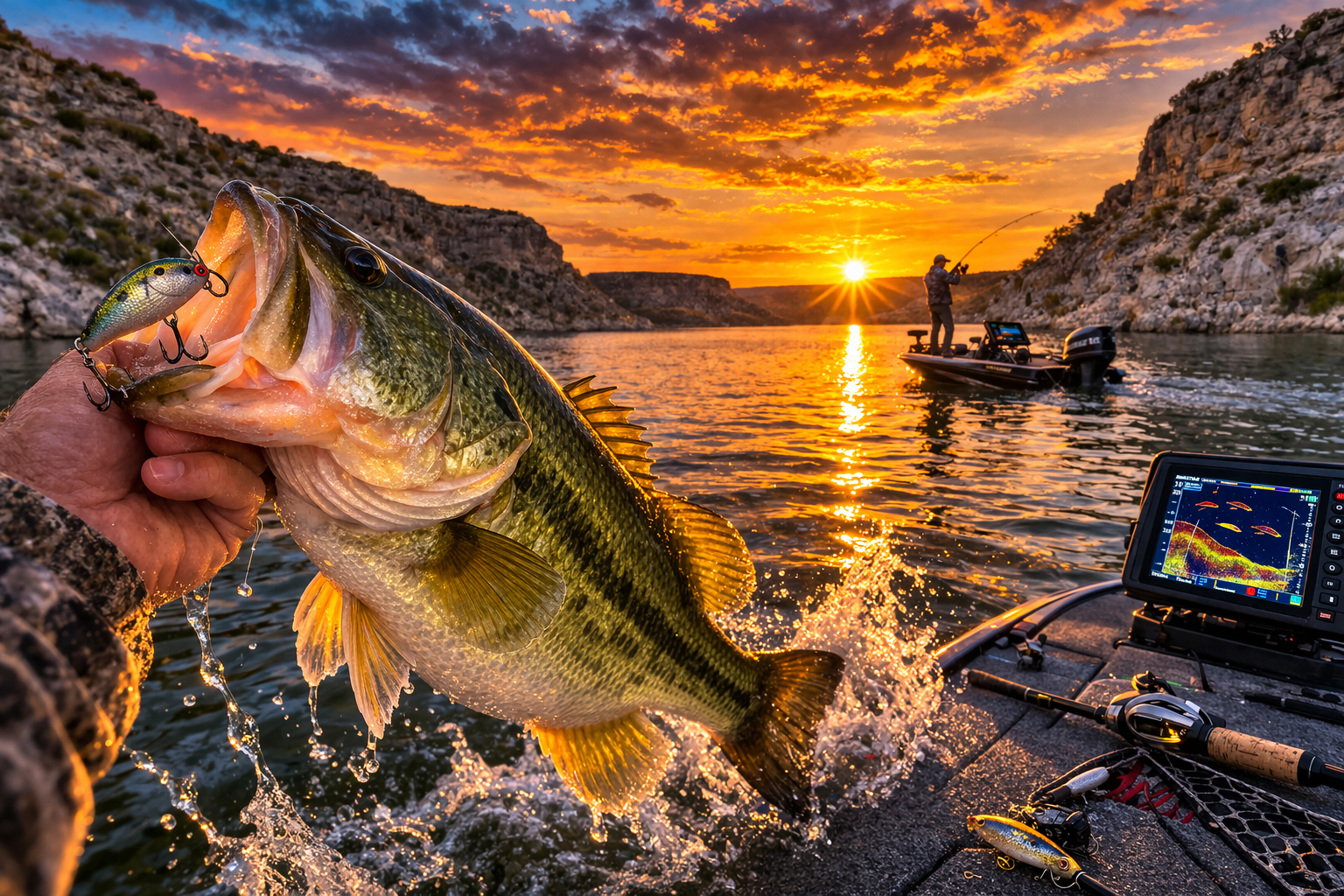
Early morning topwater action can be spectacular.
June – Early Summer Structure Pattern
Summer structure fishing begins.
Bass relate strongly to:
-
Channel bends
-
Deep hydrilla
-
Rock ledges
Depth
15–30 feet
Best Lures
-
Deep diving crankbaits
-
Carolina rigs
-
Flutter spoons
July – Deep Summer Pattern
Water temperatures climb above 85°F, pushing bass deeper.
Fish often suspend near channel drops where bait schools roam.
Best Areas
-
Channel intersections
-
Deep points
-
Canyon walls
Depth
20–40 feet
Best Lures
-
Drop shot rigs
-
Jigging spoons
-
Big worms (10–12 inches)
August – Heat of Summer
Bass feed mostly during low-light periods.
Morning Pattern
Topwater over channel points.
Midday Pattern
Deep structure fishing.
Best Lures
-
Walking topwaters
-
Flutter spoons
-
Carolina rigs
September – Early Fall Transition
Cooling water pushes baitfish into the river arms.
Bass follow shad schools along the Rio Grande channel.
Best Structure
-
Channel flats
-
Grass edges
-
Points near creek mouths
Best Lures
-
Lipless crankbaits
-
Spinnerbaits
-
Swimbaits
October – Shad Migration
Fall bass fishing can be excellent.
Bass chase shad along channel edges and shallow points.
Depth
5–15 feet
Best Lures
-
Squarebill crankbaits
-
Topwater poppers
-
Swimbaits
November – Cooling Water
Bass begin transitioning back toward deeper winter structure.
Structure
-
Bluff ends
-
Channel ledges
-
Rock piles
Best Lures
-
Jerkbaits
-
Football jigs
-
Alabama rigs
December – Winter Pattern Returns
Water temperatures drop again, concentrating bass along deep structure.
Fishing slows but large bass are still caught.
Recent fishing reports show bass caught around ledges and grass beds in 15–20 feet of water during winter patterns.
Best Lures
-
Finesse worms
-
Jigging spoons
-
Suspending jerkbaits
Best Largemouth Structure in the Rio Grande Arm
Some of the most productive channel areas include:
San Pedro Canyon Channel Swing
Steep rock ledges and deep channel turns.
Rio Grande Bluff Walls
Vertical rock with deep water nearby.
Old River Ledges
Submerged terraces along the channel edge.
Creek Channel Junctions
Feeder creeks entering the Rio Grande arm.
These areas often hold bass year-round.
Electronics and Structure Fishing Strategy
Modern electronics make locating Rio Grande structure much easier.
Look for:
-
Bait schools along drop-offs
-
Isolated rock piles
-
Grass edges on ledges
-
Suspended fish along bluff walls
Forward-facing sonar has become a powerful tool for locating bass around roaming bait schools.
Best Lure Colors for Amistad
Because Amistad water is typically clear:
Natural colors work best
Top choices include:
-
Green pumpkin
-
Watermelon red
-
Shad patterns
-
Ghost minnow
-
Smoke
Crawfish colors become important in spring.
Why the Rio Grande Channel Produces Big Bass
Several factors make the Rio Grande arm special:
-
Deep structure provides year-round habitat.
-
Canyon geography funnels baitfish movement.
-
Hydrilla creates feeding ambush zones.
-
Clear water supports sight-feeding predators.
Together these ingredients create an environment capable of producing trophy largemouth bass.
Final Thoughts on Amistad Reservoir Largemouth Bass Fishing
Few lakes in Texas combine deep canyon structure, clear water, and consistent bass populations like Lake Amistad.
For anglers who enjoy structure fishing, the Rio Grande river channel offers endless possibilities:
-
Steep canyon drop-offs
-
Deep ledges
-
Hydrilla edges
-
Rock points
-
Creek channel intersections
Understanding seasonal movement patterns and learning to read underwater structure are the keys to unlocking this remarkable fishery.
Whether probing a 30-foot ledge in winter or casting a topwater across a summer channel point at sunrise, Amistad Reservoir largemouth bass fishing remains one of the finest bass fishing experiences anywhere in the Southwest.
And when that rod bows under the weight of a Rio Grande canyon largemouth, you’ll understand why this lake continues to draw anglers back year after year.


0 Comments