

Back in the 80s and 90s a trip up the Devils River arm almost felt like stepping off the map. Once you ran upriver past the main lake traffic, the water would turn that deep emerald green and the world got quiet in a hurry.
Those limestone ledges and gravel shelves were perfect bass country. Smallmouth especially seemed to love those rocky shelves where the current from the river still had a little life in it. Largemouth would tuck into flooded mesquite or under the broken rock ledges where shade held bait.
A lot of anglers never realized how unique that stretch really was. It’s one of the few places in Texas where you could legitimately catch both largemouth and smallmouth bass in the same morning.
Early morning run up the lake while the desert air still had that cool edge to it. Sun climbing over the canyon rim. Maybe a thermos of coffee riding in the console. The water slick as glass.
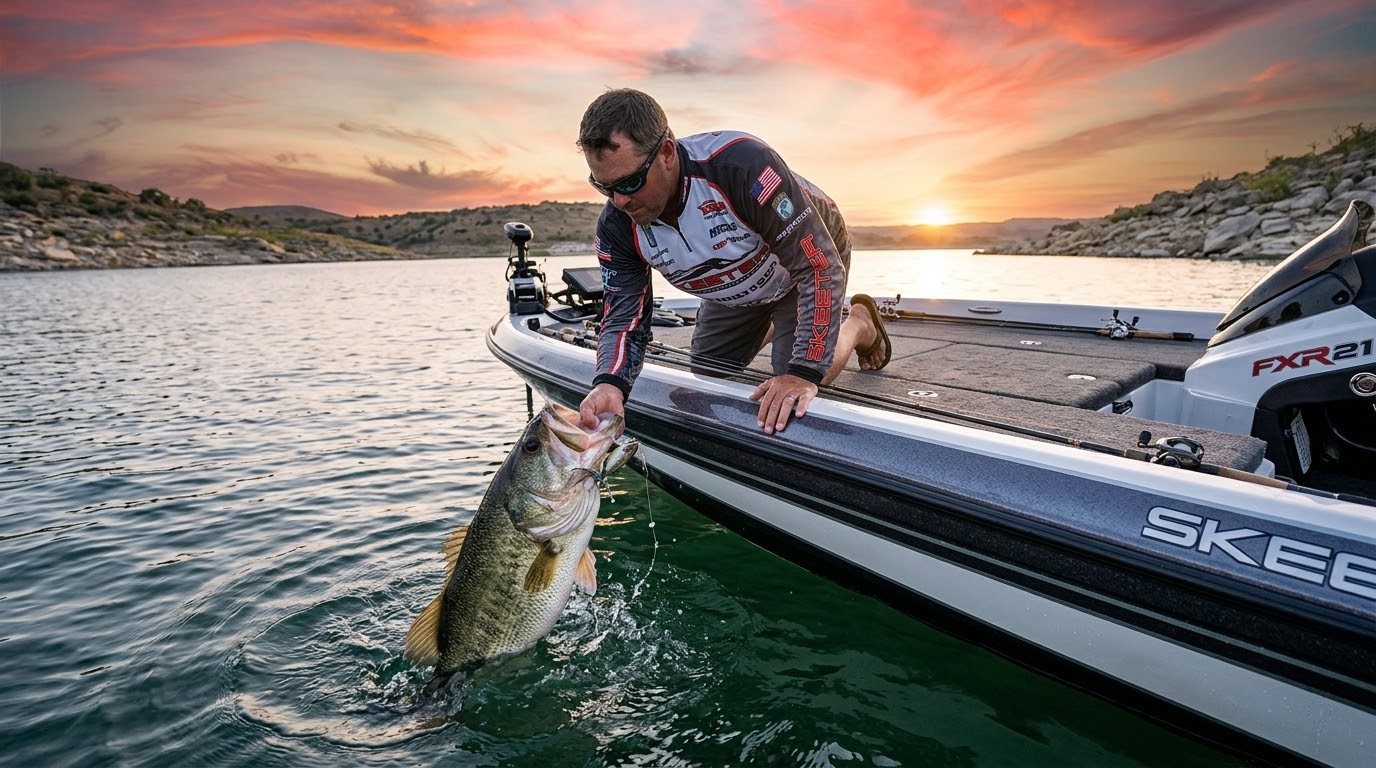
First stop on a rocky point where the Devils River channel swings close to the bank. A few casts. Maybe a bronze-backed smallmouth hammering a topwater before the sun got high.
Then later in the day easing into a quiet cove where the green water fades into flooded brush and a big Amistad largemouth rolls under a crankbait.
Days like that tend to stay with a person.
Amistad also had something that’s getting harder to find these days: space. You could fish all day in the Devils River arm and see only a handful of other boats. It felt more like an expedition than a fishing trip.
And for a couple traveling together, it made a fine fishing vacation. Del Rio for supplies, long days on the water, and evenings watching the sunset over the desert hills.
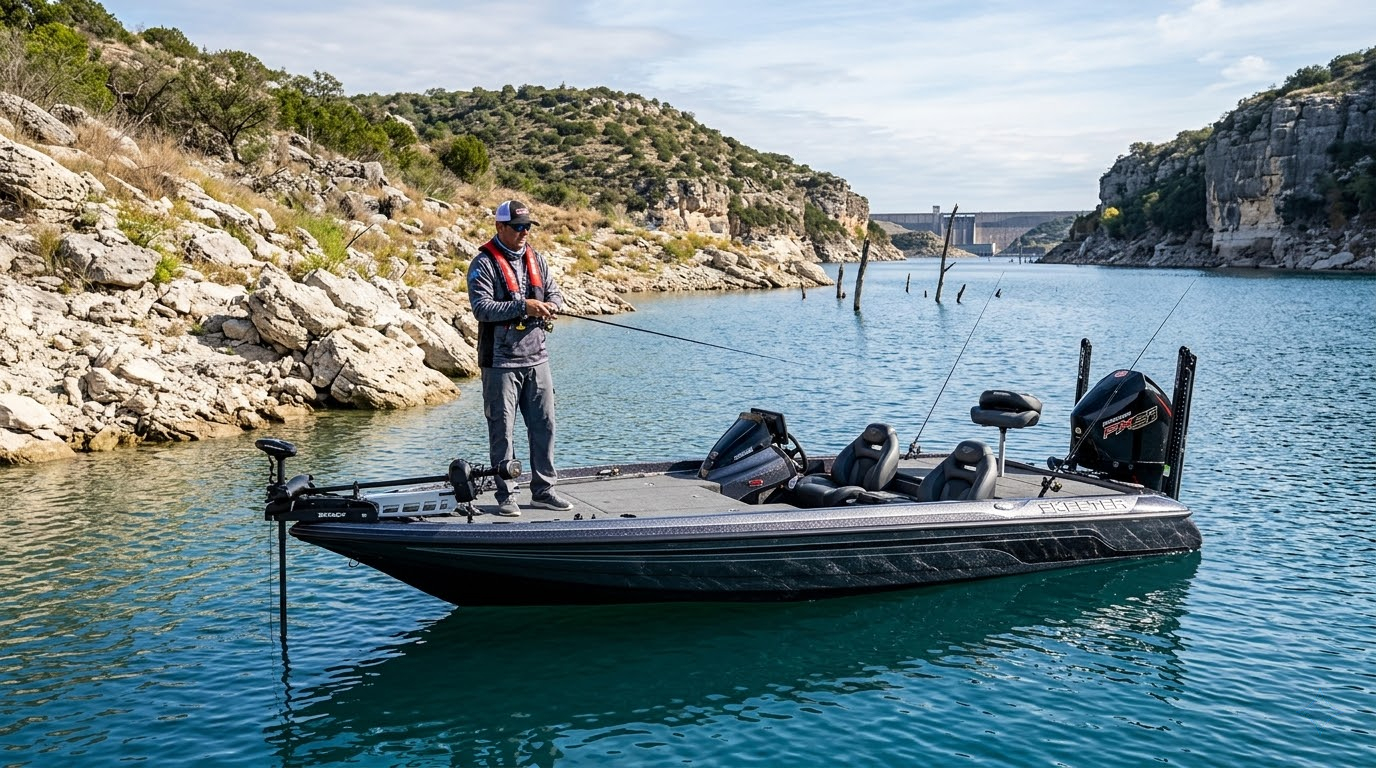
Running the Skeeter up the Devils River arm until the 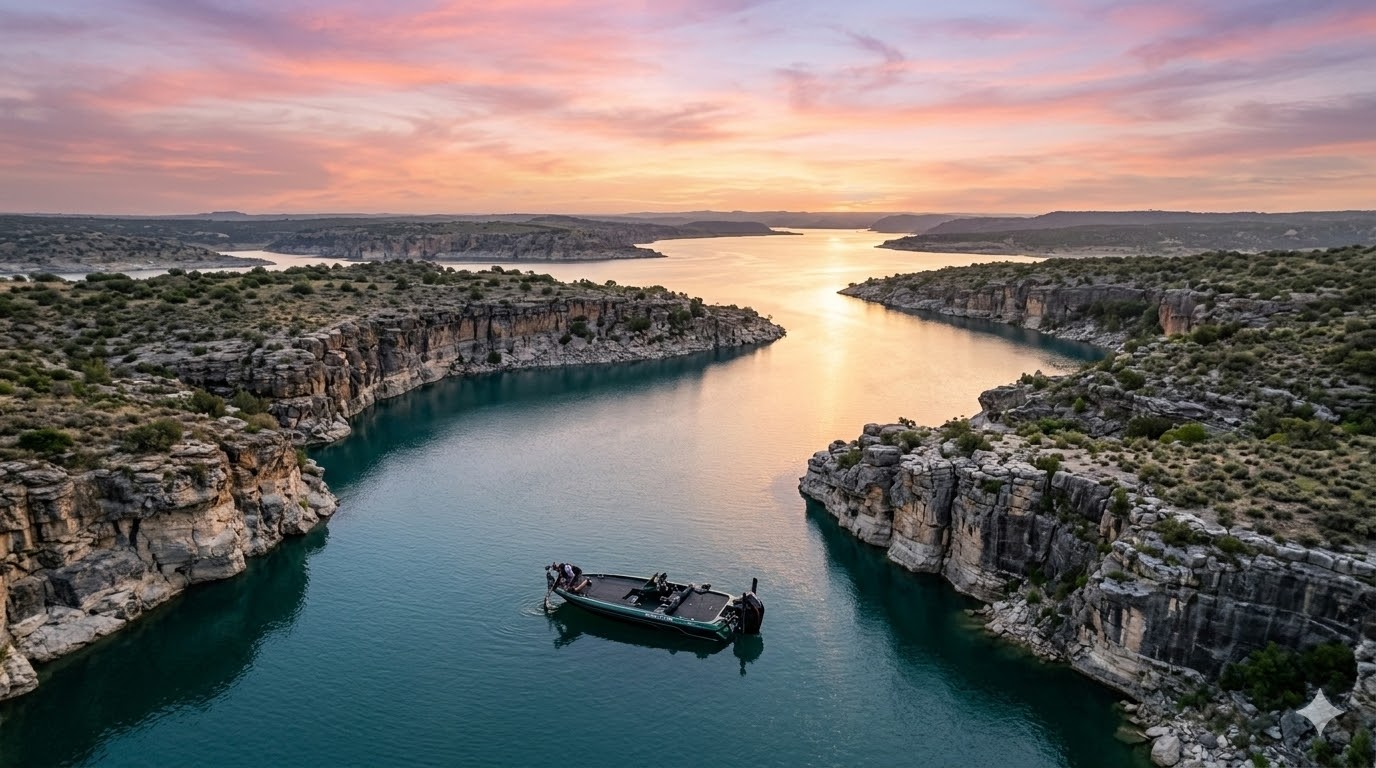 prop could no longer safely turn, then stepping overboard onto that pale limestone bottom felt like entering another world. The water there often runs so clear it seems almost invisible, the kind of clarity where shadows of fish glide across the bottom long before they ever feel a lure.
And you’re exactly right about the comparison. In many ways it felt like bonefishing on the Florida flats, except instead of palm trees and mangroves you had canyon walls and desert sky.
You’d anchor the boat, slip into the water, and suddenly the whole rhythm of fishing changed.
No trolling motor.
No outboard.
Just quiet wading and long casts.
The limestone bottom of the upper Devils River is almost surreal underfoot. Hard, pale rock shelves worn smooth by centuries of current, with shallow depressions where sand collects and patches of eelgrass waving in the slow flow.
Standing there waist-deep in that clear water, you could often see the bass before you ever cast.
Sometimes they appeared as dark shapes sliding along the edge of a shelf. Other times you’d spot a faint shadow easing out from under a limestone ledge. Smallmouth especially would cruise those flats like predators on patrol.
It created a style of fishing that was far more like sight-casting than traditional bass fishing.
Anglers who experienced it learned to move slowly. Each step careful so the limestone didn’t crunch under boots. The water often so clear that a careless ripple could send fish scattering.
The presentations that worked best were usually simple and natural.
A small white or olive streamer stripped slowly across the rock bottom could draw explosive strikes. Crawfish patterns bounced along the limestone shelves were deadly when bass were feeding deeper. And early in the morning, a floating bug skittering across the surface could bring a smallmouth charging out of nowhere.
What made those flats special was the mix of species and habitat.
Smallmouth often favored the rocky shelves and deeper current seams where the river channel still carried flow. Largemouth tended to hold closer to flooded brush or pockets where vegetation softened the stark limestone landscape.
But on those shallow flats they sometimes mingled together.
It wasn’t unusual for an angler to cast to a cruising fish expecting a bronzeback only to hook into a thick-shouldered Amistad largemouth.
Another remarkable thing about wading those areas was the silence.
Once the boat was anchored and you were a hundred yards upstream on foot, the world changed. The only sounds were water moving gently across limestone, wind brushing the canyon walls, and the occasional splash of a startled carp or gar.
You were no longer simply fishing a reservoir.
You were standing in the upper reaches of a wild Texas river.
For many anglers, those stretches of the Devils River represent the closest thing Texas has to a western trout stream, except the quarry is bass.
And for someone who spent years fishing the great Texas reservoirs, discovering that kind of water was a special treat. A completely different style of bass fishing than the structure fishing and deep ledge patterns common on lakes like Sam Rayburn or Toledo Bend.
The beauty of it was that the fishing felt almost timeless.
No electronics needed.
No heavy tackle.
Just clear water, careful wading, and sharp eyes.
I can clearly remember Paulette and I spending a full day that way. Running upriver at first light, anchoring where the river thinned into limestone flats, then easing along the shallows together casting to cruising fish.
Those kinds of fishing days tend to stay vivid long after the tackle has been put away.
And in a way, they make perfect material for Texas Sportsguide articles. Many anglers today have never even heard about that style of fishing on Amistad.
Yet it might be one of the most unique bass experiences Texas ever offered.

0 Comments