
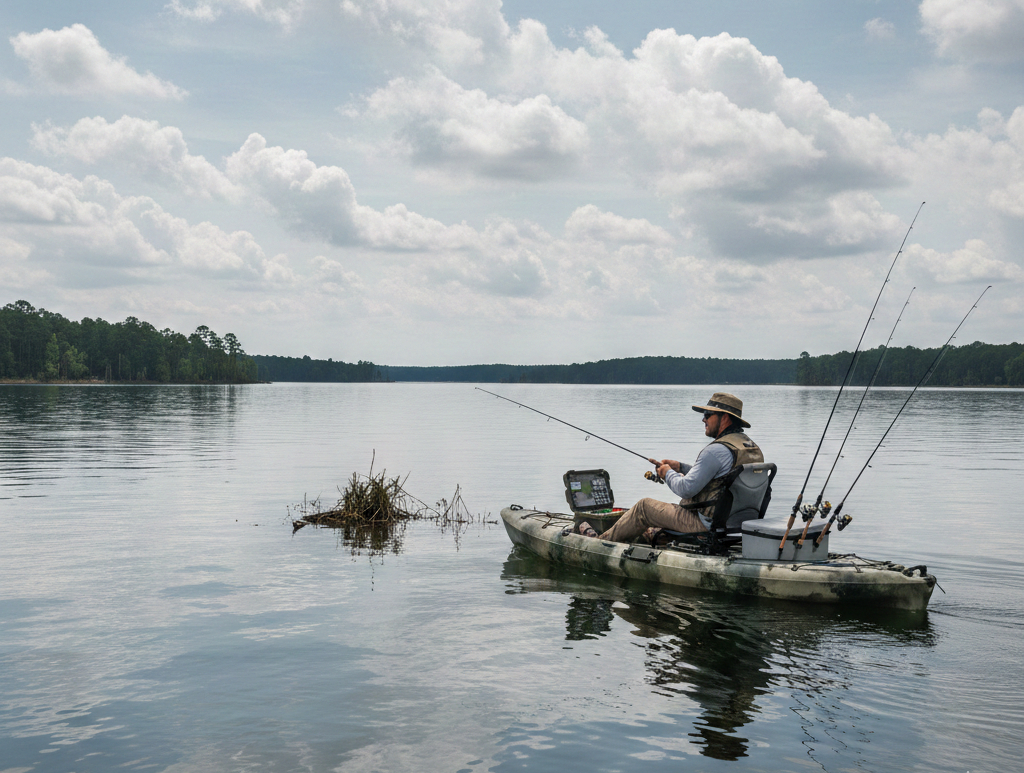
It wasn’t all that long ago that choosing a spinnerbait was a pretty simple affair. You picked a big one or a little one. Maybe you debated whether you wanted one blade or two. That was about the extent of it.
Those days are long gone.
Today’s spinnerbaits run the gamut from tiny crappie-sized models no bigger than a quarter all the way up to heavy, one-ounce-plus brutes swinging blades that look more like cowbells than fishing tackle. And the color choices? They rival a full Texas sunrise after a spring storm.
The Return of Colored Blades
Colored spinnerbait blades aren’t exactly new. I still have a couple of old chartreuse models I was chunkin’ back in the mid-1970s. For a long time, though, painted blades fell out of favor. Chrome, gold, and nickel ruled the day, and most anglers forgot all about color.
Now they’re back—and better than ever.
The biggest difference between yesterday’s painted blades and today’s modern versions is metalflake. Years ago, fishermen would glue bits of glitter onto blades hoping for a little extra flash to catch a big bass’s eye. It worked sometimes, but it wasn’t pretty or durable.
Companies like Nichols Lures, Strike King, Stanley, and Luck “E” Strike have taken that idea and perfected it. Their metalflake finishes are bonded directly to the blade, creating a durable, eye-catching surface that reflects light in an entirely different way.
Why Metalflake Works
A metalflake blade doesn’t just flash—it changes the whole look of the bait. The reflection is softer, more natural, and often closer to the shimmer of real fish scales.
At a recent fishing show in Las Vegas, I asked several experts about these metalflake blades. Here’s what they had to say:
-
On multiple trips, metalflake blades out-produced standard painted blades two to one.
-
The finish resembles fish scales, making it more believable to bass.
-
Tri-color blades with orange, green, and yellow metalflake can be dynamite on lakes where fire-tiger crankbaits shine.
-
The epoxy color finishes used today are far superior to what we had even 10 years ago.
-
Bass simply haven’t seen these finishes as much, making them more effective than old standbys.
-
They show up better in muddy or stained water.
-
Multiple colors help fish zero in on the bait, especially around vegetation.
That’s a pretty strong endorsement from anglers who make their living on the water.
Clear Water or Muddy Water?
Like most things in fishing, there’s still plenty of debate. Some pros swear that multi-colored blades shine best in clear water. Others argue that stained or off-color water—especially in spring and fall—is where painted and metalflake blades really earn their keep.
In Texas, one thing is hard to argue with: if you’re not throwing red in the spring, you’re probably not catching as many fish as you could be. That raises an important question—how’s your supply of red metalflake blades?
On cloudy or overcast days, fluorescent orange or fire-red blades can be deadly. When the water turns muddy, don’t be afraid to upsize and reach for chartreuse or bright orange blades that bass can see and track from a distance.
Give Them a Try
If you haven’t fished with the new generation of metalflake spinnerbait blades, it’s time. Tournament anglers know better than anyone that sometimes a new color—or a slightly different flash—is exactly what’s needed to put together a winning stringer.
They’re fun to fish, easy to customize, and give you another tool to match the conditions in front of you. Mix and match colors, experiment with blade sizes, and see what the fish tell you.
Sometimes progress really does make an old favorite even better.
0 Comments