

Well, howdy there, folks! Pull up a chair and grab yourself a hot cup of joe, 'cause we're fixin' to jaw a spell about one of my all-time favorite pastimes: winter bass fishin' on Lake Sam Rayburn. Now, if you ain't from 'round these parts, let me paint you a picture. Sam Rayburn – or Big Sam, as us locals call her – is this big ol' sprawlin' reservoir straddlin' the Angelina River right here in East Texas. She's got over 114,500 acres of water, plungin' down to a max depth of 80 feet in spots, and she's been crankin' out trophy largemouth bass for decades. Heck, she's ranked in the top 10 bass fisheries in the whole dang U.S. of A. for as long as I can remember.
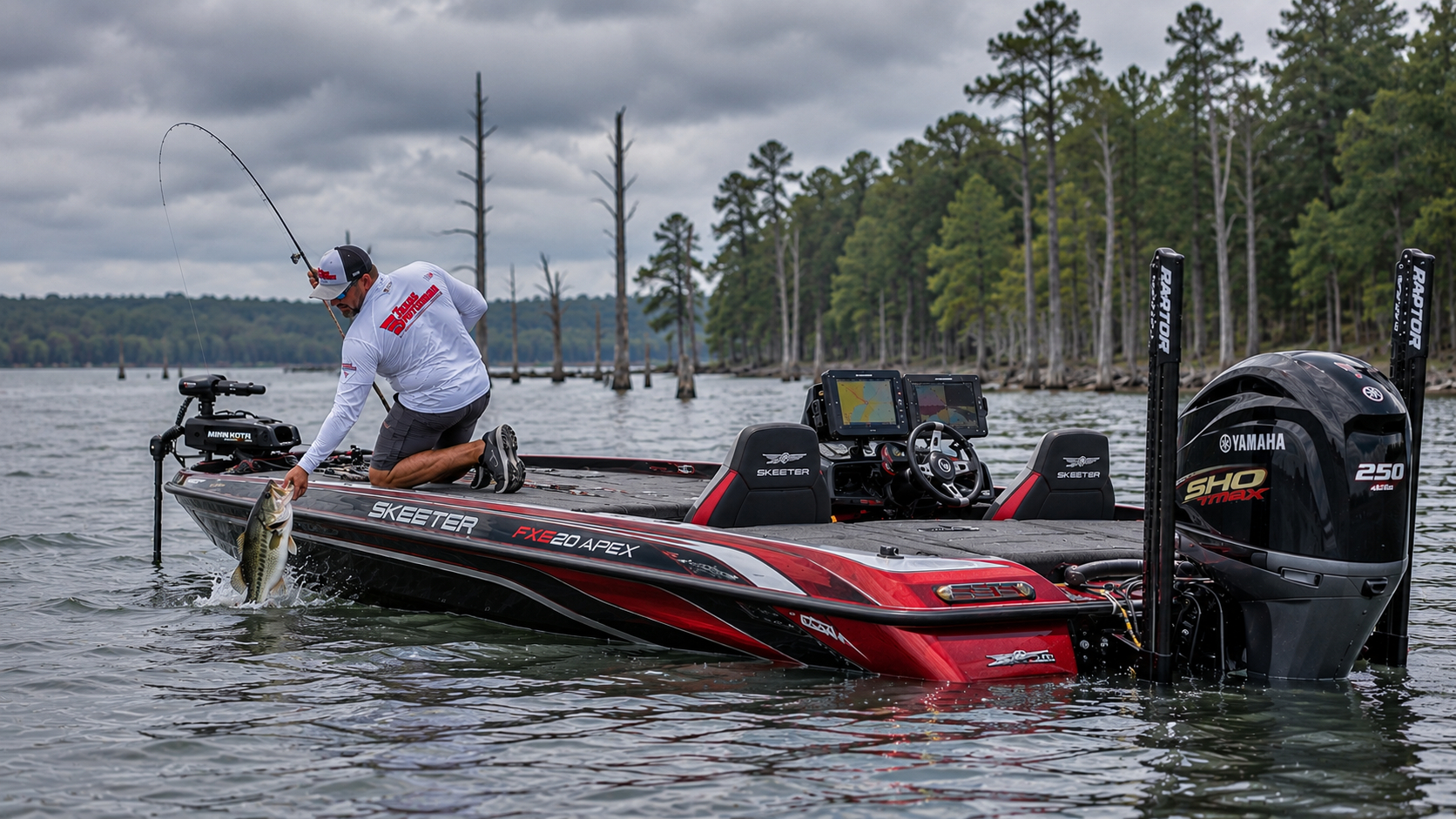
I'm Pat, just a good ol' boy from down near Santa Fe way, but I make the drive up to Big Sam every chance I get, especially when the leaves turn and the air gets that crisp bite. Winter fishin' ain't for the faint of heart – it can be colder than a polar bear's toenails out there – but Lord almighty, the rewards are sweeter than Grandma's pecan pie. Them bass might slow down a mite in the chill, but they bunch up in schools, followin' the baitfish, and if you know where to look and what to chuck, you can fill your livewell with some real hawgs. We're talkin' double-digit monsters that'd make your buddies back at the bait shop green with envy.
Now, before we dive into the nitty-gritty like lures, depths, and hot spots, let's talk prep. You can't just hop in your pickup and head out without gearin' up proper. First off, dress like you're headin' to the Arctic – layers, y'all. Thermal underwear, wool socks, a good insulated bib overall, and a heavy coat. Don't forget gloves that let you tie knots without fumblin' like a newborn calf. And a hat – one of them wool beanies that'll keep your noggin warm when the north wind howls across the lake.
Your boat's gotta be ready too. If you're trailin' one in, make sure the batteries are charged – cold weather sucks the life outta 'em faster than a tick on a hound. Check your electronics; a good fish finder with side-scan sonar is worth its weight in gold for spottin' them deep schools and structure. I run a Humminbird myself, but whatever floats your boat. Gas up, pack snacks – jerky, peanuts, maybe some hot thermos coffee – and don't skimp on safety. Life jackets, a throw cushion, and let somebody know where you're goin'. Big Sam can turn ornery with them winter fronts blowin' in.
Alright, let's get to the meat and taters: understandin' them winter bass. Come December through February, the water temp drops into the 40s and 50s, and them largemouth ain't as spry as in summer. They conserve energy, school up with their kin, and hang around areas with plenty of forage like shad or crawfish. Baitfish move to deeper, more stable water, so the bass follow suit. But here's the kicker – they ain't always glued to the bottom. On warmer days or durin' low-light hours, they'll push shallower to feed. Cold fronts can shut 'em down, but post-front, they often fire up again. Patience is key; fish slow and methodical, like you're courtin' a shy gal at the county fair.
Now, locations – that's where the magic happens. Big Sam is huge, so you gotta narrow it down. In winter, I start in the extremities of the lake, where the water warms up quickest. Head down by the dam in the south end – that's prime for shallow crankin' early on. Up north above the 147 bridge, or over in the northeast pockets like Ayish Bayou or the Attoyac arm – them areas hold historic spawnin' grounds and loads of bait. The water's often stained up there from river inflow, which bass love for ambushin'.
If the shallow bite's slow, go offshore. Look for deep main lake points adjacent to channel swings – them spots where the river channel bends and creates a drop-off. Steep rocky banks that plunge quick from 10 to 30 feet are gold mines, especially if there's rock transitions or boulders. I recall one January trip where I idled over a point near the Black Forest area – that's that submerged timber field mid-lake – and my sonar lit up like Christmas lights. Dropped a jig down, and bam, pulled up a 7-pounder that fought like a wildcat.
Creek channels are another winner. Follow 'em out from the backs of coves to where they meet the main lake, focusin' on bends or where they drop into 20-40 feet. Humps and ledges out in 25-35 feet hold mega schools – use your graph to find brush piles folks have sunk. The Angelina River arm is clearer mid-lake, clearin' up more toward the south, while the Attoyac's off-color. Ditches and submerged timber in 20-30 feet are spotted bass havens too, though we're mostly chasin' largemouth.
Varied terrain is Big Sam's secret sauce – submerged timber, rocky points, deep channels, shallow flats. If you're launchin' from Umphrey Pavilion or Powell Park, you're smack in good territory for mid-lake structure. And don't overlook eddies along banks or creek mouths for white bass, but since we're talkin' largemouth, stick to them deeper haunts.
Now, depths to fish – this varies with weather, but in winter, think 10-40 feet mostly. Early mornin' or late afternoon, probe shallower, say 2-10 feet, especially post-front when bass push up to feed. I like fishin' deep banks over 5 feet for schoolers. Midday, drop to 20-30 feet on ledges or points. If it's a bluebird day after a cold snap, go even deeper, 30-40 feet, where the water's more stable. Use your electronics to pinpoint the thermocline or where bait balls hover – bass'll be right below 'em.
Lures and techniques? Boy, howdy, that's the fun part. In winter, slow and subtle wins the race. Start with crankbaits for shallower stuff – a lipless like a Rat-L-Trap in chrome/blue or red craw, rattlin' through grass or over points in 5-15 feet. Yo-yo it slow, let it flutter on the fall. Them things mimic dyin' shad perfect.
For deeper water, nothin' beats a jig. Football jigs in 1/2 to 3/4 ounce, brown/green pumpkin with a craw trailer – hop it along rock transitions or ledges in 20-30 feet. Feel for that subtle thump; bass sip it gentle in cold water. Pair it with a chunky trailer like a Rage Craw for bulk.
Carolina rigs are old faithful for draggin' deep. Rig a 3/4-ounce tungsten weight, 18-24 inch leader, and a lizard or worm in watermelon/red or pumpkin. Crawl it over humps and channels in 15-25 feet. It's deadly when bass are finicky.
Drop-shot? Absolutely. Finesse worm like a Roboworm in morning dawn, nose-hooked on a 1/4-ounce weight, fished vertically over schools in 25-35 feet. Shake it subtle – think tremblin' like a scared minnow.
Spinnerbaits for low light: Slow-roll a 1/2-ounce willow/Colorado in white/chartreuse over grass edges in 5-10 feet. Underspins work too – 3/8 ounce with a 4-inch swimbait, swam steady in 10-20 feet.
Plastic worms: Texas or Carolina rigged, 7-10 inch in dark colors like black, smoke, pumpkin. Dead-stick 'em on the bottom.
Big cranks for reaction: Deep divers hittin' 15-20 feet on points.
Jiggin' spoons for vertical: 1/2-3/4 ounce over timber in 20-40 feet.
Colors? Stick natural: Black, gray, pumpkin, watermelon. In stained water, brighter like chartreuse.
Tips and tricks: Fish durin' stable weather – avoid right after fronts. Low light's best. Use fluorocarbon line for sensitivity. If one lure ain't workin', switch quick. Look for birds divin' on shad – bass below. In January, focus on steepest low spots, creek channels, points.
Let me spin a yarn: Last February, wind howlin', I launched at Mill Creek. Idled to a channel bend in 25 feet, dropped a Carolina rig. First cast, line went slack – set the hook, and out comes an 8-pounder! Filled limits by noon. Another time, shallow crankin' near the dam yielded a 10-pound hawg. Winter's when legends are made.
Flats need local know-how, but scan for subtle drops.
In closin', winter bass fishin' on Big Sam is pure Texas joy. Grab your gear, hit the water, and tight lines! If y'all got stories or tips, holler in the comments. Stay warm out there.


0 Comments