
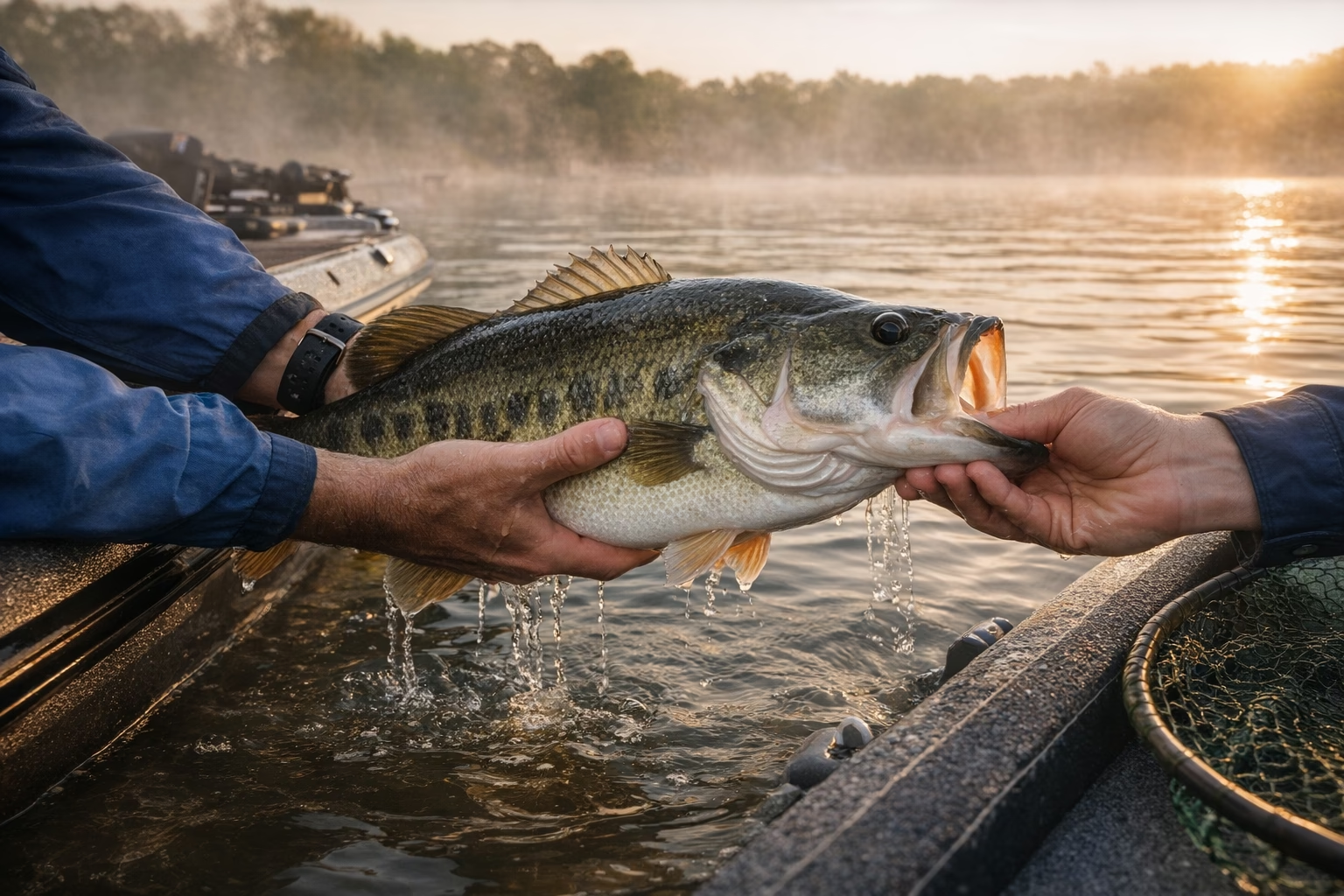
There’s a moment, right after you land a truly big bass, when time seems to slow down.
Your hands are shaking, your heart’s still thumping, and somewhere in the back of your mind you realize you’re holding something special. Not just a fish, but a rare one. The kind that doesn’t come along often.
What you do next matters more than most anglers realize.
According to David Campbell, one of the biggest factors influencing whether a trophy bass survives after being entered into the ShareLunker program isn’t where it was caught or how big it is. It’s how that fish is handled in the minutes and hours after it comes over the rail.
The guidance from the Texas Parks and Wildlife Department is simple, but it runs against a lot of instinct. Keep handling to a minimum. Reduce stress. Treat the fish like it’s something fragile, because in many ways, it is.
Every time a big bass is pulled from the water for photos, the clock starts ticking. Stress rises. Protective slime is lost. The chances of fungal infection increase, especially where hands have touched the fish. Add in the risk of dropping it or mishandling it, and what started as a celebration can quickly turn into damage that shows up days or weeks later.
Big bass aren’t just bigger versions of the two-pounders most folks are used to. They’re powerful animals.
Jim Matthews of the Texas Freshwater Fisheries Center has seen it firsthand.
“We’ve all seen pictures of bass being held up with one hand gripping the lower jaw,” he says. “Doing that with a lunker bass will almost guarantee damage to the jaw.”
And that damage isn’t always obvious.
Biologist Juan Martinez deals with the aftermath of improper handling on a regular basis. By the time these fish arrive at the hatchery, the mistakes have already been made.
“Over-handling stresses the fish,” Martinez says. “We see fish come in with missing scales, scrapes, even injuries from being held in wire baskets or cramped containers. And broken jaws are more common than people think.”
One of the biggest misconceptions, he explains, is that a broken jaw will always leave a fish’s mouth hanging open.
“That’s not always the case,” he says. “If the break is in the middle of the jaw rather than at the hinge, the mouth may still close. But the fish still can’t feed properly. That usually happens when a big fish is held vertically without supporting its body.”
In other words, that classic grip-and-grin pose, holding a big bass straight up by the jaw, might make for a good photo, but it can be a death sentence for the fish.
Campbell offers a straightforward set of guidelines that every serious angler ought to commit to memory:
- Wet your hands before touching the fish.
- Grip the lower jaw firmly with your dominant hand.
- Support the fish’s weight with your other hand under the belly, just forward of the tail.
- Lift and hold the fish horizontally, using both hands.
- Never hold a big bass vertically by the jaw alone.
- Keep handling to an absolute minimum, especially outside the water.
And above all, remember one simple truth.
“The fish has to be in the water to breathe,” Campbell says.
A bass that’s already been caught, transported, and placed in a livewell is under stress. Every second out of the water adds to that burden. What looks like a harmless photo session can lead to delayed mortality days or even weeks later.
Photos are fine, but they need to be quick and planned. Have the camera ready. Take one or two shots. Get the fish back in the water within thirty seconds.
There’s another detail many anglers overlook, wind.
Out of the water, even a light breeze can dry a bass’s eyes quickly, causing damage you won’t notice until it’s too late.
When you step back and think about it, a 13- or 14-pound bass is the freshwater equivalent of a trophy whitetail. The difference is, that deer ends up on a wall.
A big bass, if handled properly, goes back into the lake, swims away, and may contribute to the next generation of trophy fish.
That’s the real payoff.
If you want more fish like that in your future, it starts with how you treat the one in your hands today.
Handle her like she matters.
Because she does.
0 Comments