
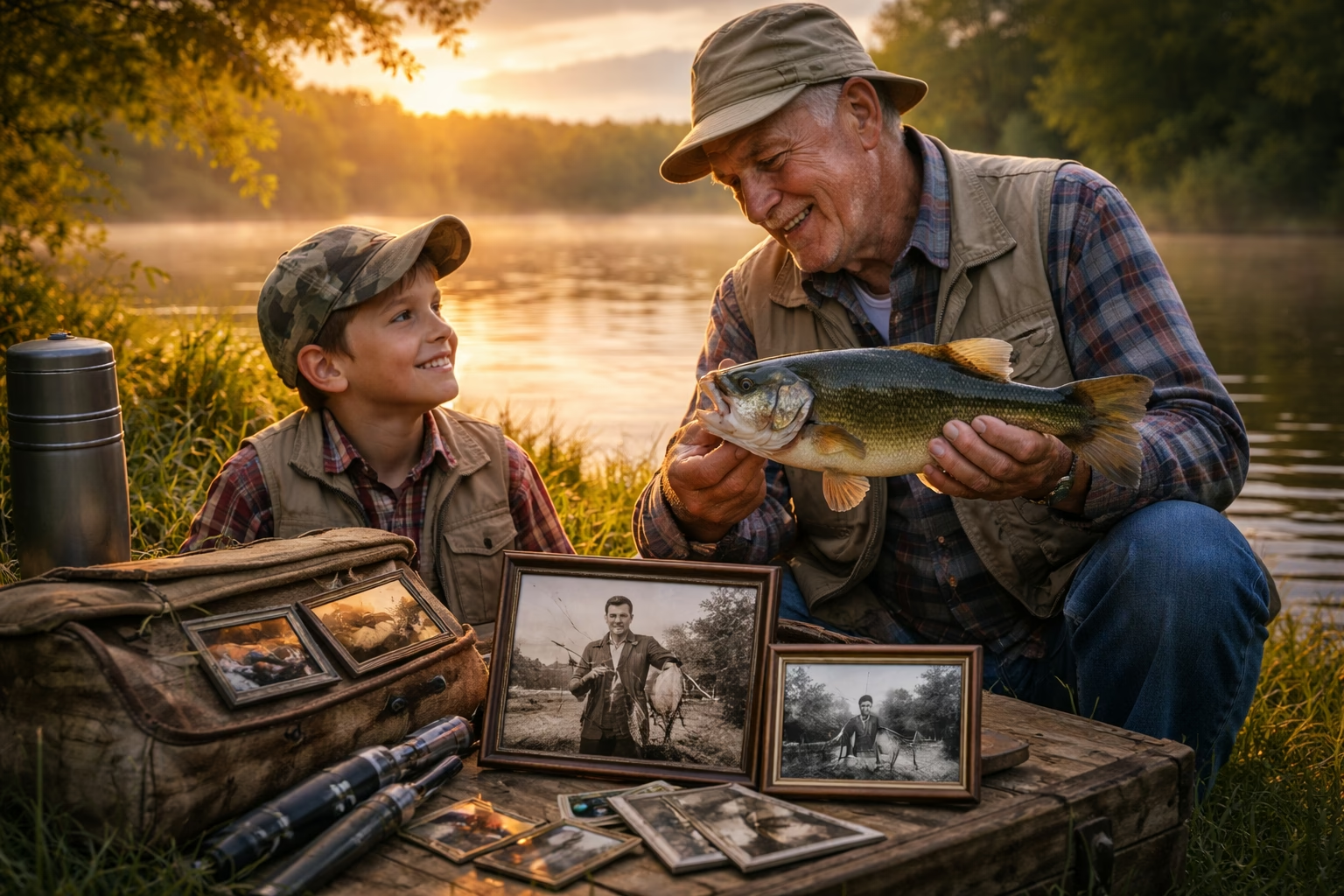
Some things are worth more than money, and family heritage is one of them.
If a man is fortunate, he inherits more than a name. He inherits stories, values, habits, and ways of looking at the world. In my family, a love for fishing, hunting, and the outdoors has been handed down just that way, from one generation to the next. It is a heritage I am proud of, and one I hope never fades.
My grandfather, Ed Cannan Sr., turned 80 last month. He has lived the kind of healthy, full life that comes from time spent outdoors, on the water, in the woods, and under open skies. Those passions were passed down to my dad, and then on to me, along with anyone else in the family who showed an interest. Around my grandparents’ house, if you sit still long enough, the stories start flowing. And most of them come with old black-and-white photographs that make the past seem close enough to touch.
One of my favorite stories Grandad tells goes back to a trip he and my grandmother made to Liberty, Texas, to visit my great-grandmother.
While my grandmother was visiting with her mother, Grandad slipped off with Oscar Huggins to fish a few stock tanks outside of town. Oscar was the agriculture teacher at the local high school, and whenever Grandad was in Liberty, the two of them usually found some excuse to get together for a little hunting or fishing.
They started on the stock tanks, but after a couple of hours, they had not done much. So they decided to head back toward town. On the way, Grandad suggested they stop at a creek that had backed up from flooding on the Trinity River. He had fished that creek before under normal conditions and had caught a few bass there, so he figured it was worth a look.
That turned out to be a very good instinct.
Using a fly rod and one of his home-tied dry flies, Grandad made a few casts and almost immediately began catching bass. Oscar never even got a hook wet. He was in a hurry to get back to Liberty for a cattle auction and started urging Grandad to leave.
Reluctantly, Grandad did.
They headed back into town, Oscar went on about his business, and Grandad, being wise enough to know what he had found, turned right around and drove back out to that creek on Wallisville Road.
As soon as he got back, the bass were still there and still biting.
Wallisville Road was a fairly busy county road, and before long the catching had drawn a crowd. Cars began pulling over. Folks got out to watch. Fly fishing was not exactly a common sight in those parts at the time, and Grandad said several people told him they had never seen anyone use a fly rod, much less catch fish on one.
One lady who had stopped happened to have a casting rod with her. She walked over and began throwing into a large bush where most of Grandad’s fish seemed to be schooled up. Almost immediately, she hung her lure in the bush and proceeded to shake and jerk until she had about rattled every limb on it.
Grandad said he was sure the fishing was over after that.
But on his very next cast with the dry fly, he caught another bass.
By the time the afternoon was done, he had landed twenty-two bass weighing from one to three and a half pounds apiece. That is the kind of day a man remembers for a lifetime.
Naturally, he went back the next day.
But by then, word had gotten out.
Grandad said it seemed as though every fly fisherman in Liberty County had shown up. There were so many people around that he could not even get close to the bush where he had done all that damage the day before. And as he stood there watching the crowd pound away at his spot, nobody was catching anything at all.
That is when Grandad summed it up in the plainest, truest way possible:
“I was at the right place at the right time.”
That may be the finest short definition of fishing ever given.
Bass fishing has changed dramatically since those days. Boats are faster. Graphs are sharper. Tackle is more specialized. Lures are more refined. Today’s fishermen have more tools, more information, and more technology than ever before.
But for all that has changed, the heart of fishing has not changed at all.
The thrill of the strike, the pull of a good fish, the beauty of being outdoors, and the stories that come afterward have survived every generation. That is why an old black-and-white photograph still means something. That is why an 80-year-old grandfather can still bring a room to life with a fishing story. And that is why those of us lucky enough to inherit such stories ought to hold on to them tight.
Because long after the tackle changes and the times move on, the best part of fishing is still what it has always been:
Who you learned it from, and the memories they left behind.



0 Comments