

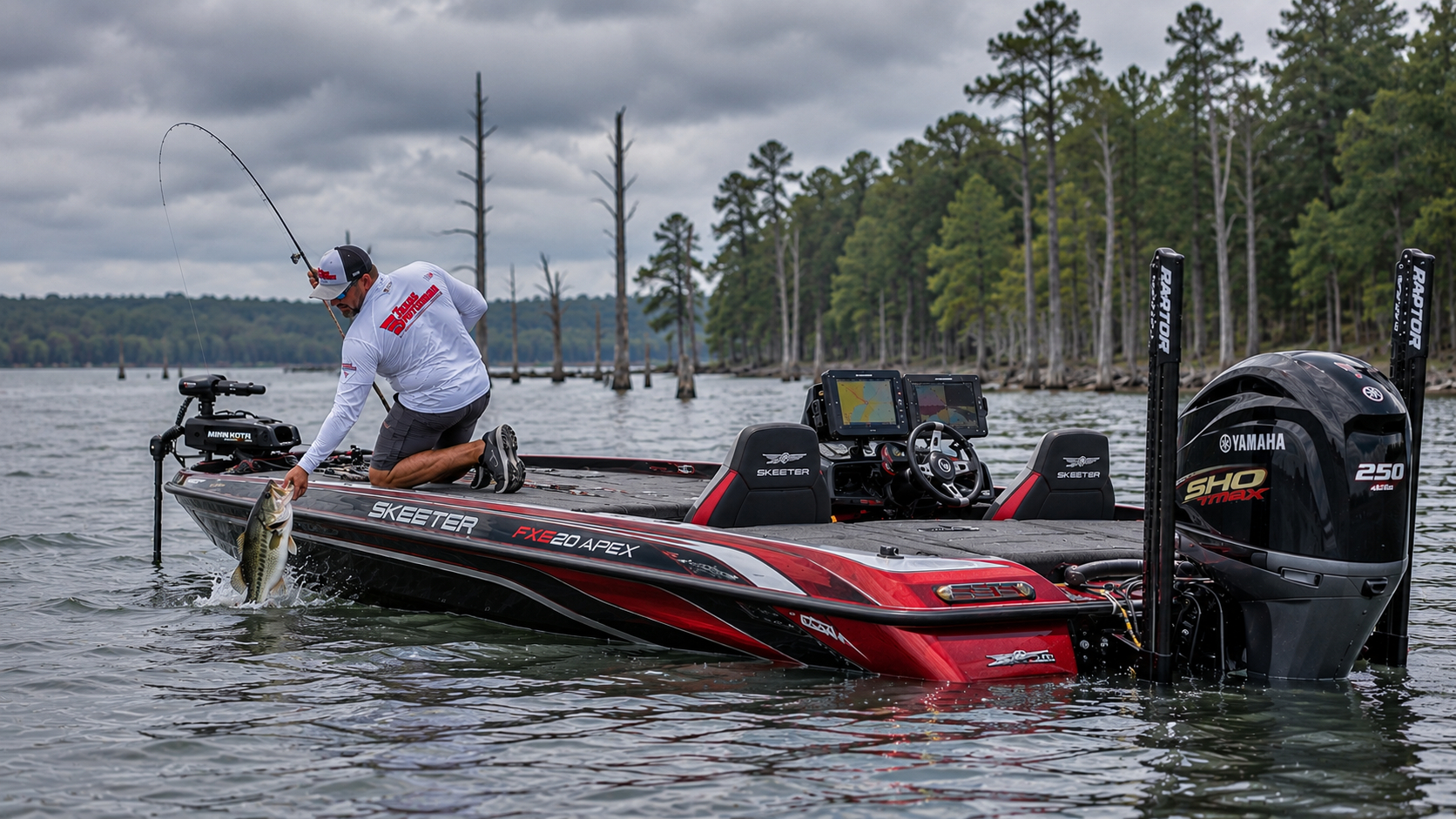
Choke Canyon Reservoir is widely regarded as one of the premier destinations for trophy bass in the Lone Star State. Located in the Frio River watershed, this sprawling South Texas impoundment has earned a reputation for producing massive largemouth bass and providing a rugged, "old-school" Texas fishing experience. Whether you are a professional tournament angler or a weekend warrior, understanding the nuances of Choke Canyon Reservoir bass fishing is the key to a successful day on the water.
In this comprehensive guide, we will dive deep into everything you need to know, from seasonal patterns and lure selections to the best boat ramps and lodging options near the lake.
General Information: The Layout of Choke Canyon
Choke Canyon Reservoir was impounded in 1982 and is managed by the City of Corpus Christi.
-
Surface Area: Approximately 25,670 acres at conservation pool.
-
Maximum Depth: 95.5 feet.
-
Water Levels: Elevation is 220.5 ft msl (mean sea level) at conservation pool.
It is important to note that Choke Canyon is a "boom or bust" lake regarding water levels. Significant fluctuations of 10 to 20 feet are common, which drastically changes the available habitat. -
Water Clarity: Generally clear to slightly stained in the lower reservoir near the dam, becoming more stained or murky in the upper Frio River reaches.
-
Feeding Rivers: The primary inflow comes from the Frio River, which winds through the South Texas brush country before entering the reservoir.
Predominant Fish Species
While the focus is often on the legendary largemouth bass, Choke Canyon is a diverse fishery.
-
White Bass: Excellent during the spring spawn in the Frio River.
-
Catfish: Blue, channel, and flathead catfish are abundant.
-
Crappie: Can be found around standing timber and brush piles.
-
Alligator Gar: The reservoir is a top-tier destination for those seeking these prehistoric giants.
-
Smallmouth Buffalo: Though not a "bass," they are frequently caught and hold significant lake records.
Largemouth Bass Fishing: Seasonal Patterns and Techniques
To master Choke Canyon Reservoir bass fishing, you must adapt your strategy to the current season and water conditions. The following details are derived from Texas Parks and Wildlife (TPWD) fishing reports and local expert guides.
Spring (Pre-Spawn & Spawn)
-
Pattern: This is the most popular time to fish. Bass move from deeper wintering holes to secondary points and then into shallow, protected flats.
-
Habitat: Look for shallow grass flats (hydrilla or water stargrass), buck brush, and rocky pockets.
-
Depth: 1 to 8 feet.
-
Best Lures: Lipless crankbaits (Rat-L-Traps), bladed jigs (Chatterbaits), and Texas-rigged soft plastics.
-
Colors: Vibrant crawfish patterns, chartreuse, and white/gold.
-
Presentation: Work lipless crankbaits over the tops of emerging grass.
Once fish are on beds, a slow-crawled lizard or creature bait is unbeatable.
Summer (Post-Spawn & Heat)
-
Pattern: Fish transition to deeper structure or seek heavy shade.
-
Habitat: Deep brush piles, submerged timber along creek channel edges, and the edges of thick hydrilla mats.
-
Depth: 10 to 25 feet.
-
Best Lures: Deep-diving crankbaits, football jigs, and large Carolina-rigged worms.
-
Colors: Darker, natural tones like green pumpkin, watermelon red, or plum.
-
Presentation: Slow and methodical. Bass are often lethargic in the South Texas heat, so a "dead-sticking" approach with a weightless stick bait can often trigger a strike when nothing else works.
Fall (The Feeding Frenzy)
-
Pattern: As water temperatures drop, shad begin to school in the backs of creeks, and the bass follow.
-
Habitat: Main lake points and the mouths of major coves.
-
Depth: 3 to 12 feet.
-
Best Lures: Spinnerbaits, topwater frogs, and squarebill crankbaits.
-
Colors: Shad-imitating colors—white, silver, and "sexy shad."
-
Presentation: Fast-moving search baits allow you to cover water and find active schools of feeding bass.
Winter (Cold Water Staging)
-
Pattern: Bass move to the deepest available cover near creek channels.
-
Habitat: Deep rock piles and the "river bends" of the submerged Frio River.
-
Depth: 15 to 30 feet.
-
Best Lures: Jigging spoons, tail-spinners, and heavy jigs.
-
Colors: Silver, white, and dark blue/black.
-
Presentation: Vertical jigging or very slow dragging on the bottom.
A Note on Smallmouth Bass
While Choke Canyon is world-renowned for its largemouth population, it does not typically support a smallmouth bass fishery due to the warm, stained water and lack of rocky, cool-water habitat found in Highland Lakes. However, the Smallmouth Buffalo is a prominent resident, often reaching weights over 60 pounds.
Structure and Aquatic Vegetation
The "bones" of Choke Canyon consist of flooded mesquite brush, standing timber, and steep rocky banks.
-
Vegetation: Hydrilla is the dominant aquatic plant. When water levels are stable, it provides the primary oxygen source and cover for bass. American pondweed and water stargrass are also present.
-
Structure: The "drains" and creek channels are the highways for fish movement. Focus on where a channel swings close to a point or a grass line.
Lake Fish Records
The potential for a "Fish of a Lifetime" is very real here. Here are the standing rod-and-reel records for the reservoir:
-
Largemouth Bass: 15.45 lbs (26.25 inches) – Caught Jan 21, 2009, by Brad Bookmyer on a crankbait.
-
White Bass: 3.69 lbs – Caught Dec 30, 1992.
-
Blue Catfish: 70.50 lbs – Caught Dec 14, 1989.
-
Alligator Gar: 216.00 lbs – Caught Aug 15, 2017.
Marinas, Boat Ramps, and Access
Due to fluctuating water levels, always check the current status of boat ramps before heading out.
-
Website:
TPWD Choke Canyon Page -
Email:
choke.canyon@tpwd.texas.gov
Lodging and Accommodations
Staying near the lake is essential for those dawn-patrol fishing starts.
-
Choke Canyon Lodge
-
Address: 141 Jeff Street, Three Rivers, TX 78071
-
Phone: (361) 786-3999
-
Website:
chokecanyonlodge.com
-
-
Bass Inn
-
Address: 3149 TX-72, Three Rivers, TX 78071
-
Phone: (361) 786-1900
-
-
Three Rivers Inn & Suites
-
Address: 101 West McMullen, Three Rivers, TX 78071
-
Phone: (361) 786-4700
-
-
Eagles Den Suites (Travelodge)
-
Address: 5842 Highway 281, Three Rivers, TX 78071
-
Phone: (361) 786-6900
-
-
Choke Canyon State Park (Camping & Cabins)
-
Address: 358 Recreation Road 8, Calliham, TX 78007
-
Reservations: (512) 389-8900
-
Getting There: Driving Routes and Distances
Choke Canyon is centrally located in South Texas, making it a manageable drive from most major Texas hubs.
-
From San Antonio (approx. 65 miles): Take I-37 South to Exit 72 (US-281 South).
Continue to Three Rivers, then turn right on Hwy 72 West. -
From Corpus Christi (approx. 80 miles): Take I-37 North to Exit 69. Turn left onto US-281 South into Three Rivers, then turn right on Hwy 72 West.
-
From Austin (approx. 160 miles): Take I-35 South to San Antonio, then follow the I-37 South directions.
-
From Houston (approx. 210 miles): Take US-59 South to George West.
Turn right on US-281 North to Three Rivers, then turn left on Hwy 72 West. -
From Dallas / Ft. Worth (approx. 330 miles): Take I-35 South through Austin and San Antonio, then I-37 South as described above.
Safe Boating Tips for Choke Canyon
Choke Canyon is a "timber lake," meaning there are thousands of submerged trees just inches below the surface.
-
Stay in the Channels: Use a GPS with a lake chip and stay within the marked "boat lanes" whenever running on plane.
-
Idle in the Brush: Once you leave the main channel, keep your motor at idle. Striking a submerged mesquite trunk can easily damage a lower unit or hull.
-
Watch the Wind: The lake is oriented in a way that South Texas winds can create dangerous whitecaps quickly.
-
Life Jackets: Always wear your PFD, especially when the big motor is running.
Expanding Your Texas Fishing Horizons
If you enjoy the rugged beauty of Choke Canyon, you might be interested in exploring other top-tier Texas destinations. Many anglers who frequent this reservoir also enjoy
Final Thoughts
Choke Canyon Reservoir bass fishing is not just about the catch; it’s about the challenge of the South Texas wilderness. From the sound of the Frio River flowing into the lake to the sight of an alligator sunning on a log, it is an experience like no other. Check the


0 Comments