
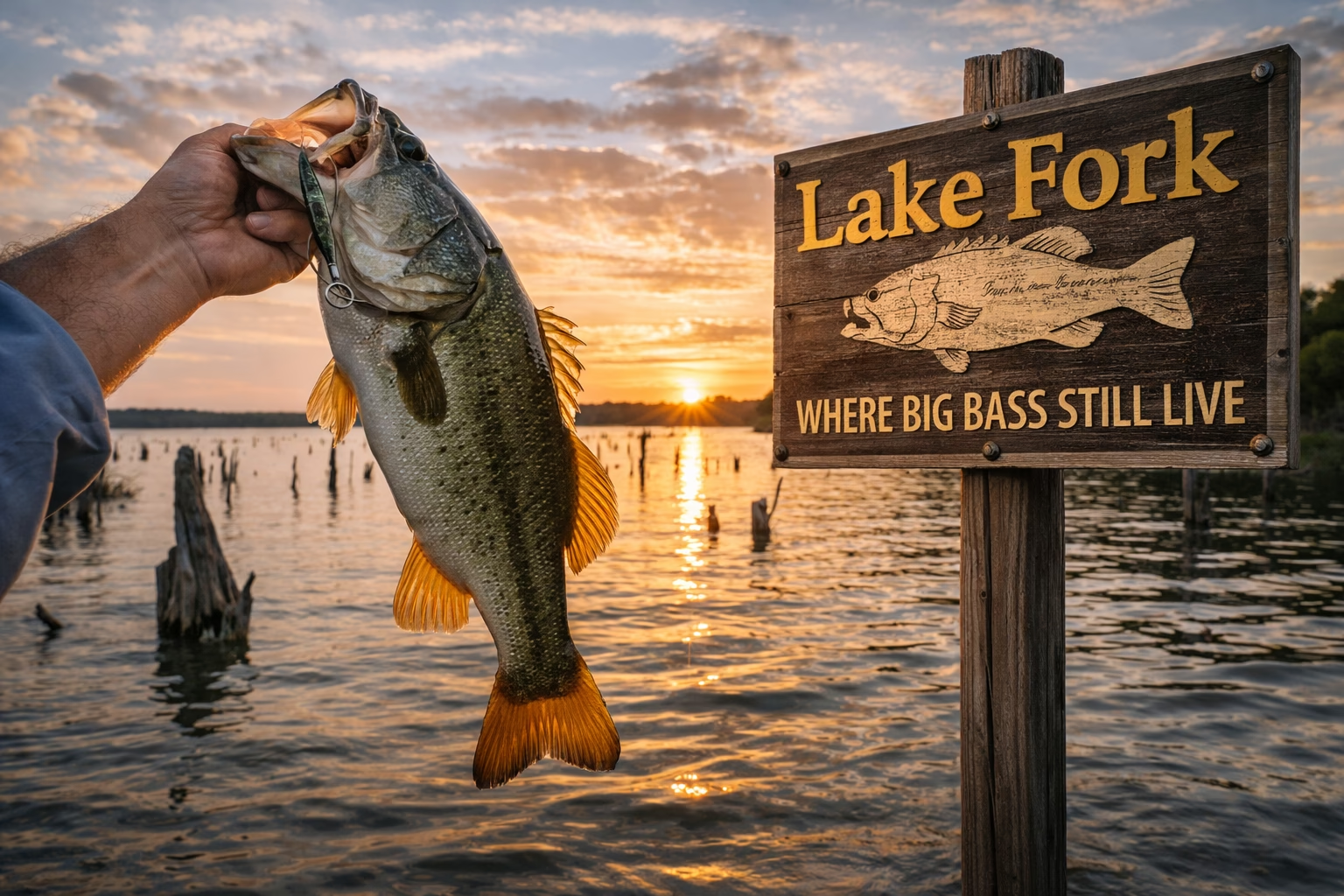
Lake Fork: Where Big Bass Still Live
There are lakes that promise big fish—and then there’s Lake Fork Reservoir, a place where promises have a way of turning into stories you tell for the rest of your life.
This spring, that reputation gained another notch.
In May, the Lake Fork Trophy Bass Survey quietly crossed a milestone that speaks louder than any billboard or tournament weigh-in. Since its launch in March 2003, anglers have reported catching more than 10,000 trophy largemouth bass—fish weighing seven pounds or better—from this 27,000-acre East Texas reservoir. For a lake already steeped in legend, it’s proof that the magic hasn’t faded.
If anything, it’s still growing.
The Trophy Bass Survey is a voluntary program, built on the honesty and enthusiasm of anglers who take a moment to log their catch at participating marinas. It’s a cooperative effort between the Lake Fork Chamber of Commerce, the Lake Fork Sportsman’s Association, and Texas Parks and Wildlife. And while it may seem simple on the surface, the data it produces has become one of the most valuable tools fisheries managers have—offering insight that standard surveys simply can’t match.
The rules are straightforward: catch a bass over seven pounds, record the weight and length, and add your name to the ledger. Each month, TPWD biologists collect the logs and compile the results. What comes back is more than numbers—it’s a running history of one of the finest trophy fisheries in the world.
And those numbers tell quite a story.
Since 2003, the survey has logged 10,127 bass over seven pounds. But that’s just the visible tip of the iceberg. Creel surveys suggest that only about 8.1 percent of trophy catches are actually reported. Expand that across the lake’s fishing pressure, and you’re looking at more than 125,000 trophy bass caught over that same period—an average of roughly 1,600 big fish every month.
Let that sink in for a moment.
Of the recorded entries, more than 8,400 fish were officially weighed, and over 1,300 of those tipped the scales at 10 pounds or better. Fifty-six fish broke the 13-pound mark—true giants, many worthy of entry into the Texas Parks and Wildlife ShareLunker Program. Length measurements tell the same story: a full third of reported fish stretched to 24 inches or longer.
That kind of growth doesn’t happen by accident.
It’s the result of careful management and a slot-length limit that’s doing exactly what it was designed to do—protecting fish through their prime growing years and allowing them to reach true trophy size. At Lake Fork, bass aren’t just surviving. They’re thriving.
And anglers are still coming.
The survey reflects participation from 47 states, the District of Columbia, and even international visitors—drawn to a lake that has earned its reputation the hard way. Texans, as expected, lead the charge, accounting for more than 60 percent of reported catches. But neighboring states—Oklahoma, Missouri, Louisiana, and Arkansas—add a steady stream of visitors, along with anglers from farther afield willing to burn the fuel and make the trip.
Even in the face of rising gas prices and a tightening economy, Lake Fork continues to pull them in.
Because places like this don’t come along often.
They’re built over decades—through good management, a little restraint, and a lot of patience. And once they reach this level, they take on a life of their own.
Out on those stumpy flats and winding creek channels, the next cast always carries a little extra weight. Not just because of what might be on the end of the line—but because of what’s already been proven.
At Lake Fork, the fish of a lifetime isn’t a long shot.
It’s just another entry waiting to be written down.

0 Comments