
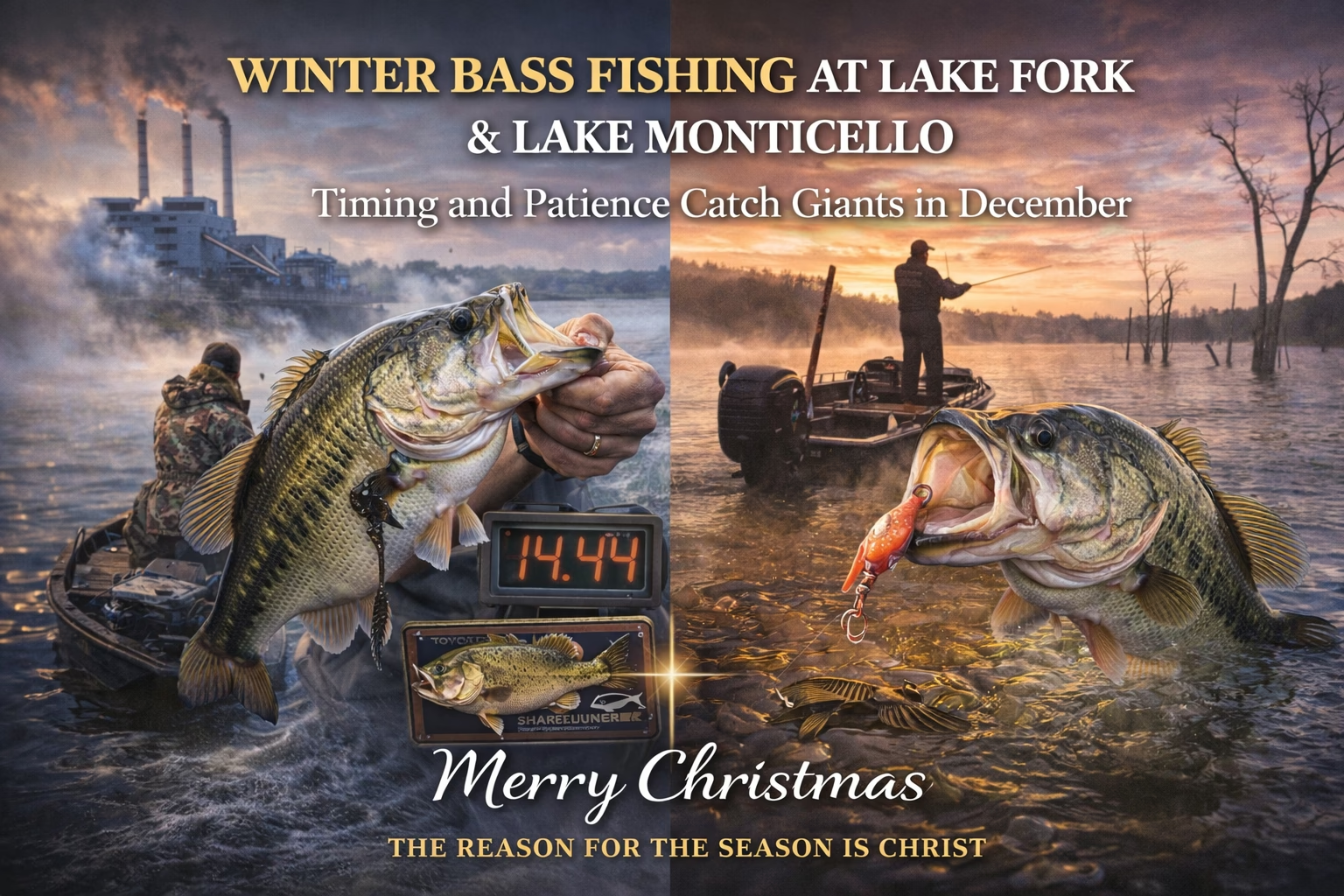
December fishing in East Texas has a way of separating the casual from the committed.
The mornings come cold, the water cools into the 50s, and every bite feels earned. But for those willing to adjust—and maybe wait a little longer in the day—the rewards are still there.
Lately, the pattern has been clear: split your time between Lake Monticello and Lake Fork, and let the fish tell you when and where to be.
Monticello: Early and Active
Monticello has been the early-day standout.
The lake is in excellent shape, with water levels holding steady and clarity ranging from slightly stained to clear. This time of year, it’s a numbers game—but not at the expense of quality.
Most of the fish are still in a pre-spawn mode, and it won’t be long before they begin making their move. Right now, though, they’re feeding and positioning along familiar structure.
Flipping timber along old creek channel edges has been the ticket for bigger fish. Texas-rigged 10-inch black worms and creature baits in green pumpkin or black-and-blue are producing steady action.
If you prefer to cover water, shallow- to mid-diving crankbaits, lipless cranks, and spinnerbaits are all solid options. On cloudy days, don’t overlook the topwater bite—buzzbaits and frogs have been surprisingly effective.
For anglers willing to venture out, the discharge areas and highway bridge are offering excellent Carolina rig and drop-shot action. Smaller worms in natural colors—green pumpkin, watermelon, motor oil red—are getting plenty of attention.
Lake Fork: Late-Day Payoff
Over on Lake Fork, the bite has been more deliberate.
Fish can still be caught early, but the best action has come later in the day, when water temperatures reach their peak. That slight bump in temperature can make all the difference.
Shallow fish are holding in grass from 2 to 6 feet, with lipless crankbaits in red or orange, chatterbaits in white or chartreuse, and square-bill cranks in shad patterns doing the heavy lifting.
Around creek channel edges and shallow timber, the jig bite has been dependable. A 1/2-ounce flipping jig in green pumpkin, black-and-blue, or bama bug—paired with a craw-style trailer—has been a consistent producer.
But the deeper pattern is where things get interesting.
Despite the cold, bass are stacking up on structure—channel drops, humps, ridges, points, and even old roadbeds—in 24 to 32 feet of water. They’re feeding heavily on shad and schooling baitfish, and when you find them, you can stay with them.
Jigging spoons, tail spinners, jig-and-grub combinations, Carolina rigs, and football jigs are all producing. The key isn’t the lure—it’s the pace.
Slow down.
In cold water, everything takes a little longer. The anglers who adjust their tempo are the ones getting bit.
Timing, Patience, and Perspective
This is winter fishing at its core—two lakes, two patterns, and a narrow window where things come together.
Monticello gives you action early.
Fork rewards patience later.
And somewhere in between, there’s a rhythm that only shows up this time of year.
If you’re planning to get on the water this winter—or looking ahead to spring—it’s worth getting your plans in place early. The calendar fills up fast when the fish start to move.
But for now, as the year winds down and the holidays draw near, there’s something else worth remembering.
Fishing will always be there.
The lakes will warm again.
And the best days ahead are still waiting—
just like the season they remind us of.
Merry Christmas, and may your next cast be a good one.

0 Comments