
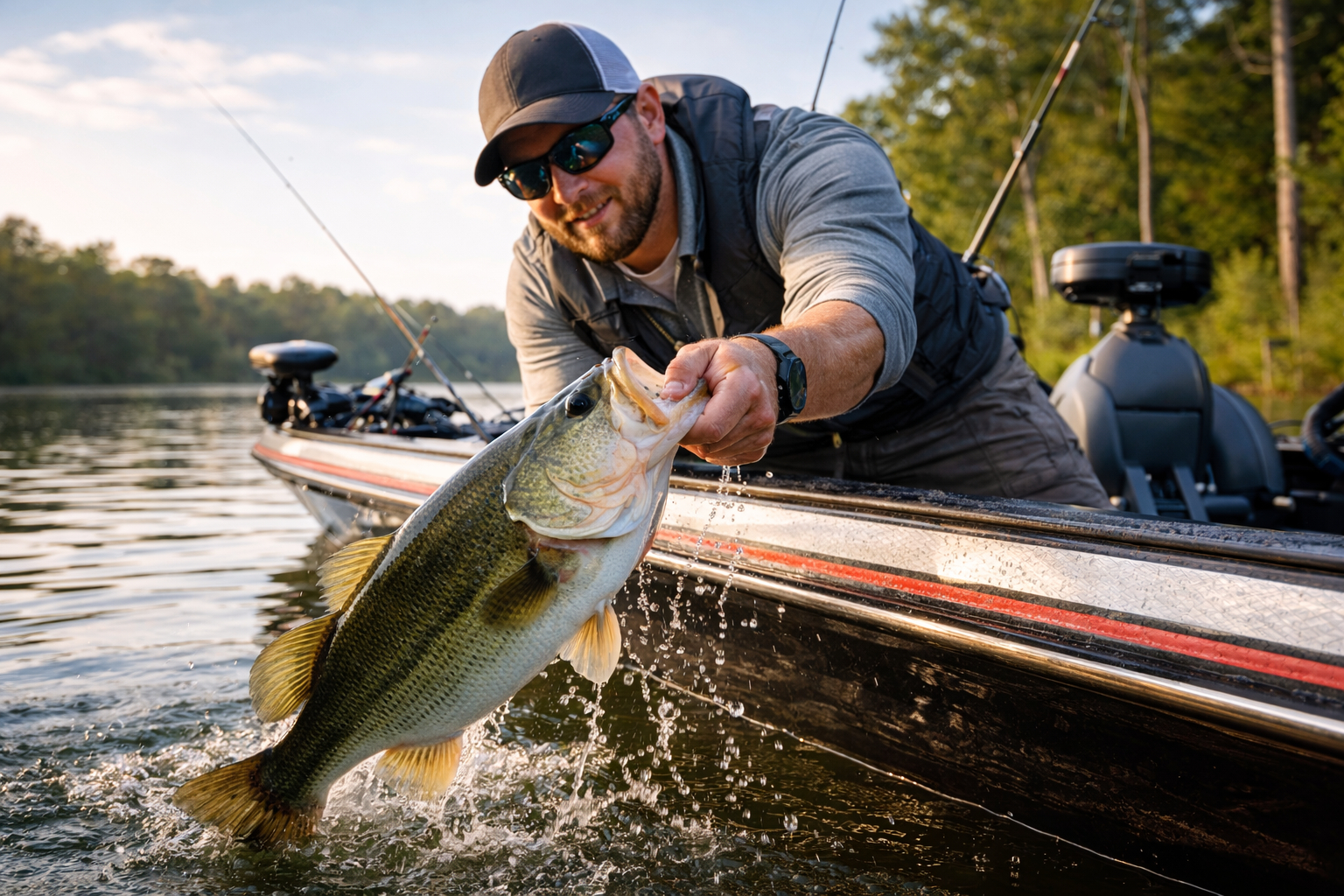
Not all that many years ago, Texas bass fishing was a simpler game—especially when it came to spinnerbaits. You walked into the tackle shop, picked a big one or a little one, maybe decided between a single blade or a double, and headed for the lake. Confidence came from time on the water, not from aisle after aisle of color combinations.
Those days have changed, but the heart of Texas bass fishing hasn’t.
Today’s spinnerbaits range from tiny crappie-sized models no bigger than a quarter to full-grown, one-ounce-plus baits swinging blades that sound like cowbells thumping underwater. The color choices are nearly endless—enough to rival a Hill Country sunrise or a spring storm rolling across East Texas.
Yet among all this modern variety, one old idea has returned stronger than ever: colored spinnerbait blades, now enhanced with metalflake finishes.
A Look Back: Colored Blades Aren’t New
Colored spinnerbait blades have been around longer than many anglers care to admit. I still have a few chartreuse blades I was throwing back in the mid-1970s while fishing Texas reservoirs that were still filling. Back then, painted blades came and went, eventually giving way to chrome, gold, and nickel finishes that dominated tackle boxes for decades.
For a long stretch of time, most Texas bass fishermen forgot about colored blades altogether.
Now they’re back—and they’re not the same blades we used years ago.
Metalflake: Old Idea, New Technology
For years, anglers experimented by gluing glitter onto spinnerbait blades, hoping that extra flash would draw the attention of a big largemouth bass. Sometimes it worked. Sometimes it didn’t. Most of the time it didn’t last very long.
Modern lure companies have taken that same idea and refined it with today’s materials and manufacturing processes. Brands like Nichols Lures, Strike King, Stanley, and Luck “E” Strike now apply metalflake directly into durable epoxy finishes that bond to the blade.
The result is a blade that doesn’t just flash—it shimmers, much like the scales of a live baitfish.
That difference matters, especially in Texas bass fishing where water clarity, light conditions, and fishing pressure vary widely from lake to lake.
Why Metalflake Spinnerbait Blades Catch More Bass
Metalflake blades give off a completely different kind of flash than standard painted or polished metal blades. Instead of a hard, mirror-like reflection, the light scatters in multiple directions. This changes the entire hue of the spinnerbait as it moves through the water.
At a recent fishing show in Las Vegas, I asked several seasoned anglers and industry experts about their experience with metalflake spinnerbait blades. Their responses were telling:
-
On multiple fishing trips, metalflake blades out-produced standard colored blades by as much as two to one.
-
The metalflake finish closely resembles the look of real fish scales.
-
On lakes where fire-tiger crankbaits excel, tri-color blades featuring orange, green, and yellow metalflake can be downright dynamite.
-
Modern epoxy finishes are vastly superior to what was available just ten years ago.
-
Bass simply haven’t seen these finishes as often, making them more effective on pressured Texas lakes.
-
Metalflake blades show up better in muddy or stained water.
-
Multi-color blades help bass zero in on the bait when fishing around grass, brush, and timber.
Those observations line up perfectly with what many Texas bass anglers are seeing on the water today.
Clear Water vs. Muddy Water: The Texas Debate
As with most things in fishing, opinions vary. Some pros believe multi-colored and metalflake blades shine brightest in clear water, where bass can fully see the color transitions and subtle flash.
Others argue just as strongly that off-color water, so common during Texas spring rains and fall cold fronts, is where these blades truly excel.
In truth, both camps are right—depending on conditions.
One thing is nearly universal in Texas bass fishing: red works in the spring. If you’re not throwing some shade of red when the water begins warming, you’re probably leaving fish uncaught. That makes red metalflake blades especially valuable early in the season.
On cloudy or overcast days, fluorescent orange and fire-red blades can trigger reaction strikes. When Texas lakes turn muddy after a hard rain, larger chartreuse or bright orange blades help bass locate the bait through vibration and color.
Where Metalflake Spinnerbaits Shine in Texas
Metalflake spinnerbait blades are especially effective in classic Texas bass fishing environments:
-
Shallow grass flats on lakes like Sam Rayburn, Toledo Bend, and Falcon
-
Creek arms and coves during spring spawning movements
-
Windblown shorelines where visibility is reduced
-
Vegetation-heavy lakes where bass rely on both sight and vibration
The combination of flash, color, and blade thump gives bass multiple reasons to commit.
Final Thoughts: Old Confidence, New Edge
If you haven’t given the new generation of metalflake spinnerbait blades a fair try, now’s the time. Tournament anglers understand that sometimes a small change—a new blade color, a different flash—is all it takes to turn a tough day into a winning stringer.
At their core, spinnerbaits are still one of the most reliable tools in Texas bass fishing. Metalflake blades simply give an old favorite a fresh edge.
Mix and match colors. Pay attention to light and water conditions. Let the fish tell you what they want.
Some traditions are worth keeping—and sometimes, a little modern shine makes them even better.

0 Comments