
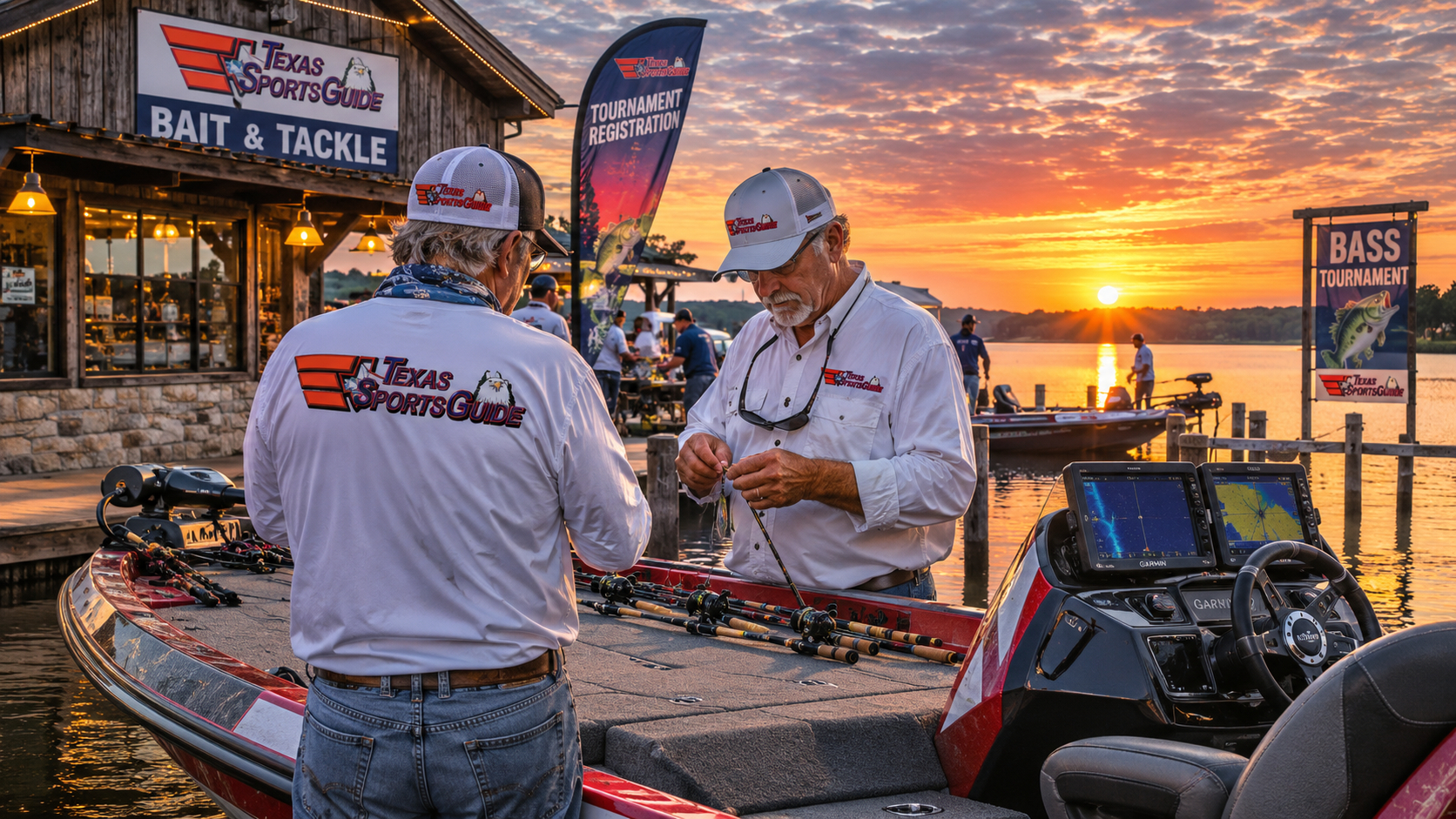
From a youngster's first fishing rod to a tournament angler's fully equipped bass boat, the business of chasing largemouth bass supports an extraordinary network of Texas jobs, businesses and communities.
Bass Fishing Is More Than a Sport. It's Big Business in Texas.
I've spent a good portion of my life chasing little green fish around Texas reservoirs.
Back when I bought my first bass boat in 1975 and began spending weekends on Lake Livingston, I wasn't thinking about economic development, tourism revenue or the financial health of rural Texas communities.
I was thinking about where the bass might be hiding Saturday morning.
Over the years, however, fishing became considerably more than a weekend pastime. I competed in bass tournaments, guided fishermen on Lake Conroe, traveled across Texas to fish its reservoirs and eventually became the publisher of Texas SportsGuide and Black Bass magazine.
Along the way, I began noticing something interesting.
Everywhere bass fishermen gathered, businesses grew up around them.
Tackle shops opened. Boat dealerships expanded. Marina owners added slips. Restaurants began serving breakfast before daylight. Motels filled their parking lots with bass boats, and service technicians made a living keeping outboards running.
A successful bass fishery could breathe economic life into an entire lakeside community.
And that brings us to something worth exploring.
What is the financial impact of bass fishing sport in Texas?
The answer is considerably larger than most people imagine.
According to a March 2025 Texas Parks and Wildlife Department report, recreational sportfishing contributes approximately $14 billion annually in statewide economic impact and supports an estimated 78,040 Texas jobs. TPWD also reported that licensed anglers spent approximately $9.2 billion in 2022 on food, lodging, transportation and equipment while fishing Texas freshwater and coastal waters.
TPWD
Those figures include freshwater and saltwater fishing, not just bass fishing. That distinction matters.
But TPWD has also estimated that individual trophy largemouth fisheries, including Lake Fork, Sam Rayburn, Toledo Bend and O.H. Ivie, generate approximately $10 million to $37 million annually in local economic value, depending on the lake and study.
TPWD
That's a remarkable amount of money being generated by people trying to persuade a fish to eat something made of plastic.
And the story gets more interesting when we follow those dollars beyond the boat ramp.
How Much Money Does Recreational Fishing Generate in Texas?
Before discussing boats, tackle, lodging and tournaments, we need to understand what the economic numbers actually measure.
In the fishing industry, there are two important concepts.
Direct spending is money anglers actually spend: buying boats, rods, reels, gasoline, meals, motel rooms, licenses and other products or services.
Economic impact measures the broader activity generated as those purchases support suppliers, employees and other businesses.
For example, when I buy a fishing rod, the retailer receives revenue. The retailer purchases inventory from a distributor, the distributor deals with manufacturers, and employees throughout that chain receive wages they spend elsewhere.
That's the economic ripple effect.
We cannot simply add every published fishing-industry figure together, because some measure direct purchases while others include those secondary effects. Many also cover overlapping years and categories.
With that distinction in mind, here are some useful benchmarks.
|
Economic measure |
Reported amount |
Scope |
|---|---|---|
|
Annual sportfishing economic impact |
$14 billion |
Texas freshwater and saltwater |
|
Licensed angler spending, 2022 |
$9.2 billion |
Food, lodging, transportation and equipment |
|
Sportfishing jobs supported |
78,040 |
Statewide |
|
Local value of leading largemouth fisheries |
$10 million–$37 million annually |
Individual fisheries |
|
Recreational fishing economic output, 2021-based ASA estimates |
$7.7 billion |
Statewide, different study and methodology |
Sources: Texas Parks and Wildlife Department and American Sportfishing Association.
TPWD+1
The important point is that Texas bass fishing is a substantial part of a multibillion-dollar recreational fishing economy, even though a precise statewide bass-only total is not separately established by these published figures.
I would rather make that distinction than manufacture an impressive-looking number.
After all, fishermen have been accused of stretching measurements often enough without doing it to the economics.
Food and Lodging: The Money Bass Fishermen Leave Behind
One of the most overlooked economic benefits of bass fishing is the money spent away from the lake.
Consider a typical weekend tournament.
A hundred boats arrive for a two-day event. Many anglers travel with partners, family members or friends. Some arrive Thursday evening to practice Friday. Others stay through Sunday.
Suddenly, a small community has visitors needing motel rooms, restaurants, gasoline, ice, groceries, coffee and parking.
And bass fishermen have some interesting spending habits.
We may spend fifteen minutes debating whether a particular crankbait is worth twelve dollars, then spend seventy dollars filling the truck without giving it another thought.
Restaurants and Grocery Stores
The restaurant business benefits from fishing tourism in several ways.
There's the predawn breakfast crowd, often ordering enough coffee to float a small boat. There are sandwiches and drinks purchased for the day, groceries for fishermen staying in cabins, and evening meals after everyone returns from the lake.
Tournament anglers often eat together, too.
A restaurant near a popular tournament ramp may see groups of fishermen several evenings in a row.
And those fishermen aren't necessarily local residents.
They're bringing outside dollars into the community.
Hotels, Motels, Cabins and RV Parks
Bass fishing supports everything from conventional hotels to fishing lodges, cabins, campgrounds and RV parks.
I have stayed in my share of fishing accommodations over the years.
Some were comfortable.
Some were memorable for entirely different reasons.
But one feature was always particularly attractive: a parking lot where I could safely leave a boat attached to the truck and plug in the battery chargers overnight.
Fishing-oriented lodging operators understand that.
Covered boat parking, electrical hookups, early breakfasts, fish-cleaning facilities and proximity to launch ramps can give a property an advantage over a more luxurious hotel several miles away.
And when a destination becomes famous for trophy bass, those accommodations can attract anglers from other states.
That means Texas is importing tourism dollars rather than merely circulating money already being spent locally.
How Much Does a Visiting Bass Angler Spend?
There is no single reliable daily spending figure for every Texas bass fisherman. Expenses vary enormously depending on whether an angler lives beside the lake or travels several hundred miles for a tournament.
But consider this illustrative weekend budget for two fishermen sharing a truck and boat:
|
Expense |
Illustrative weekend cost |
|---|---|
|
Two nights of lodging |
$300 |
|
Restaurant meals and groceries |
$160 |
|
Truck and boat fuel |
$180 |
|
Launch fees and miscellaneous expenses |
$30 |
|
Bait, tackle and supplies |
$80 |
|
Total |
$750 |
These are example expenses, not TPWD survey averages.
Now imagine 100 visiting teams spending that amount.
That's $75,000 in direct purchases over one tournament weekend, before tournament entry fees, major equipment purchases or additional spending by accompanying family members.
Not every event attracts 100 visiting teams, and not every team spends $750. But the example illustrates why a strong tournament calendar can matter to a lakeside economy.
It also explains why restaurants and motels often become enthusiastic supporters of bass tournaments.
Those anglers aren't merely catching fish.
They're paying customers.
Bass Boat Sales: A Major Part of the Texas Fishing Economy
When I purchased my first bass boat in 1975, bass fishing equipment was considerably simpler.
We had boats, outboards, trolling motors, depth finders and enough tackle to get into trouble.
Today's tournament-equipped bass boat is an entirely different proposition.
A modern fiberglass bass boat may carry a high-horsepower outboard, sophisticated electronics, GPS mapping, shallow-water anchors, multiple battery systems, advanced trolling motors and an impressive assortment of accessories.
And somebody manufactures, distributes, installs, services and eventually replaces every one of those components.
New Bass Boats Generate Several Revenue Streams
A bass boat purchase doesn't benefit only the dealership.
There is the hull manufacturer, outboard manufacturer, trailer supplier, electronics companies, trolling motor manufacturer, battery supplier, upholstery provider and transportation network.
The dealership earns revenue from the sale, financing arrangements, accessories, installation and service.
Texas also collects applicable sales and use taxes, registration fees and title fees.
The buyer may subsequently purchase insurance, storage, maintenance and additional electronics.
And after several years?
Well, fishermen have a remarkable ability to convince themselves that the boat they already own needs just one more improvement.
I speak from experience.
What Is the Annual Value of Texas Bass Boat Sales?
This is an important distinction.
Public recreational-fishing expenditure studies include spending on boats and related equipment, but they do not provide a dependable, current statewide dollar total for bass boats alone.
Texas boat registration and title revenue also covers many kinds of vessels, not just bass boats.
Consequently, I wouldn't claim that Texas bass boat sales generate a particular number of billions of dollars without a bass-specific industry study to support it.
What we can document is the state's broader boat-related revenue.
During a January 2026 Texas Parks and Wildlife Commission work session, TPWD reported $21.9 million in boat-related agency revenue for fiscal 2025, a 1.5 percent increase from the preceding year.
Texas Parks and Wildlife
That is government revenue associated with boating administration, not the retail value of boats sold.
And it is only one part of the boating economy.
Bass Boat Manufacturing: Texas Builds the Boats We Fish
This part of the story is especially interesting to me because it connects fishing with Texas manufacturing.
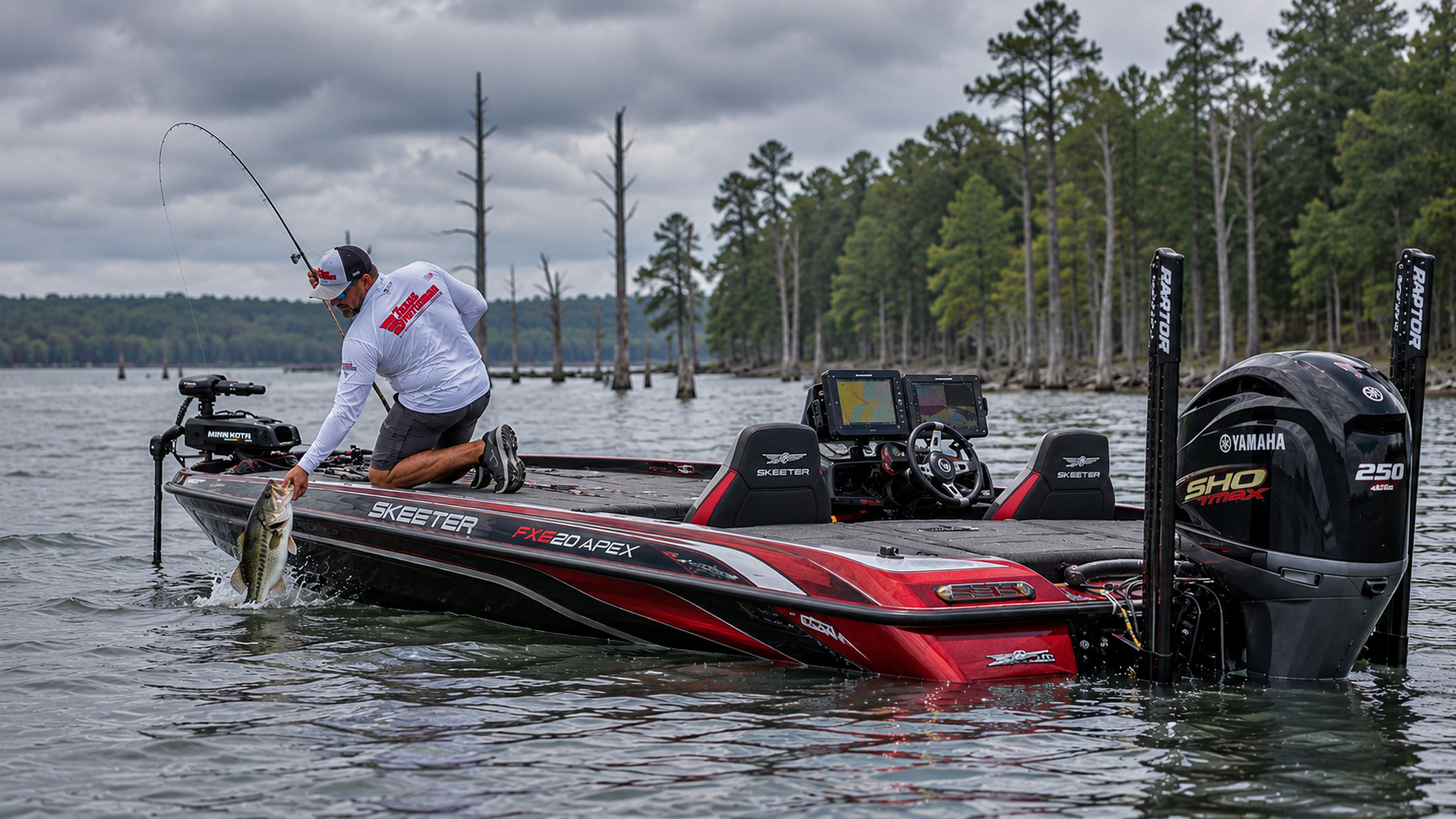
One of the most recognizable names in tournament bass fishing is Skeeter Boats.
Skeeter's manufacturing operation is based in Kilgore, Texas.
Its official company information lists the operation at One Skeeter Road, Kilgore, TX 75662, and describes a manufacturing program built around advanced composite construction and performance fishing boats.
Skeeter Boats
That means a Texas-built bass boat represents more than a sale at the dealership.
It represents manufacturing activity, skilled labor, suppliers, transportation and the technical knowledge required to produce a sophisticated recreational vessel.
The Economic Chain Behind a Bass Boat
Consider what goes into producing and selling one modern bass boat.
The hull requires materials, tooling, engineering and production workers. Seats, wiring, pumps, plumbing, hardware and electronics must be sourced and installed.
An outboard manufacturer supplies the engine.
A trailer manufacturer supplies the trailer.
Transportation companies deliver the completed package to dealerships.
Then the dealer prepares the boat, installs requested accessories and supports the customer.
The money moves through numerous businesses before the fisherman ever launches.
And afterward, the service economy begins.
Boat Service and Repair
An active bass fisherman eventually needs maintenance.
Outboards require servicing. Water pumps, lower-unit lubricants, propellers, batteries, trailer bearings, tires, brakes and electrical components all require attention.
Sometimes a repair is routine.
Sometimes a submerged stump sends a perfectly good propeller into early retirement.
Either way, service technicians, parts suppliers and marine dealerships benefit.
For a fishing community, a dependable marine service business can be nearly as important as the boat ramp.
A tournament angler with a disabled outboard isn't particularly interested in sightseeing.
He wants to get back on the water.
The Texas Tackle Industry: Thousands of Purchases, Large and Small
There is another industry that owes bass fishermen a considerable debt of gratitude.
The tackle business.
If you've ever watched a fisherman enter a tackle shop to buy one package of hooks and emerge carrying a bag full of crankbaits, worms and spinnerbaits, you understand the business model.
I've participated in that particular economic experiment more times than I care to admit.
Rods, Reels and Fishing Line
The tackle industry includes rods, reels, fishing line, hooks, weights, terminal tackle, artificial lures, tackle storage and numerous specialized accessories.
Many of these products wear out or are lost and must be replaced.
Fishing line is changed.
Hooks become dull.
Soft-plastic worms are torn apart.
Jigs disappear into submerged timber.
Crankbaits develop a permanent relationship with underwater rocks.
And every lost lure represents another potential retail purchase.
Artificial Lures and Soft Plastics
Texas bass fishing has a long history of innovation in artificial lures.
Soft plastics, spinnerbaits, crankbaits, jigs and topwater lures are central to the sport.
Different Texas reservoirs create demand for different products.
A fisherman visiting Lake Fork's trophy largemouth fishery may purchase heavy tackle, large soft plastics and specialized presentations for grass and timber.
An angler fishing Lake Palestine's vegetation and creek-channel structure might stock up on spinnerbaits, frogs, Texas-rigged plastics and deep-diving crankbaits.
Different fishing conditions create demand for different equipment.
And that's good business for tackle manufacturers and retailers.
How Much Revenue Does Bass Tackle Generate?
Here again, the available economic studies report broader fishing-equipment expenditures rather than a separate audited Texas bass-tackle total.
A 2022 angler expenditure study prepared for TPWD reported average total expenditures of approximately $3,000 per Texas angler, including about $1,300 in equipment-related expenditures, $800 in trip-related costs and $900 in other categories.
Association of Fish & Wildlife Agencies
Those are averages across the surveyed fishing population, not a claim that every bass fisherman spends $1,300 annually on rods and lures.
They nevertheless illustrate the substantial role equipment purchases play in the fishing economy.
Marine Electronics Have Created an Industry of Their Own
When I started bass fishing, a depth finder was a relatively simple instrument.
It told us how deep the water was and, with some experience, provided clues about what might be underneath the boat.
Today we have side imaging, down imaging, GPS chartplotters, detailed contour mapping and forward-facing sonar.
Modern trolling motors can follow programmed routes and hold a boat in position using satellite navigation.
Shallow-water anchors allow anglers to remain positioned without constantly operating the trolling motor.
All of that technology creates economic activity.
Electronics are manufactured, shipped, sold, installed, updated and repaired.
Specialists provide mounting systems, wiring, battery upgrades and technical support.
Training services help anglers understand equipment that can be considerably more complicated than the computers we once used to run businesses.
And new technologies encourage upgrades.
The fish may not have changed much.
The equipment we're using to find them certainly has.
Fishing Licenses and Permits: Revenue That Helps Sustain the Resource
Unlike some recreational activities, fishing directly contributes to the management of the resource that makes the activity possible.
Texas fishing licenses generate revenue for conservation and public recreation.
But when discussing license revenue, we need to distinguish between fishing-specific receipts and combined hunting-and-fishing figures.
In January 2026, TPWD reported that final license-year 2025 revenue reached $114 million, up 3.6 percent from license year 2024. That figure covers the agency's broader hunting-and-fishing licensing program, not bass fishing alone.
Texas Parks and Wildlife
The Texas Comptroller's fiscal 2024 cash report also documents several related revenue categories, including approximately $14.22 million in vessel registration fees, $3.97 million in vessel and outboard motor title certificate revenue, and $351,944 in Lake Texoma fishing license fees.
Texas Comptroller
Those figures help demonstrate the range of government revenue connected with outdoor recreation and boating.
They should not be added together and presented as bass-fishing revenue, because they cover different activities and, in some cases, overlapping accounting categories.
What Do Fishing License Dollars Help Support?
Fishing license revenue contributes to the broader system of fisheries management and public access.
That includes fisheries research, biological surveys, stocking programs, habitat work and angler access.
Texas also receives federal sportfish restoration funding supported by eligible excise taxes on fishing equipment and motorboat fuel.
In a 2024 TPWD Commission presentation, officials described how state investments in fisheries and access projects can leverage federal Sport Fish Restoration funds.
Commission
That creates a useful cycle.
Fishermen purchase equipment and licenses.
Those purchases help fund conservation.
Conservation helps maintain quality fishing opportunities.
Quality fishing brings anglers back.
And those returning anglers support local businesses.
It's one of the more sensible arrangements in outdoor recreation.
Fish Hatcheries, Stocking Programs and the Toyota ShareLunker Program
If we're going to discuss the financial impact of Texas bass fishing, we cannot overlook the investment required to maintain productive fisheries.
Texas Parks and Wildlife operates a substantial freshwater fisheries program.
In 2024, TPWD stocked nearly 27 million fish representing 17 species, subspecies and hybrids into Texas public waters. Approximately 7.9 million went into waters associated with state parks.
TPWD
Those were not all largemouth bass, of course.
But the program demonstrates the scale of the state's investment in recreational fisheries.
The Toyota ShareLunker program is particularly important to trophy bass fishing.
Through selective breeding, hatchery production, research and angler participation, the program helps support the development of trophy largemouth fisheries.
Its influence extends beyond biology.
A reservoir that develops a reputation for producing double-digit largemouth bass becomes a destination.
Anglers travel farther.
They stay longer.
They spend more.
And some return year after year.
Lake Fork: A Fishery That Became an Economic Destination
Few Texas lakes demonstrate this better than Lake Fork.
Fork's reputation for producing trophy largemouth bass has made it a destination for serious fishermen from across the country.
Its fishing economy supports guides, lodging operators, tackle shops, marinas, boat dealerships, restaurants and numerous other businesses.
The financial value of a trophy bass is therefore much greater than the price of a fishing license.
A living trophy fish can attract fishermen for years.
And that's one reason I have always appreciated catch-and-release fishing.
A released bass remains part of the fishery.
A particularly large one may eventually become part of its reputation.
Bass Fishing Tournaments: Small-Town Economic Engines
I spent enough years fishing professional and team tournaments to appreciate what happens when a major bass event comes to town.
The tournament itself may last only two or three days.
The spending begins much earlier.
Anglers arrive to practice. They purchase fuel, meals, lodging, groceries, ice and tackle. Their families sometimes accompany them.
Tournament organizers need facilities, equipment, staff and services.
Sponsors support the event.
Local businesses advertise.
And if the tournament attracts a substantial field, the community can experience a noticeable increase in visitors.
Sam Rayburn Reservoir: A Tournament Economy
Sam Rayburn is a particularly good example.
During an August 2024 Texas Parks and Wildlife Commission meeting, officials discussed the economic importance of the reservoir and cited an estimated $47 million in annual economic impact associated with the Sam Rayburn fishery.
The presentation also emphasized the substantial participation of tournament anglers in the reservoir's black bass fishing activity.
Commission
That estimate comes from a particular economic study and should not be treated as directly interchangeable with every other published lake valuation.
But the underlying point is unmistakable.
Bass tournaments can play a significant role in sustaining a local tourism economy.
Tournament Entry Fees and Prize Money
Tournament entry fees are another part of the financial picture.
Entry fees help support tournament administration, insurance, event operations and prize payouts.
Prize money may return to anglers, who subsequently spend some of it on travel, boats, equipment and future competitions.
Tournament organizations also generate revenue through sponsorships, advertising, merchandise and media arrangements.
One important accounting distinction: prize money redistributed from entry fees isn't automatically additional economic production.
It's a transfer of money.
The broader economic benefit comes from tournament operations and the additional spending that the event brings into a community.
That distinction matters when estimating the true financial impact.
Fishing Guides: Turning Local Knowledge Into a Business
Guiding was one of the more enjoyable chapters of my fishing career.
When I guided on Lake Conroe, I learned that clients weren't simply paying for a boat ride.
They were purchasing access to experience.
They wanted to learn where bass lived, how to recognize productive structure, which lures worked under particular conditions and how to become better fishermen.
Some wanted to catch their first largemouth.
Others hoped for a trophy.
And a few simply wanted a good day on the water.
The Economics of a Guide Trip
A guide's fee supports far more than the guide's income.
There are boat payments, insurance, fuel, maintenance, electronics, tackle, advertising, booking services and replacement equipment.
Visiting clients may also spend money on hotels, restaurants and other activities.
Guiding therefore connects several parts of the fishing economy.
A successful guide can also become an informal ambassador for a reservoir.
Satisfied clients tell friends.
They return with family members.
They may eventually buy boats of their own.
That's how a fishing experience can create additional economic activity long after the original trip ends.
Marinas, Boat Storage and Waterfront Businesses
A marina is much more than a place to launch a boat.
Depending on the facility, it may provide boat slips, fuel, storage, repairs, bait, tackle, food, lodging and boat rentals.
Marinas also create employment opportunities for managers, mechanics, dock workers, retail employees and maintenance personnel.
On heavily fished reservoirs, seasonal activity can be especially important.
Spring bass fishing may bring strong demand for launching and lodging.
Summer brings recreational boaters and vacationing families.
Fall tournaments can provide another busy period.
Even winter can attract dedicated trophy bass fishermen.
A healthy lake economy therefore benefits from more than one fishing season.
Gasoline, Trucks, Trailers and Transportation
This is a category that can easily disappear inside broader economic studies, but fishermen know how important it is.
A bass boat needs fuel.
So does the truck pulling it.
And the farther we travel, the more we spend.
There are also trailers, tires, wheel bearings, brakes, towing equipment and maintenance.
For fishermen traveling several hundred miles to compete in tournaments, transportation becomes a significant expense.
Some of that money goes to Texas businesses.
Some flows to companies outside the state through wholesale fuel markets, vehicle manufacturing and national supply chains.
That's why total angler spending and money retained in a local economy aren't necessarily the same thing.
Still, gasoline stations and travel-related businesses near major fishing destinations benefit directly from visiting anglers.
State Parks, Boat Ramps and Public Access
Fishing access is another important part of the economic equation.
A reservoir can contain wonderful bass habitat, but without practical public access, much of its recreational value remains difficult to realize.
Boat ramps, parking areas, fishing piers, campgrounds and shoreline access help turn a fishery into a usable public resource.
Texas state parks also generate substantial revenue.
TPWD reported approximately $63.8 million in fiscal 2025 state park revenue, although that figure includes all state park visitors and activities, not bass fishing alone.
Texas Parks and Wildlife
Bass fishermen are among the visitors who benefit from and contribute to that system.
Access improvements can also influence local spending.
A good ramp with adequate parking may encourage tournaments.
Reliable access makes it easier for visiting anglers to return.
And nearby businesses benefit when fishermen choose one lake over another.
Fishing Publications, Advertising and the Outdoor Media Business
This is a part of the story I know particularly well.
When I purchased Texas SportsGuide in 1990 and later published Black Bass, fishing information was a business built largely around print publications, advertising and personal relationships with anglers and businesses.
Boat dealers advertised.
Tackle manufacturers promoted products.
Guides wanted customers.
Marinas and resorts wanted fishermen to know where they were.
Tournament organizations needed publicity.
Fishing publications helped connect all those businesses with the people most likely to become customers.
The internet changed the delivery system, but it didn't eliminate the underlying economic relationship.
Today, fishing websites, videos, social media, podcasts and digital advertising serve many of the same purposes.
A fisherman researching Lake Tawakoni bass fishing may discover a marina, guide service or tackle shop.
Someone planning a trip to Lake Ray Hubbard may use online information to choose a launch ramp, restaurant or nearby hotel.
And a family researching Caddo Lake Texas Bass Fishing may decide to spend several days exploring one of the most unusual fisheries in the state.
Fishing information helps people make decisions.
Those decisions frequently involve spending money.
That makes outdoor publishing part of the larger fishing economy, even when the publication itself is free to read.
What Happens When a Texas Bass Fishery Declines?
We've spent considerable time discussing the benefits of good fishing.
But there's another side to the equation.
What happens when a fishery deteriorates?
Suppose a reservoir experiences prolonged low water levels, invasive vegetation problems, poor access or declining fishing quality.
Anglers may begin traveling elsewhere.
Tournament organizations may choose another destination.
Guides may struggle to attract clients.
Marinas and lodging businesses may lose customers.
A lake that once drew visitors from across Texas may become primarily a local fishery.
The financial consequences can extend well beyond the fishing industry.
Fisheries Management Is Also Economic Development
That is why habitat restoration, stocking, water-quality management, aquatic vegetation control and public access deserve attention.
They're conservation programs.
But they're also investments in recreational opportunities that support businesses and employment.
Consider Lake Palestine's bass fishing economy, where productive habitat, public ramps, marinas and tournament opportunities contribute to the lake's appeal.
Maintaining those opportunities benefits both the fishery and the surrounding community.
The same principle applies throughout Texas.
Can We Calculate the Total Financial Impact of Bass Fishing Alone?
This is the question I would most like to see answered by a dedicated statewide study.
Texas has excellent information on recreational fishing expenditures and economic impact.
We also have studies of individual reservoirs and fisheries.
But those sources do not yet provide a single comprehensive, current figure separating largemouth and smallmouth bass fishing from every other form of freshwater and saltwater recreational fishing in Texas.
There are several reasons this is difficult.
A fisherman may target largemouth one weekend, crappie the next and striped bass the following month.
A bass boat may also be used for other species.
A fishing license covers multiple activities.
Tackle, fuel, lodging and boat expenditures frequently overlap.
A proper bass-specific economic study would need to estimate participation, spending, local economic retention, business activity and employment without counting the same dollars multiple times.
The result would be extremely useful to communities, fisheries managers, manufacturers and tourism organizations.
Until then, the responsible conclusion is that bass fishing represents an important, economically significant part of Texas recreational fishing, but its exact statewide dollar contribution cannot be isolated reliably from the published figures cited here.
The Future of the Texas Bass Fishing Economy
I believe several developments will continue shaping the business of bass fishing.
Electronics and specialized equipment will remain important parts of the market.
Boat manufacturing and marine services will continue to support skilled jobs.
Trophy fisheries will attract destination anglers.
Tournaments will bring visitors to lakeside communities.
Digital media will continue connecting fishermen with businesses and fishing opportunities.
But the most important factor may be the simplest one.
We need healthy bass fisheries.
Without productive lakes, all those boats, rods, reels and electronics lose much of their purpose.
Texas has been fortunate to have fisheries managers, conservation organizations, fishing clubs and anglers willing to invest in the future of the sport.
That investment deserves to continue.
Frequently Asked Questions About the Financial Impact of Bass Fishing Sport in Texas
How Much Money Does Fishing Generate in Texas?
TPWD reported approximately $14 billion in annual statewide sportfishing economic impact in 2025, based on its cited economic estimates. This includes freshwater and saltwater recreational fishing, not just bass fishing.
TPWD
How Many Jobs Does Recreational Fishing Support in Texas?
TPWD cited approximately 78,040 jobs supported by Texas sportfishing.
TPWD
How Much Are Texas Trophy Bass Lakes Worth Economically?
TPWD has cited local economic values of approximately $10 million to $37 million annually for leading trophy largemouth fisheries. Other individual lake studies have reported different estimates depending on the reservoir and methodology.
TPWD+1
Does Texas Manufacture Bass Boats?
Yes. Skeeter Boats operates from Kilgore, Texas, making bass boat manufacturing part of the state's fishing-related industrial economy.
Skeeter Boats
Does Bass Fishing Support Restaurants and Hotels?
Yes. Visiting anglers purchase food, lodging, fuel and other services. Tournaments and destination fisheries can concentrate that spending in communities near popular reservoirs.
Do Fishing License Fees Support Conservation?
Yes. Fishing license revenues are part of the funding system supporting fisheries management, public access and related conservation programs. Federal sportfish restoration funds provide additional support.
Is Bass Fishing Revenue the Same as Economic Impact?
No. Direct spending measures purchases made by anglers. Economic impact includes broader activity generated as those purchases circulate through suppliers, workers and other businesses. Adding the two together would double-count some activity.
Final Thoughts: The Same Old Green Fish Supports a Remarkable Texas Economy
When I think back over my years of bass fishing, the memories that come to mind aren't financial.
They're personal.
The first bass boat.
The early mornings on Lake Livingston.
The years guiding on Lake Conroe.
Tournament trips to Sam Rayburn, Toledo Bend, Texoma, Amistad and all those other Texas reservoirs.
The tackle shops.
The marinas.
The motels.
The conversations with other fishermen over breakfast.
And the occasional bass that managed to convince me I didn't know nearly as much about fishing as I thought I did.
But looking back, I can also see the businesses that made those experiences possible.
Somebody built the boat.
Somebody manufactured the outboard.
Somebody sold the tackle.
Somebody maintained the engine.
Somebody operated the marina.
Somebody cooked breakfast at four-thirty in the morning.
Somebody provided a motel room where I could recharge the batteries and get a few hours of sleep.
And somebody worked to maintain the fishery that brought us all together.
That's the real financial story of Texas bass fishing.
It's not merely the price of a boat or the cost of a tournament entry.
It's the enormous network of people and businesses supported by the sport.
There is something rather satisfying about that.
A fisherman makes a cast.
A largemouth bass decides to eat his lure.
And somewhere in the background, an entire economy is humming along.
After more than fifty years around bass fishing, I still find that remarkable.
The boats have certainly changed.
The electronics have changed beyond anything I could have imagined back in 1975.
The tackle industry has developed enough specialized equipment to keep a fisherman studying catalogs through an entire winter.
But underneath it all?
Same old green fish.
And those green fish have been helping support Texas families, businesses and communities for generations.
Not bad for a creature with a brain about the size of a pea.


0 Comments